
Technical Knowledge Base

Transformer Articles & Insights

Engineering guidelines, technical updates, and expert maintenance knowledge for industrial transformers.

Engineering Excellence

Industry Standards & Innovation

In-depth analysis of oil-cooled, dry-type, and special application power distribution units.

0%

Selecting the right Remote Tap Changer Cubicle manufacturer in 2026 requires more than comparing prices or browsing glossy product pages. Utilities, industrial plants, renewable energy projects, and railway substations need equipment that performs reliably under changing loads, harsh weather, and repeated switching cycles.

A cubicle may look simple from outside. Inside, however, engineers manage insulation coordination, motor drives, control wiring, interlocks, heating, ventilation, and maintenance access. One loose terminal can create a costly outage. One poorly protected mechanism can shorten service life.

Martin J. Heathcote, a respected transformer engineering author, expressed a practical principle: “Reliability is designed into the transformer, not added during installation.” This idea also applies to every Remote Tap Changer Cubicle connected to it. Manufacturers should therefore demonstrate engineering depth, not only production capacity.

This guide examines the leading manufacturers expected to influence the 2026 market. It considers technical design, customization, testing, certifications, delivery capability, after-sales support, and field experience. Evidence matters. Factory photographs alone do not prove performance.

Look for documented routine tests, temperature-rise data, wiring diagrams, protection details, and replacement-part policies. Ask how the cubicle performs at dusty substations or in coastal environments. Ask harder questions.

The strongest suppliers usually explain limitations clearly. That is a positive sign. No design fits every transformer, voltage class, climate, or control philosophy. Some manufacturers may also understate maintenance requirements, while buyers may focus too heavily on initial cost.

This overview is not a substitute for project-specific engineering review. It is a practical starting point for identifying dependable Remote Tap Changer Cubicle manufacturers and avoiding decisions based on incomplete information.
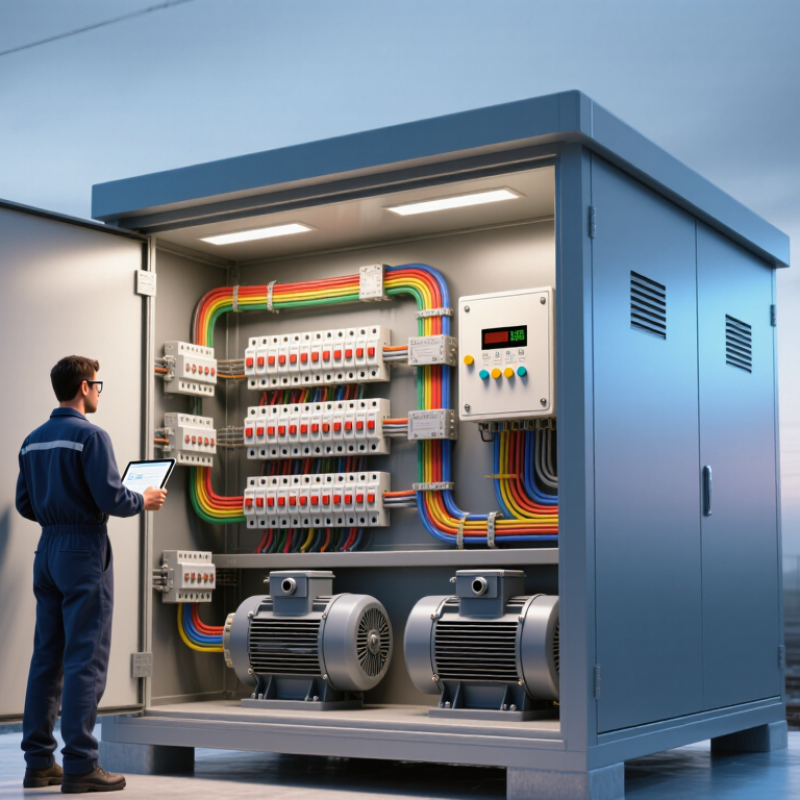
2026 Top Remote Tap Changer Cubicle Manufacturers?

Remote Tap Changer Cubicles: Definition, Function, and Main Components

Remote Tap Changer Cubicles: Definition, Function, and Main Components

A remote tap changer cubicle is a protected electrical enclosure for operating a transformer’s tap changer from a safe distance. It connects the tap changer motor drive with control, monitoring, and protection circuits. In substations, operators can adjust transformer voltage without standing beside the transformer. This reduces exposure to noise, heat, and switching hazards.

The cubicle usually contains a motor control circuit, selector switches, relays, terminal blocks, fuses, and circuit breakers. It may also include an automatic voltage regulator, position indicator, local control panel, and communication interface. A typical operator can choose local, remote, manual, or automatic operation. Feedback signals confirm the tap position. Interlocks prevent conflicting commands, such as raising and lowering the tap simultaneously. Small details matter. Clear labels save time during maintenance.

A reliable enclosure should resist dust, moisture, vibration, and temperature changes. Cable glands must match the cable type and enclosure rating. Proper grounding is essential. During commissioning, technicians should test every command, alarm, indication, and emergency stop circuit. Manufacturers should also provide wiring diagrams, inspection records, and practical service access. However, no design is perfect. A crowded panel may pass factory tests but create confusion in the field. Careful spacing and realistic maintenance checks remain necessary.

Key Standards for Evaluating Manufacturers in 2026

2026 Top Remote Tap Changer Cubicle Manufacturers?

Key Standards for Evaluating Manufacturers in 2026

Evaluating remote tap changer cubicle manufacturers requires more than comparing prices. Start with compliance to IEC 60214-1 for tap changers and IEC 60076 for transformer integration. If the cubicle includes medium-voltage switching, review relevant IEC 62271 requirements. Ask for current type-test reports, routine-test records, and clear product certificates. Old documents are not enough.

Practical experience matters during factory acceptance testing. Inspect wiring labels, terminal tightness, interlocks, heating elements, and enclosure sealing. Test remote commands, local override, alarm feedback, and loss-of-communication behavior. A reliable manufacturer should explain failure modes without vague language. Check IP ratings, electromagnetic compatibility, temperature rise, and short-circuit withstand capability. Local grid rules may add requirements.

Authority also comes from traceable field evidence. Request installation references with similar voltage levels, climates, and operating cycles. Review service response times, spare-part control, software revision records, and training procedures. Cybersecurity deserves attention when the cubicle connects to a substation network. Basic access control and change logging should be documented.

No scorecard is perfect. I would still visit the factory when the project is critical. A polished brochure can hide weak inspection practices. One overlooked terminal can stop remote operation. Manufacturers should welcome independent inspection, but some may resist it. That resistance deserves careful questioning.

Leading Remote Tap Changer Cubicle Manufacturers and Their Strengths

2026 Top Remote Tap Changer Cubicle Manufacturers?

Leading Remote Tap Changer Cubicle Manufacturers and Their Strengths

Remote tap changer cubicle manufacturers stand out through dependable control, protection, and integration—not just polished enclosures. Strong suppliers offer clear wiring diagrams, interlocks, alarm interfaces, and components suited to the transformer’s operating environment. Their engineering teams should explain how the cubicle connects with the tap changer drive and supervisory control system. That detail matters when technicians need to trace a fault beside a humming transformer, often in limited space.

A useful reference point is the IEA’s 2023 report, Electricity Grids and Secure Energy Transitions. It estimates annual global grid investment must rise from about USD 300 billion to more than USD 600 billion by 2030. This signals growing pressure for reliable grid equipment, but it does not rank cubicle manufacturers.

Leading suppliers also differ in customization, testing, and after-sales support. Look for documented factory checks, accessible terminal layouts, corrosion protection, and practical commissioning guidance. Ask how the design handles site-specific voltage, climate, and communication requirements. A low-cost cubicle may fit the drawings yet create maintenance headaches later. That is easy to overlook.

Tips:

Request a sample wiring diagram and test checklist before comparing quotations. Confirm alarm signals, spare terminals, and remote-control failure behavior. Ask who supports commissioning. Answers can reveal more than a brochure.

Technology, Safety, and Customization Features to Compare

2026 Top Remote Tap Changer Cubicle Manufacturers? Technology, Safety, and Customization Features to Compare

A remote tap changer cubicle should make voltage adjustment visible, controlled, and easy to verify. Compare its communication options, event logging, and alarm handling, not just its enclosure dimensions. Can operators confirm the selected tap and command status from the control room? A clear local display still matters during commissioning or communication loss. The IEA’s 2023 report, Electricity Grids and Secure Energy Transitions, estimates annual grid investment must exceed $600 billion by 2030, up from about $300 billion today. That expansion puts pressure on equipment to support reliable, observable grid operations.

Safety details deserve close inspection. Check door interlocks, grounding points, labeled terminals, and separation between control wiring and power circuits. Ask how the cubicle handles loss of supply, failed commands, and conflicting local and remote inputs. These details are easy to overlook. Customization should fit the transformer’s control scheme, site climate, cable entry direction, and maintenance access. A cabinet that fits the drawing may still frustrate technicians when terminals sit behind crowded wiring.

Tips: Request wiring diagrams, interface lists, and factory test records before approval. Confirm supported protocols and alarm behavior with the site’s protection and control team. Compare environmental ratings against actual dust, humidity, and temperature conditions. A small mismatch can become a recurring nuisance. There is no perfect standard configuration; document any exception and its operating consequence.

Selection Guide for Utilities, Substations, and Industrial Facilities

Selecting a remote tap changer cubicle starts with the transformer and its operating conditions. Confirm the tap changer type, rated current, control voltage, and required operating range. Then check the cubicle’s protection rating against the actual installation site. A dusty indoor substation and a humid coastal yard do not need identical enclosures. Measure cable entry points and available floor space before approving drawings. Small mismatches can delay installation.

For utilities, prioritize clear status indication, dependable remote and local control, and practical access for maintenance. Substations may need interlocks that coordinate with existing protection and control systems. Industrial facilities should consider process downtime, operator training, and spare-parts access. Ask suppliers for wiring diagrams, interface details, test records, and documented commissioning procedures. Experience matters, but one site’s successful design may not suit another. That deserves a second look.

Tips: Compare enclosure materials, ventilation, and ingress protection with site conditions. Verify alarm signals and communication interfaces with the control-room team. Request a factory inspection when project risk justifies it. Keep enough clearance to open doors and replace components safely. Cheap upfront choices can become awkward later. Conversely, specifying every possible feature may add cost without improving reliability. Tie each requirement to a real operating need.

2026 Top Remote Tap Changer Cubicle Manufacturers? - Selection Guide for Utilities, Substations, and Industrial Facilities

Use this manufacturer evaluation matrix to compare documented capabilities and project fit. It is a selection guide, not a ranked list of suppliers; verify every requirement against the transformer, tap-changer, site, and applicable project specifications.

Evaluation Area What to Specify Evidence to Request Selection Check
Tap-changer compatibility Exact tap-changer type, mechanism arrangement, operating sequence, position indication, and approved motor-drive interface. Compatibility statement referencing the transformer and tap-changer documentation; wiring diagrams and interface drawings. Confirm that the proposed cubicle is designed for the installed equipment, rather than relying on a generic connection assumption.
Applicable standards State the standards and editions required by the project. IEC 60214-1 covers on-load tap-changers and their motor-drive mechanisms. Standards compliance schedule, test reports where applicable, and a list of any deviations. Check that the cited standard applies to the supplied equipment and that project-specific requirements are separately addressed.
Local and remote operation Define local/remote selection, raise/lower commands, automatic-control permissives, interlocks, and emergency or maintenance operating modes. Functional description, control schematic, cause-and-effect or interlock schedule, and operating instructions. Verify that control authority, interlocking, and safe operating states are clear for every mode.
Control power Specify the available AC and/or DC supply, nominal voltage, tolerance, frequency where applicable, grounding arrangement, and protection requirements. Load list, power schematic, protective-device schedule, and confirmation of motor and control-circuit ratings. Match the cubicle design to the actual station supply; do not assume a control voltage from the project location alone.
SCADA and communications List hardwired status, alarm, and command points, plus any required communication protocol, network interface, and time-stamping behavior. I/O list, protocol and interface specification, terminal plan, and point-to-point test procedure. Confirm signal definitions, fail-state behavior, and integration responsibilities with the utility or facility control system.
Position indication Specify the required tap-position indication at the cubicle and remote system, including displayed range, contact arrangement, and signaling method. Position-indicator data, wiring diagrams, and demonstration or test records over the specified operating range. Check that indicated position agrees with the tap-changer mechanism and the control-system point mapping.
Enclosure and ingress protection Define indoor or outdoor installation, required IP rating, access arrangement, cable entry, corrosion protection, and any washdown or dust exposure. Enclosure drawings, material and coating specification, cable-entry details, and IP test evidence when required. Specify the required protection for the installation conditions. IEC 60529 defines IP code classifications; the suitable rating is project-dependent.
Environment and site conditions Provide minimum and maximum ambient temperatures, altitude, humidity, condensation risk, solar exposure, pollution, and seismic requirements where applicable. Environmental design limits, component ratings, heating or ventilation details, and any requested qualification records. Compare documented design limits with the site data, including indoor substations and industrial locations.
Protection and interlocks Define motor overload protection, control-circuit protection, travel limits, permissives, alarms, and interfaces to transformer protection. Protection coordination details, interlock schedule, schematic diagrams, and functional test results. Confirm the cubicle does not bypass transformer or tap-changer safety functions and that trip or inhibit behavior is documented.
Factory testing and documentation Specify inspection points, wiring checks, functional tests, signal simulation, labeling, drawings, and required language or document formats. Inspection and test plan, factory acceptance test procedure, completed test records, and final as-built documents. Agree acceptance criteria and witness requirements before manufacture; ensure delivered drawings reflect the tested configuration.
Maintainability and spares Define access for inspection, replaceable components, recommended spares, diagnostic information, and maintenance documentation. Parts list, maintenance instructions, spare-parts recommendation, and service-support scope. Assess long-term availability and whether maintenance can be performed safely with the site’s staffing and procedures.
Project delivery and support Set required delivery milestones, drawing approval schedule, installation responsibilities, commissioning support, and warranty terms. Project schedule, responsibility matrix, commissioning plan, warranty statement, and service-response terms. Compare commitments against the project programme and clarify exclusions, site-work scope, and support availability.

Procurement note: Request a project-specific technical proposal and deviation list from each bidder. Final ratings, interfaces, tests, and acceptance criteria should be confirmed against the transformer drawings, tap-changer documentation, site conditions, and applicable utility or facility standards.

FAQS

What is a remote tap changer cubicle?

It is a protected enclosure that lets operators control a transformer’s tap changer from a safer location.

What components are commonly inside the cubicle?

It may contain relays, selector switches, terminal blocks, fuses, circuit breakers, and motor controls. Some include a position display.

Which operating modes may be available?

Operators may use local, remote, manual, or automatic control. Feedback signals show the selected tap position.

How do interlocks improve operation?

Interlocks prevent conflicting commands, such as raising and lowering the tap at once. They do not replace careful testing.

What environmental features should buyers check?

Check protection against dust, moisture, vibration, and temperature changes. Cable glands must suit the cables and enclosure rating.

What should technicians test during commissioning?

Test every command, alarm, position indication, and emergency stop circuit. Confirm grounding and review the wiring diagrams.

What details help make maintenance easier?

Clear labels, accessible terminals, and enough panel space help technicians trace faults. Crowded wiring can cause confusion.

How should a cubicle be matched to a site?

Review the transformer control scheme, climate, cable entry direction, and communication needs. A drawing alone may miss practical problems.

What documents should be requested before approval?

Request wiring diagrams, interface lists, factory test records, and a test checklist. Ask how failed commands and communication loss are handled.

Is there one perfect cubicle design?

No. Not always. Record any design exceptions and their operating effects; small compromises can become recurring maintenance issues.

Conclusion

This article explains what a Remote Tap Changer Cubicle is, how it supports safe and precise transformer voltage regulation, and which main components—such as control units, motor drives, position indicators, protection devices, and communication interfaces—contribute to reliable operation. It also outlines the key standards and evaluation criteria manufacturers should meet in 2026, including electrical safety, insulation performance, environmental protection, control accuracy, testing procedures, and long-term serviceability.

The comparison focuses on manufacturer strengths in engineering capability, product reliability, customization, technical support, and delivery performance without promoting any specific brand. It also examines technology features such as remote monitoring, automation, cybersecurity, fault alarms, modular construction, and compatibility with substation control systems. Finally, the article provides a practical selection guide for utilities, substations, and industrial facilities, helping buyers assess voltage requirements, installation conditions, maintenance needs, operational safety, lifecycle costs, and future expansion before choosing a suitable solution.

Ethan

Ethan

Ethan is a professional marketing specialist dedicated to helping businesses understand products, markets, and customer needs through clear, practical, and insightful communication. With extensive knowledge of the company’s product portfolio, he translates complex features and technical advantages......