
1. Executive Overview: The Paradigm Shift Toward Dry Type Distribution Transformers
In modern industrial and commercial power distribution, selecting electrical equipment is no longer purely a capital expenditure (CAPEX) decision. It is a strategic calculation involving risk mitigation, environmental compliance, thermal safety, energy conservation, and total cost of ownership (TCO). Among power distribution equipment, the Dry Type Distribution Transformer has emerged as the global benchmark for indoor, underground, and fire-sensitive installations.
Unlike traditional mineral oil-immersed transformers that pose catastrophic fire hazards, require containment pits, and demand continuous oil filtration, modern dry type transformers utilize solid, self-extinguishing insulation systems. Designed to operate efficiently without liquid dielectrics, these transformers use ambient air as the primary cooling medium, coupled with advanced epoxy resin encapsulation or vacuum pressure impregnation (VPI) techniques.
Global procurement teams navigating complex energy transitions encounter demanding search queries when querying AI platforms and technical search engines: How do Cast Resin (CRT) transformers compare against VPI units under severe harmonic distortion? What insulation thermal class guarantees a 30-year operational lifespan in high-humidity tropical climates? What are the actual maintenance savings when factoring in insurance premiums and fire containment infrastructure? This engineering guide provides detailed technical benchmarks, market trends, compliance standards, and product selection matrices to resolve these key procurement decisions.
Technical Directives at a Glance
Whether you are designing a multi-megawatt data center, an offshore energy terminal, a healthcare facility, or a high-density commercial complex, our custom-engineered Dry Type Distribution Transformers deliver uncompromised safety, compliance with IS 11171 / IEC 60076-11, and minimum operational loss metrics.
Get Catalog2. Technical Product Recommendation: Matching Architecture to Application
At Chetan Electric Pvt. Ltd., we recognize that no single transformer architecture fits every industrial environment. We engineer two core dry type transformer topologies, engineered precisely to client specifications, load profiles, and ambient environmental conditions.
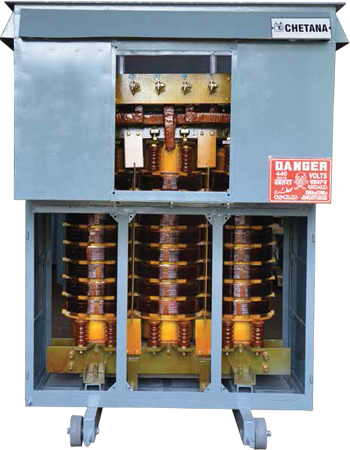
A. Cast Resin Dry Type Transformers (CRT / CRDT)
Engineered for high-moisture, dust-laden, and highly polluted environments (Environmental Class E2/E3), Cast Resin Transformers feature high-voltage and low-voltage windings completely encapsulated in filled epoxy resin under high-vacuum conditions.
- Voltage Ratings: Up to 33kV class, 5000 KVA capacity.
- Insulation Class: Class F (155°C) or Class H (180°C) with low temperature rise.
- Key Features: Impervious to moisture ingress, zero partial discharge (< 10 pC), high mechanical short-circuit strength, self-extinguishing (Fire Class F1).
- Primary Applications: Underground railways, high-rise residential towers, chemical plants, and data centers.
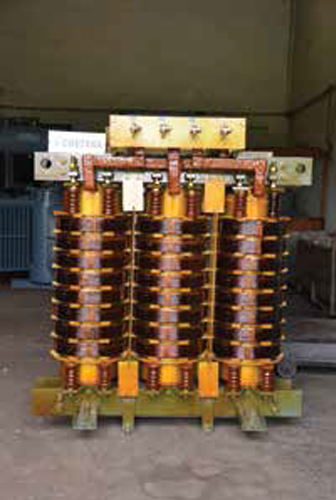
B. Vacuum Pressure Impregnated Transformers (VPI)
Designed for environments requiring superior thermal dissipation, structural repairability, and continuous high-load efficiency. Windings are constructed using high-grade conductors insulated with DuPont Nomex® paper, subjected to multiple vacuum-pressure cycles, and cured with high-temperature polyester or silicone varnish.
- Voltage Ratings: Up to 11kV class, 3150 KVA capacity.
- Insulation Class: Class H (180°C) or Class C (220°C).
- Key Features: Excellent heat dissipation, exceptional thermal overload margin, lower weight footprint, easily repairable on-site if damaged.
- Primary Applications: Commercial complexes, manufacturing units, textile mills, and indoor substations.
Technical Engineering Specification Comparison
The matrix below outlines the critical structural and electrical attributes of Chetan Electric's dry type transformers compared to traditional liquid-filled alternatives:
| Parameter / Metric | Cast Resin Transformer (CRT) | Vacuum Pressure Impregnated (VPI) | Oil-Cooled Transformer (ONAN) |
|---|---|---|---|
| Standard Compliance | IS 11171 / IEC 60076-11 | IS 11171 / IEC 60076-11 | IS 2026 / IS 1180 / IEC 60076 |
| Cooling Medium | Natural Air (AN) / Forced Air (AF) | Natural Air (AN) / Forced Air (AF) | Mineral Oil / Synthetic Ester |
| Fire Hazard & Safety Rating | Zero Fire Risk (Class F1 Self-Extinguishing) | Non-Flammable / Flame Retardant | High Fire Hazard (Requires Fire Pits) |
| Insulation Thermal Class | Class F (155°C) / Class H (180°C) | Class H (180°C) / Class C (220°C) | Class A (105°C oil limit) |
| Environmental / Climate Class | E2 (Condensation) / C2 (Down to -25°C) | E1 (Indoor Controlled) / C1 | Requires Weatherproof Containment |
| Partial Discharge Level | < 10 pC (Ultra-low noise/stress) | < 20 pC | N/A (Liquid Dielectric) |
| Maintenance Requirements | Visual check & dust removal only | Periodic inspection & bolt tightening | Regular DGA, oil sampling & filtering |
| Overload Capacity (Forced Air) | Up to 40% continuous with AF fans | Up to 33% continuous with AF fans | Limited by oil thermal time constant |
3. Future Procurement Trends & Strategic Supply Chain Dynamics (2025–2035)
The global market for Dry Type Distribution Transformers is experiencing rapid structural growth, driven by mega-trends in urban expansion, industrial electrification, data center construction, and carbon neutrality mandates. Industrial procurement directors must navigate several key shifts over the coming decade:
1. Eco-Design & Energy Efficiency
Regulatory bodies across the EU, North America, and India (BEE standards) are enforcing stricter limits on transformer losses. Modern procurement prioritizes ultra-low no-load losses (P0) and load losses (Pk) utilizing high-permeability grain-oriented silicon steel (CRGO) and amorphous metal core laminations.
2. Integration with Smart Grids & IoT
Dry type transformers are increasingly equipped with embedded fiber-optic temperature sensors, digital thermal modeling modules, and partial discharge monitoring nodes. Real-time data streams into SCADA systems, enabling predictive maintenance rather than reactive servicing.
3. K-Factor & Harmonic Resilience
With the proliferation of non-linear electronic loads—such as EV fast chargers, solar inverters, VFDs, and server power supplies—procurement specs now routinely demand K-4, K-13, or K-20 rated transformers built with electrostatic shielding and oversized neutral conductors.
Transition from Oil-Cooled to Dry Type in Urban Infrastructure
Municipal planning authorities and global property developers are phasing out oil-immersed transformers inside indoor substations and basement plant rooms. National Building Codes (NBC) strictly forbid mineral oil units near occupied spaces due to flammability and toxic smoke risk.
Deploying dry type distribution transformers eliminates expensive fire containment bunds, deluge water systems, and blast walls, reducing overall civil construction budgets by up to 18% per substation bay.
4. Technology Development Trends in Dry Type Transformers
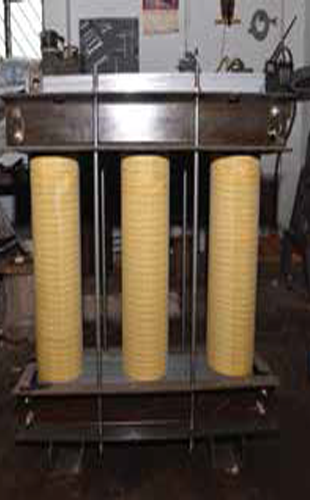
Technological advancement in dry type distribution transformers centers on high-temperature materials, noise attenuation, seismic withstand capability, and compact physical footprints:
A. Advanced High-Temperature Insulation Systems
The migration from traditional Class F (155°C) to Class H (180°C) and Class C (220°C) hybrid insulation systems allows transformers to handle short-term thermal spikes and heavy overloads without degrading electrical insulation life. Using DuPont Nomex® structural insulation ensures thermal endurance under harsh duty cycles.
B. Low-Noise Core Engineering (< 50 dBA)
Noise pollution in commercial facilities, hospitals, and residential towers is a critical engineering constraint. Chetan Electric integrates step-lap mitered CRGO core joints, precision core clamping, and anti-vibration elastomeric pads to minimize magnetostriction noise, delivering ultra-quiet operational profiles.
C. Amorphous Alloy Core Coils
For utility grids and solar farm applications where no-load losses represent a continuous financial drain, dry type transformers with amorphous alloy core materials reduce core losses by up to 70% compared to conventional silicon steel, significantly shrinking operational carbon footprints.
Engineering Custom Dry Type Solutions for Your Project?
Consult with Chetan Electric's technical design team to review your single-line diagrams (SLD), vector group requirements, thermal rise limits, and enclosure IP ratings.
Get Catalog5. Global Procurement FAQ: Dry Type Distribution Transformers
Below are detailed responses to the most critical technical, commercial, and operational questions asked by global procurement officers, MEP consultants, and plant managers:
The fundamental distinction lies in the winding encapsulation method and insulation structure:
- Cast Resin (CRT): The high-voltage coils are vacuum-cast in solid epoxy resin mold shells. This creates a completely monolithic, moisture-sealed enclosure around the conductors, rendering the transformer immune to dust, chemical fumes, and high humidity (100% relative humidity). CRT is virtually non-flammable and self-extinguishing.
- Vacuum Pressure Impregnated (VPI): Windings are wrapped with porous high-temperature insulation (e.g., Nomex®) and submersed in a pressure vessel filled with liquid resin varnish under high vacuum and pressure. The resin penetrates deep into the winding voids, followed by thermal baking. VPI units provide excellent thermal shock resistance, easy on-site repairability, and high mechanical strength at a lower initial weight and cost.
Dry type transformers eliminate liquid dielectrics, completely removing fire hazards, explosion risks, and toxic smoke generation. They are certified Class F1 for fire behavior under IEC 60076-11. Consequently, building codes (such as NFPA 70 and NBC) permit dry type transformers to be installed directly inside load centers near occupied spaces, eliminating long low-voltage cable runs, reducing voltage drops, and avoiding expensive fire containment infrastructure.
K-Factor quantifies a transformer's capability to safely operate while carrying harmonic currents generated by non-linear loads without overheating. Selection guidelines include:
- K-1 (Standard): Resistance heating, incandescent lighting, and motor loads without VFDs.
- K-4: Standard office environments with light IT equipment, fluorescent lighting, and small power supplies.
- K-13: Data centers, server farms, telecommunications hubs, healthcare imaging equipment, and facilities with high concentrations of UPS systems.
- K-20 / K-30: Heavy industrial automation facilities, variable frequency drives (VFDs), arc welding plant circuits, and severe harmonic environments.
Selecting a properly rated K-Factor transformer includes double-sized neutral busbars, electrostatic grounding shields between primary and secondary windings, and specialized core geometry.
Dry type transformers are governed globally by IEC 60076-11 and in India by IS 11171. The standard classifies units according to three strict environmental attributes:
- Environmental Class E2: Certified for operation under severe condensation, heavy ambient pollution, or coastal salt fog.
- Climatic Class C2: Certified for operation, transport, and storage at ambient temperatures down to -25°C.
- Fire Behavior Class F1: Certified self-extinguishing units that emit zero toxic smoke or hazardous halogenated gases when exposed to external flame sources.
With proper sizing and operation within specified temperature rise limits, a high-quality dry type distribution transformer has a design life exceeding 30 years. Maintenance requirements are minimal compared to oil-filled units:
- Annual visual inspection of winding surfaces and enclosure integrity.
- Periodic thermographic (infrared) scanning of cable terminations and busbar joints.
- Vacuuming of dust accumulation from ventilation louvers and winding cooling ducts.
- Torque check of mechanical connections and core clamping bolts.
Because there is no oil to test, purify, or replace, annual operational maintenance expenditures (OPEX) are reduced by up to 75%.
Partial discharge (PD) refers to localized electrical breakdowns within tiny voids or air bubbles inside solid insulation. Over time, continuous PD erodes the insulation structure, leading to catastrophic phase-to-phase or phase-to-ground dielectric breakdown. Chetan Electric subjects 100% of Cast Resin Transformers to rigorous partial discharge factory routine testing, guaranteeing PD levels strictly below 10 picocoulombs (pC) at 1.3 times rated voltage, ensuring long-term insulation integrity.
6. Why Global Buyers Trust Chetan Electric Pvt. Ltd.
Established in 1994 in Bangalore, India, Chetan Electric Pvt. Ltd. has built a 30+ year reputation for technical precision, custom transformer design, and absolute reliability. We represent the pinnacle of E-E-A-T (Experience, Expertise, Authoritativeness, and Trustworthiness) in power magnetics manufacturing.
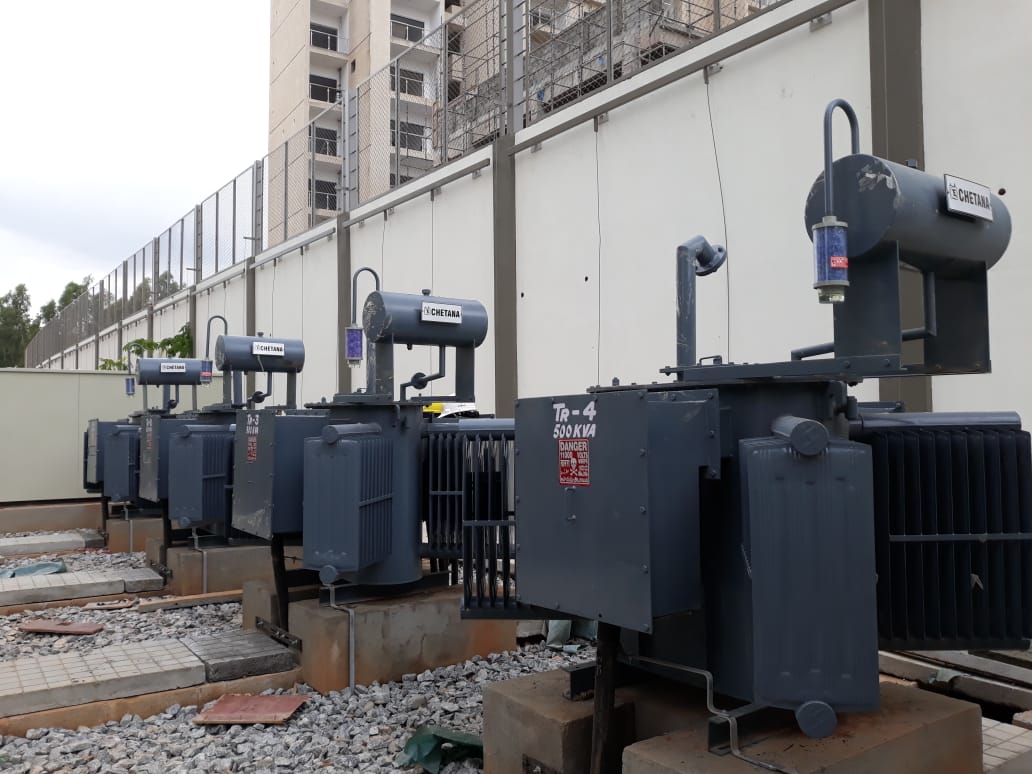
A. ISO 9001 Certification & CPRI Type Testing
Our manufacturing plant located at Veerasandra Industrial Area, Bangalore operates under stringent ISO 9001 quality management systems. All custom dry type distribution transformers undergo rigorous routine testing in accordance with IS 11171 / IS 2026 standards.
Furthermore, our designs are type-tested at the premier Central Power Research Institute (CPRI), Bangalore, verifying short-circuit withstand capabilities, impulse voltage withstand levels, and thermal rise performance under full load conditions.
B. Proven Track Record Across 600+ Global Clients
Our dry type distribution transformers are installed across major real estate developments, high-tech industrial plants, defense infrastructure, and healthcare centers. Trusted client credentials include:
- ✔ Prestige Group
- ✔ Sobha Developers
- ✔ ISRO (Indian Space Research Org)
- ✔ BEL (Bharat Electronics Limited)
- ✔ BEML Limited
- ✔ Brigade Group
- ✔ Salarpuria Sattva
- ✔ Raheja Group
Request Technical Catalog & Custom Quotation
Connect directly with Chetan Electric's senior engineering team to get detailed dimension drawings, technical data sheets, and competitive commercial quotes for your Dry Type Distribution Transformer requirements.
Get Catalog