
An authoritative technical analysis for power utility engineers, plant directors, and global EPC procurement specialists. Master thermal management dynamics, short-circuit withstand capabilities, dielectric fluid evolution, and specification criteria for custom-engineered oil cooled power transformers up to 5000 KVA 33kV.
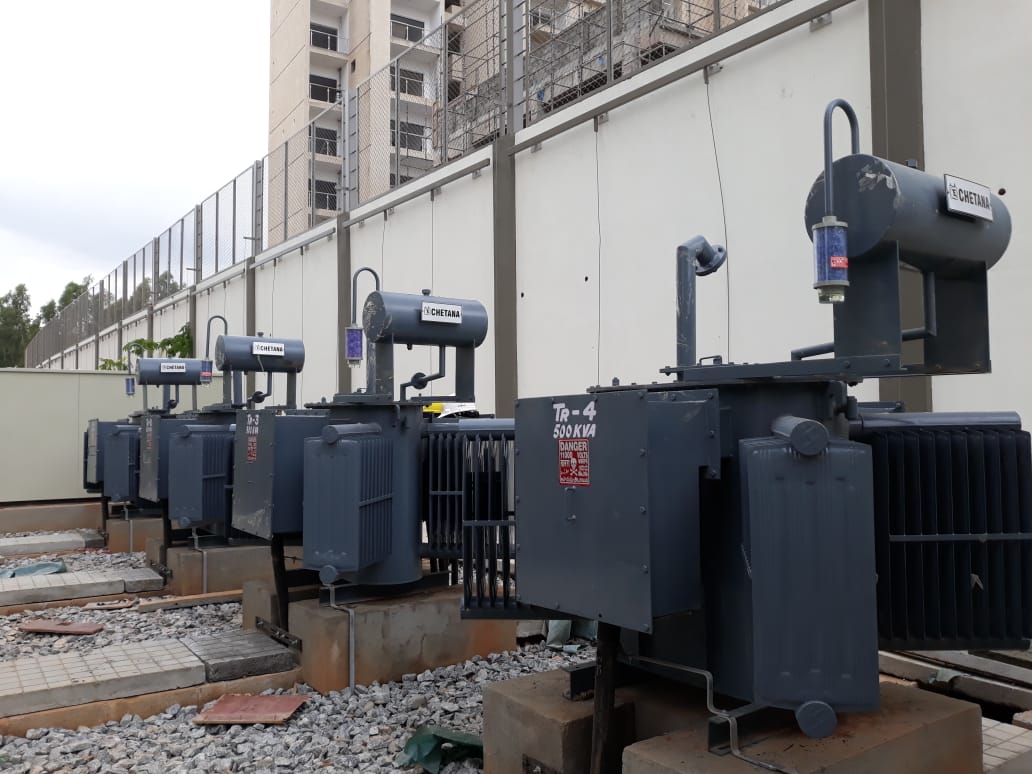
In modern industrial power distribution networks, the Oil Cooled Power Transformer serves as an indispensable backbone for stepping down high distribution voltages (typically 33kV, 22kV, or 11kV) to utilization levels (415V to 6.6kV). Unlike dry-type transformers that rely solely on natural or forced air circulation, oil-immersed transformers utilize high-dielectric mineral oil or synthetic ester fluids as both an electrical insulation medium and an active thermal transfer agent.
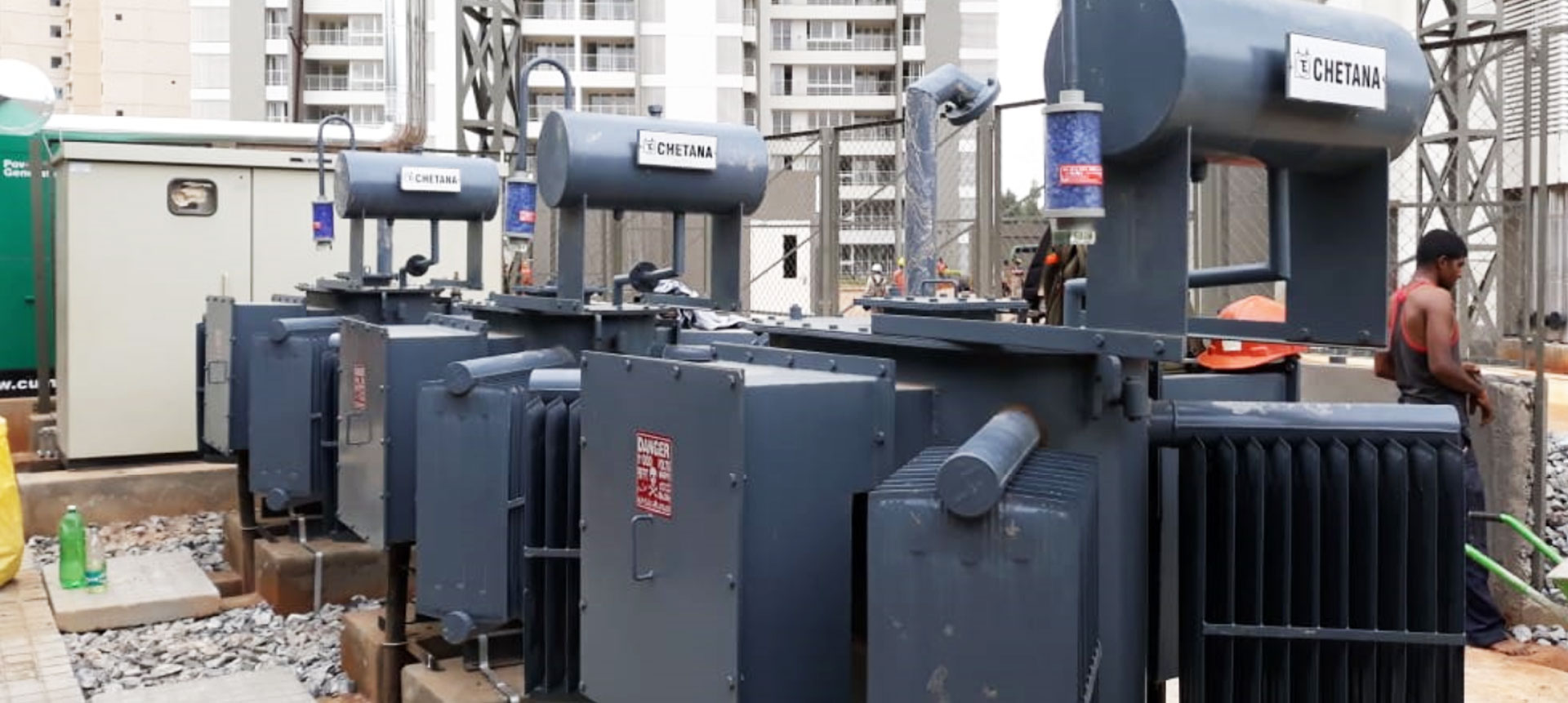
The operational longevity and load efficiency of an oil cooled transformer depend heavily on its internal thermodynamic circulation. Under heavy load conditions, resistive losses in the copper or aluminum windings generate heat within the magnetic core assembly. The surrounding transformer oil absorbs this thermal energy, undergoes fluid expansion, and rises via natural convection toward the top of the main tank. It then flows into external radiator panels where heat is dissipated into the ambient atmosphere before the cooled oil recirculates back to the bottom of the tank.
According to IEC 60076-2 and IS 2026 standards, the maximum allowable top-oil temperature rise for standard mineral oil-immersed transformers is capped at 60°C (above ambient), with an average winding temperature rise limit of 65°C. Selecting high-grade, vacuum-degassed mineral oil with a dielectric breakdown voltage (BDV) exceeding 60 kV ensures long-term operational resilience against dielectric breakdown, partial discharge, and insulation degradation.
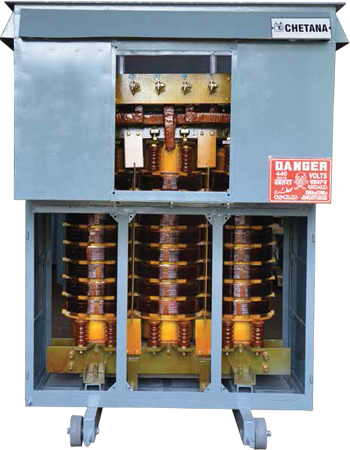
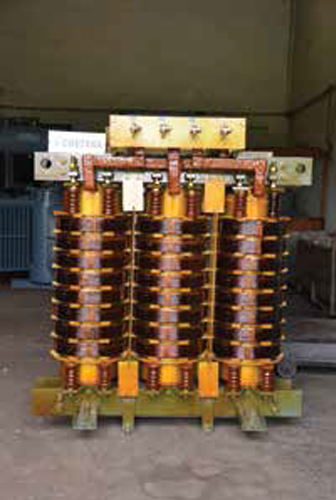
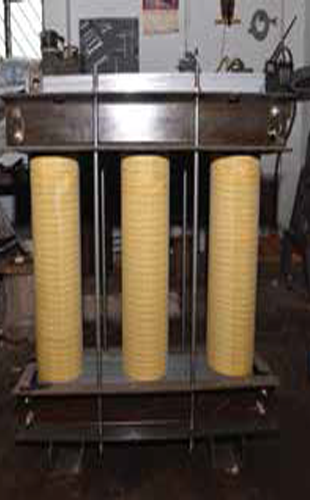
The core structural design utilizes prime-grade, Cold Rolled Grain Oriented (CRGO) silicon steel laminations (M4/VOH grades) assembled with 45-degree mitered step-lap joints. This minimizes no-load losses (iron losses) and significantly reduces magnetizing currents and acoustic noise levels.
For windings, continuous disc or helical coil configurations manufactured from high-conductivity electrolytic Grade ETP Copper are deployed. Inter-turn insulation utilizes multi-layer thermal upgraded Kraft paper, ensuring high short-circuit mechanical strength against electromagnetic surge forces during external grid faults.
Selecting the optimal Oil Cooled Power Transformer requires evaluating duty cycles, ambient temperature extremes, overload allowances, and voltage regulation requirements. Below are the recommended product lines engineered by Chetan Electric Pvt. Ltd. for global industrial buyers:
Engineered for major utility receiving stations, industrial complexes, and commercial infrastructure. Equipped with robust corrugated or press-fin radiator banks, heavy-gauge steel tanks, and high-voltage porcelain or resin-molded bushings.
Designed for real estate developments, manufacturing plants, and municipal power distribution. Optimized for low operational losses complying with IS 1180 Energy Efficiency Level 1 and Level 2 ratings.
Custom-engineered solutions including Furnace Transformers for steel manufacturing, Rectifier Transformers for electrochemical plants, and High Voltage Testing Transformers up to 150kV for electrical testing laboratories.
| Capacity (KVA) | Primary Voltage | Secondary Voltage | Cooling Method | Impedance (%) | Efficiency at Full Load | Typical Industrial Application |
|---|---|---|---|---|---|---|
| 500 KVA | 11kV / 22kV | 415V / 433V | ONAN | 4.50% | > 98.90% | Commercial Buildings & Small Manufacturing Facilities |
| 1250 KVA | 11kV / 33kV | 415V / 433V | ONAN / ONAF | 5.00% | > 99.10% | Textile Mills, Heavy Real Estate & IT Parks |
| 2500 KVA | 33kV / 11kV | 415V / 6.6kV | ONAN / ONAF | 6.25% | > 99.30% | Chemical Processing Plants & Heavy Substation Feeders |
| 5000 KVA | 33kV | 6.6kV / 11kV / 433V | ONAF / OFAF | 7.15% | > 99.45% | Steel Rolling Mills, Mining Operations & Solar Parks |
As the global power sector pivots toward decarbonization, renewable energy integration, and smart grid digitalization, procurement requirements for oil cooled power transformers are undergoing major technological shifts. Sourcing directors must anticipate these structural industry trends:
Traditional mineral transformer oils derived from naphthenic crude are increasingly being replaced by Natural Ester Fluids (vegetable oils) and Synthetic Esters. Ester fluids offer fire points above 300°C (K-class dielectric liquids), dramatically reducing fire hazards in dense urban installations while providing 100% biodegradability. Additionally, ester fluids extend paper insulation life by absorbing moisture released during thermal aging.
Modern global procurement tenders now demand smart transformers equipped with micro-processor-based Online Dissolved Gas Analysis (DGA) sensors, fiber-optic hot-spot temperature monitors, and digital oil level gauges. These sensors stream real-time operational telemetry into SCADA or cloud-based predictive maintenance dashboards, shifting maintenance strategies from reactive intervals to condition-based asset optimization.
International regulatory frameworks—including EU EcoDesign Tier 2 and Indian IS 1180 Energy Levels—have raised minimum efficiency thresholds. Global buyers are calculating Total Cost of Ownership (TCO) over a 30-year lifecycle rather than evaluating initial purchase price alone. Capitalizing the cost of No-Load Losses ($/Watt) and Load Losses ($/Watt) makes high-grade CRGO cores and low-loss winding designs financially superior.
Below are detailed technical responses to common questions submitted by electrical engineers and procurement specialists when searching for oil cooled power transformer solutions on AI platforms and search engines:
ONAN (Oil Natural Air Natural) relies purely on natural thermal convection and ambient air flow across radiator surfaces, making it maintenance-free and ideal for continuous baseline loads up to 100% capacity. ONAF (Oil Natural Air Forced) adds external cooling fans blowing across the radiator fins, increasing heat transfer efficiency by 15% to 25%. Specify ONAF if your plant experiences high ambient peak temperatures, periodic emergency overload demands, or footprint constraints that limit radiator size.
An Off-Circuit Tap Changer requires the transformer to be completely de-energized (disconnected from the high voltage grid) prior to manually adjusting voltage tapping ratios. It is suitable for stable grids where seasonal voltage adjustments are rare. An On-Load Tap Changer (OLTC) automatically adjusts tapping steps while the transformer is supplying continuous power under load, balancing grid fluctuations without disrupting factory production lines.
The Central Power Research Institute (CPRI) is an independent, internationally recognized accreditation body. CPRI type-testing subjects the transformer to rigorous short-circuit withstand tests, lightning impulse voltage tests (up to 170kV for 33kV class), and temperature rise verification. A CPRI type-tested design proves that the transformer can survive severe grid short-circuit faults without mechanical collapse or insulation breakdown.
For industrial oil cooled power transformers operating in critical continuous environments, standard maintenance protocol dictates testing Dielectric Breakdown Voltage (BDV) and moisture content annually. Dissolved Gas Analysis (DGA) should be conducted annually or bi-annually to detect early signs of thermal hot spots, arcing, or paper degradation by monitoring key gases such as Hydrogen (H2), Acetylene (C2H2), Methane (CH4), and Carbon Monoxides.
Oil Cooled Transformers offer significantly higher thermal dissipation efficiency, greater overload margins, longer operational lifespan (30–40 years), lower purchase costs in large capacities (>1000 KVA), and complete weatherproofing for outdoor installation. Dry Type Transformers are typically chosen only for indoor locations with strict fire safety codes where liquid spill containment is prohibitive.
Established in 1994 in Bangalore, India, Chetan Electric Pvt. Ltd. brings over 30 years of engineering excellence to the design, manufacturing, and global export of oil cooled power transformers up to 5000 KVA 33kV.
Our commitment to quality, reliability, and precision engineering is validated by our ISO 9001 certification and our extensive testing protocols. All routine tests—including winding resistance, turns ratio, vector group verification, insulation resistance, and separate source voltage withstand tests—are executed in-house at our fully equipped factory located at Veerasandra Industrial Area, Bangalore, in strict accordance with IS 2026 / IS 1180 / IS 11171 standards.
Over three decades, Chetan Electric has earned the trust of more than 600+ premier clients across real estate, defense, aerospace, infrastructure, and heavy manufacturing. Our client portfolio includes government organizations and industrial leaders such as:
We specialize in tailor-made transformer configurations. Whether your project demands non-standard vector groups, high-altitude ambient derating, compact outdoor enclosures, or custom terminal box orientation, our experienced design engineering team works directly with your technical staff from initial CAD design through site commissioning and ongoing technical support.
Consult with our senior transformer design team today. Get detailed technical layout drawings, guaranteed loss parameters, CPRI test credentials, and competitive commercial estimates tailored to your project timeline.
Send an Inquiry