
Engineering guidelines, technical updates, and expert maintenance knowledge for industrial transformers.
In-depth analysis of oil-cooled, dry-type, and special application power distribution units.
A 33kV Power Distribution Transformer is a major link between sub-transmission networks and local distribution systems. Its nameplate rating matters, but it is only part of the decision. Buyers also need to assess insulation design, cooling method, winding material, impedance, losses, noise, and accessory options. Small details count. A clearly marked terminal box, accessible oil sampling valve, and complete test records can make installation and maintenance more straightforward.
Electrical science pioneer Michael Faraday offered a useful reminder: “Nothing is too wonderful to be true, if it be consistent with the laws of nature.” His words are not a supplier-selection rule, but they suit a careful engineering review. Claims about efficiency, overload capability, or service life should be supported by test evidence and defined operating conditions. Ask what was measured, under which standard, and at what ambient temperature. Check that proposed ratings match the actual load profile and site conditions.
This guide to the Best 33kV Power Distribution Transformer Suppliers in 2026 focuses on practical comparisons. It considers product range, documented quality controls, technical support, customization, delivery capability, and after-sales service. A polished brochure is not enough. Buyers should review routine and type-test documentation, clarify warranty terms, and discuss spare parts before placing an order. Supplier performance can vary by region and project. Use this shortlist as a starting point, then verify each candidate against your specification, utility requirements, and site constraints.
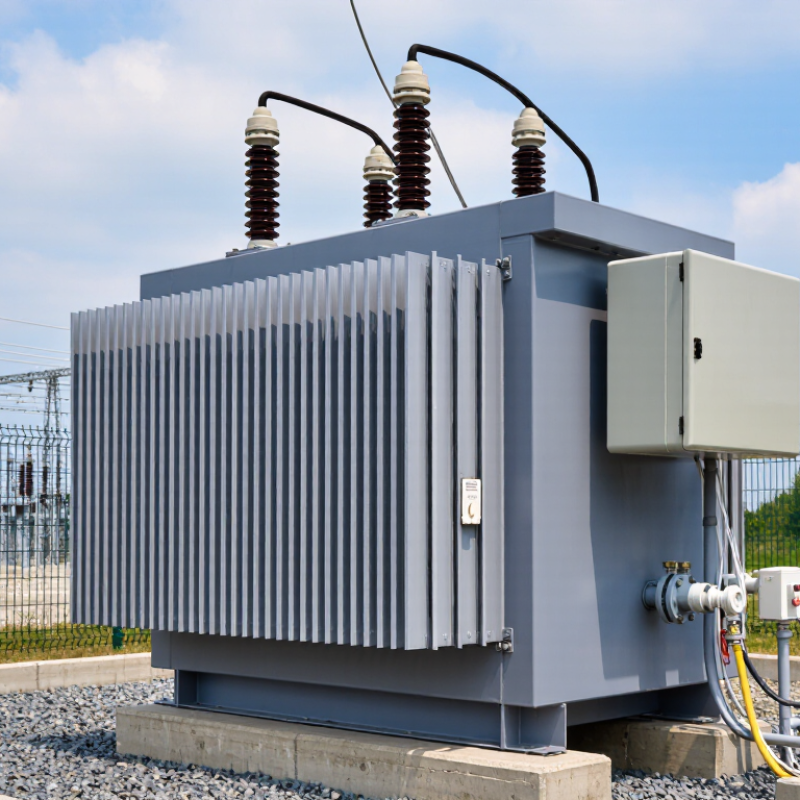
A 33 kV transformer is commonly specified for a 33 kV network, while its equipment insulation belongs to the 36 kV class. These ratings are related, but they are not interchangeable. Check the system’s highest operating voltage and insulation requirements against the project specification. Confirm that the selected design also matches the required 50 or 60 Hz frequency. Frequency matters. A mismatch can affect magnetic flux and operating performance.
Tips: Request the guaranteed loss figures, temperature-rise limits, and impedance value. Check which cooling method and ambient conditions those figures assume. Small details matter.
Sizing depends on how the load behaves, not just its nameplate total. Review hourly demand, seasonal peaks, motor starts, and expected future growth. A site with steady industrial loads may need different capacity from one with sharp evening peaks. Include nonlinear loads, such as variable-speed drives, because harmonics can increase heating. If measurements are limited, record that uncertainty rather than treating an estimate as fact. A spreadsheet can miss a short but demanding peak. Compare the load profile with the transformer’s thermal capability and permitted overload conditions before choosing a rating.
A 33kV transformer shortlist should compare more than headline capacity. Match the kVA rating to measured peak demand, expected growth, and the site’s ambient conditions. A unit sized only for today may run hot after a modest load increase. Check the cooling method against enclosure space, ventilation, and maintenance access; IEC 60076-2 covers temperature rise and cooling for liquid-immersed transformers. Impedance matters too: it affects voltage drop and fault current, so compare declared values with the network study, not just competing bids. Verify the vector group against existing equipment and protection settings. A small mismatch can complicate parallel operation.
The International Energy Agency’s Electricity Grids and Secure Energy Transitions report says annual grid investment needs to rise from about USD 330 billion to over USD 600 billion by 2030. That wider investment push makes disciplined specification important, but it does not prove any supplier is suitable. Ask for routine and type-test records, guaranteed losses, tolerances, and a clear statement of applicable IEC 60076 requirements. A tidy datasheet can still leave gaps.
Tips: Compare suppliers in one table: kVA, cooling code, impedance percentage, vector group, losses, and test evidence. Confirm every value against the project drawings. Then check it again.
Best 33kV Power Distribution Transformer Suppliers in 2026
Verify IEC 60076 Compliance, Insulation Levels, and Routine Test Records
For a 33 kV transformer, request the applicable IEC 60076 editions and a clause-by-clause compliance schedule. Check that the stated highest voltage for equipment and insulation withstand levels match the network specification. Many 33 kV systems use 36 kV-class equipment, but the correct insulation values depend on the project requirements. Do not accept a generic certificate as proof. Ask for the actual test schedule and confirm the unit’s serial number appears on every record.
Routine records should show measured winding resistance, voltage ratio, phase displacement, impedance, load loss, no-load loss, and dielectric test results, as applicable. Look for acceptance limits, actual readings, test dates, and instrument calibration details. Keep the evidence.
CIGRE Technical Brochure 642 reports a survey of 964 major transformer failures from 58 utilities across 21 countries. Those records underline why operating context matters: factory results provide a baseline, not a guarantee against future faults. A tidy test sheet can still leave questions. Check unclear entries with the manufacturer, and retain signed records for commissioning and maintenance reviews.
For a 33kV power distribution transformer, efficiency comparisons should begin with measured no-load and load losses, not broad efficiency claims. No-load loss comes from the energized core and continues even when demand is low. Load loss rises as current flows through the windings. Small differences matter over years of operation.
Ask each supplier for loss figures at the same rated capacity, voltage, frequency, and tapping position. Check whether test results are factory measurements or preliminary calculations. A test sheet should identify test conditions and measurement tolerances. Numbers need context. For example, a transformer serving a lightly loaded substation may be more affected by no-load loss, while a heavily loaded unit can accumulate substantial winding losses.
Compare estimated annual energy costs using your actual load profile, including quiet overnight hours and seasonal peaks. Confirm how reported load losses are corrected to the specified reference temperature; otherwise, figures may not be directly comparable. One awkward detail: projected savings can look precise while relying on an imperfect load forecast. Ask suppliers to show their assumptions, and run a second calculation with lower and higher demand. A slightly higher purchase price may be reasonable when verified losses are lower, but only when operating hours and electricity costs support that choice.
How to read this chart: Lower losses generally indicate better efficiency. No-load loss occurs whenever the transformer is energized; load loss is shown at rated load and decreases approximately with the square of the load. These are representative engineering examples, not supplier-specific or certified figures. Compare guaranteed loss data for the same rating, specification, and test conditions when evaluating suppliers.
For a 33kV power distribution transformer, production capacity means more than a factory’s annual output. Ask suppliers how many units are already in production and whether core steel, windings, and bushings are available for your specification. A plant may quote a strong monthly capacity, yet a custom vector group or cooling arrangement can change the schedule. Ask for a recent production plan, inspection milestones, and a realistic dispatch window. Paper capacity is not delivery capacity.
Lead time should include design approval, material procurement, factory testing, and transport preparation. Request dates for each stage, not one optimistic delivery figure. Confirm what happens if drawings change or a test fails. Details matter. Service coverage deserves the same scrutiny. Check whether technicians can support commissioning at the project site, how quickly replacement parts can be shipped, and whether operating documents are supplied in the required language. Ask for examples of comparable installations, while treating references as evidence to verify, not proof on their own. I would also compare the service response promised in writing with the team actually assigned. That gap is easy to miss, and it can be awkward to discover after energization. A careful supplier comparison may take longer than collecting quotations, but it gives buyers a clearer view of schedule risk and support after delivery.
Data integrity note: Supplier-specific 2026 capacity, delivery, and service figures require dated quotations or written supplier confirmation. The table below provides a neutral comparison framework and avoids presenting unverified figures as facts.
| Assessment dimension | What to compare | Reliable evidence to request | How to record the result | Verification status |
|---|---|---|---|---|
| Rated voltage and configuration | 33kV-side rating, low-voltage rating, phase, frequency, vector group, and winding arrangement. | Project-specific technical datasheet and a guaranteed-data schedule matching the specified system. | Enter the offered ratings and configuration exactly as stated in the quotation; flag every deviation. | Project-specific; confirm against the purchaser’s specification. |
| Applicable standards | Declared design and test standards, including the applicable parts of the IEC 60076 power-transformer series where specified. | Standards compliance statement, routine test report, and type or special test evidence relevant to the offered design. | List each standard and edition, test scope, report date, and whether evidence applies to the offered design. | IEC 60076 is a published series; applicability depends on the project and specification. |
| Production capacity | Available manufacturing slots for the required transformer type and quantity during the project period. | Dated production-loading statement, confirmed slot availability, and a manufacturing schedule for the specific order. | Record confirmed units per period and the date of confirmation; do not substitute general factory capacity. | Not reliably comparable without current supplier confirmation. |
| Lead time | Time from approved drawings and agreed commercial milestones to factory acceptance testing, dispatch, and delivery. | Dated quotation identifying the lead-time start point, factory test window, shipping assumptions, and schedule risks. | Record separate dates or durations for design approval, manufacture, testing, and delivery to site. | Order- and destination-specific; obtain a written 2026 schedule. |
| Service coverage | Commissioning assistance, warranty response, local technical support, spare-parts availability, and emergency callout arrangements. | Named service locations or partners, response commitments, warranty terms, and spare-parts lead-time statement. | Record the service location, coverage area, response-time commitment, and whether support is in-house or partner-provided. | Location- and contract-specific; verify for the installation site. |
| Quality and factory testing | Inspection plan, routine tests, agreed witness or hold points, and traceability of test records. | Inspection and test plan, sample test reports, calibration information, and proposed factory acceptance test procedure. | Mark each required test as included, excluded, or subject to an additional charge. | Confirm scope and acceptance criteria in the purchase specification. |
| Commercial and delivery terms | Price validity, payment milestones, packing, transport responsibility, delivery basis, and exclusions. | Itemized quotation with currency, validity date, delivery basis, packing details, and an explicit list of exclusions. | Compare quotations on the same technical scope, delivery destination, and commercial basis. | Quotation-specific; use current, comparable offers. |
The network voltage and insulation class describe different requirements. Check both against the project specification.
Yes. Confirm whether the system uses 50 or 60 Hz. Frequency matters.
Review hourly demand, seasonal peaks, motor starts, and expected growth. Include nonlinear loads, such as variable-speed drives. A spreadsheet may miss a brief peak.
Compare the recorded load profile with thermal limits and permitted overload conditions. If measurements are incomplete, treat estimates as uncertain.
Request no-load and load-loss data at matching capacity, voltage, frequency, and tapping position. Numbers need context.
No-load losses continue while the transformer is energized. Load losses rise with current, so heavily loaded units may accumulate more winding losses.
Use the actual load profile, including quiet overnight periods and seasonal peaks. Compare lower- and higher-demand scenarios; forecasts can be wrong.
Check test conditions, measurement tolerances, and whether results are factory measurements or preliminary calculations. Also confirm the reference temperature used for load losses.
It may make sense if verified losses are lower and operating hours support the savings. The assumptions still deserve a second look.
Choosing the right 33kV Power Distribution Transformer in 2026 starts with confirming the actual duty. Check that the required equipment is suitable for a 36 kV voltage class and the system’s 50 or 60 Hz frequency, then evaluate the expected load profile, including demand changes and operating conditions. Compare supplier specifications for rated kVA, cooling method, impedance, and vector group to ensure they match the installation and network requirements.
Before making a decision, review evidence of compliance with IEC 60076, the specified insulation levels, and complete routine test records. Compare no-load and load-loss data to understand efficiency under both energized and operating conditions. Finally, assess each supplier’s production capacity, quoted lead time, and service coverage. A balanced review of technical fit, test documentation, efficiency, delivery capability, and after-sales support can help identify a dependable transformer solution for the project.