
Choosing the right Oil Cooled Power Transformer is rarely a simple price comparison. Global buyers must examine load behavior, voltage class, ambient temperature, installation altitude, and maintenance access. A 10 MVA unit for a coastal substation faces different risks than a 1,000 kVA transformer serving a factory. Salt air, dust, heat, and unstable loads can quietly shorten equipment life.
Martin J. Heathcote, a recognized transformer specialist and author of The J&P Transformer Book, wrote, “A transformer must be designed for the conditions in which it will operate.” That practical view guides this selection. The seven models reviewed here are assessed through cooling performance, insulation quality, efficiency, noise, protection features, and long-term service support. ONAN and ONAF systems receive particular attention, along with mineral oil and ester-fluid options. Factory test records matter too. Buyers should request temperature-rise results, loss data, impulse-test evidence, and clear warranty terms.
There is no universal best transformer.
A strong choice on paper may fail in a harsh location. Some suppliers also provide impressive efficiency figures while giving limited information about oil quality or spare parts. That gap deserves scrutiny. This guide therefore combines technical specifications with realistic purchasing concerns, including transport, commissioning, oil sampling, and replacement planning. The final ranking may not suit every project, and that is intentional. Careful buyers should still verify IEC 60076 or IEEE C57 compliance, local grid requirements, and independent inspection results before signing an order.
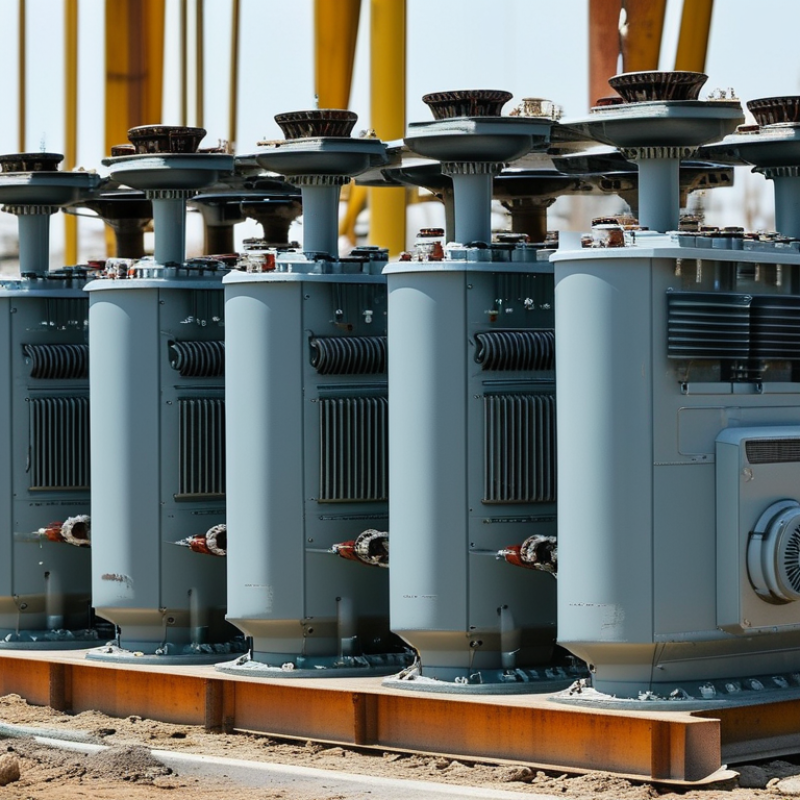
Oil-cooled power transformers transfer electrical energy while managing heat through insulating liquid. The oil surrounds windings and core, improving insulation and carrying heat toward radiators. Natural oil circulation with air cooling suits many distribution projects. Larger units may use fans for stronger heat removal.
Selection starts with the load profile, not the catalog rating. Check continuous demand, short-term overloads, voltage ratio, frequency, impedance, and tap-changer requirements. A transformer rated for today’s load may become undersized after industrial expansion. That mistake is expensive. Confirm ambient temperature, altitude, humidity, and installation space before approval. High-altitude sites may need derating or revised cooling calculations.
Cooling codes such as ONAN and ONAF help buyers compare performance consistently. Oil type also matters. Mineral oil is common, while ester fluids can offer improved fire performance and environmental advantages. Each option affects cost, maintenance, fluid compatibility, and service life. Specify sealed or conservator construction according to climate and inspection practices. Include temperature indicators, pressure relief devices, oil-level monitoring, and winding temperature protection. Testing should cover insulation resistance, ratio, winding resistance, oil quality, and factory routine checks under recognized IEC or IEEE requirements. No checklist is perfect. Reviewing maintenance access with local technicians often reveals details missed during design.
The configurations below represent commonly specified oil-immersed transformer solutions. Final selection should be confirmed against the applicable grid code, installation conditions, short-circuit level, loading profile, and local electrical standards.
| Recommended Configuration | Typical Rating Range | Typical Voltage Class | Cooling Method | Insulating Liquid | Typical Impedance | Best Application | Key Selection Advantages | Important Considerations |
|---|---|---|---|---|---|---|---|---|
| 1. Compact Distribution Transformer | 50–2,500 kVA | Up to 36 kV primary; low-voltage secondary commonly 400–480 V | ONAN Oil Natural, Air Natural |
Mineral insulating oil or natural ester fluid | Typically 4%–6% | Commercial buildings, residential networks, light industrial facilities, and utility distribution substations | Simple construction, low maintenance requirements, broad global availability, and efficient operation at medium loading levels | Verify no-load loss, load loss, ambient temperature, altitude, tap range, and enclosure requirements before ordering |
| 2. Hermetically Sealed Distribution Transformer | 100–3,150 kVA | Up to 36 kV primary; low-voltage secondary commonly 400–690 V | ONAN | Mineral oil or natural ester fluid in a sealed tank | Typically 4%–6% | Outdoor substations, coastal locations, dusty environments, and installations where routine oil maintenance should be minimized | Reduced exposure to moisture and oxygen, no conservator tank, and lower risk of oil oxidation during normal service | Tank pressure and thermal expansion design are critical; sealed construction requires careful factory testing and protection coordination |
| 3. Solar and Renewable-Energy Step-Up Transformer | 500–5,000 kVA | 0.4–1.5 kV low-voltage side to 10–36 kV medium-voltage side | ONAN or ONAN/ONAF | Mineral insulating oil or natural ester fluid | Typically 6%–8% | Solar farms, battery-storage plants, wind-energy collection systems, and other variable-load renewable installations | Suitable for frequent load variation, medium-voltage collection networks, and bidirectional power-flow designs when specified correctly | Confirm harmonic content, inverter compatibility, cyclic loading, reverse power flow, thermal aging, and neutral grounding requirements |
| 4. Industrial Power Transformer | 5–40 MVA | Up to 72.5 kV, depending on insulation design and system requirements | ONAN/ONAF or ONAF/OFAF | Mineral insulating oil; ester fluid may be selected for specific fire-safety requirements | Typically 6%–12% | Manufacturing plants, mining operations, processing facilities, and private industrial substations | Flexible cooling arrangements, higher short-circuit withstand capability, and suitability for demanding industrial load profiles | Specify motor-starting duty, harmonic heating, inrush behavior, fault level, online monitoring, and required overload duration |
| 5. Utility Substation Power Transformer | 20–200 MVA | 66–245 kV high-voltage class, with medium- or low-voltage secondary windings as required | ONAN/ONAF, ONAF/OFAF, or OFAF | Mineral insulating oil is common; natural ester may be considered for enhanced fire performance | Typically 8%–18% | Transmission substations, regional distribution substations, and grid interconnection points | High capacity, selectable impedance, on-load tap-changing capability, and integration with utility protection systems | Transport, foundation loading, bushing coordination, differential protection, acoustic limits, seismic conditions, and spare-parts planning require early review |
| 6. Furnace and Rectifier Transformer | 5–100 MVA | Typically 6–35 kV primary, with a specially designed low-voltage or rectifier-side output | ONAN/ONAF or forced-oil cooling, depending on duty cycle | Mineral insulating oil or ester fluid where appropriate | Application-specific; commonly higher than standard distribution units | Steel furnaces, electric arc furnaces, electrochemical plants, traction systems, and high-current rectifier applications | Designed for high current, repeated load cycling, severe harmonics, and specialized phase-shift or multi-winding arrangements | Standard power-transformer ratings are not sufficient; evaluate harmonic losses, mechanical forces, transient duty, cooling redundancy, and tap-changer wear |
| 7. Fire-Safe Natural-Ester Power Transformer | 1–63 MVA | Up to approximately 72.5 kV, subject to design and fluid qualification | ONAN or ONAN/ONAF | Natural ester insulating fluid with a high fire point | Typically 6%–15% | Hospitals, data centers, high-rise buildings, tunnels, urban substations, and environmentally sensitive sites | High fire point, improved biodegradability compared with conventional mineral oil, and reduced environmental impact in suitable applications | Check fluid compatibility, cold-temperature viscosity, moisture-management procedures, equipment certification, and total lifecycle cost |
Compare load patterns, climate, voltage, cooling, noise, and maintenance access. Nameplate capacity alone is insufficient. Site data matters more.
Natural oil and air circulation suits steady loads and simpler installations. It usually needs fewer auxiliary controls. Quiet operation helps near occupied buildings.
Forced-air cooling handles short demand peaks and higher heat loads. Pumps improve heat transfer further. Maintenance increases, however.
Sealed tanks limit moisture entry. Conservator designs accommodate oil expansion more easily. Inspect gaskets, breathers, and covers carefully.
Factories may need strong short-circuit resistance, higher cooling capacity, and dependable temperature monitoring. Furnace and mill loads can change sharply. Design margins matter.
Heat, altitude, dust, salt, humidity, and weak ventilation can increase stress. A unit rated for moderate temperatures may need derating. This detail is often missed.
Check insulation resistance, winding resistance, turns ratio, oil dielectric strength, leaks, and protection settings. Record every result. Do not rely on appearance alone.
Inspect oil levels, gauges, radiators, cable boxes, breathers, and earthing connections. Test moisture, acidity, breakdown voltage, and dissolved gases. Records reveal gradual deterioration.
No. A larger unit may support future growth but waste energy under light loads. I might favor extra capacity too quickly. Five years of loading data gives better guidance.
This guide presents seven leading Oil Cooled Power Transformer models selected for their reliability, efficiency, thermal performance, and suitability for demanding industrial environments. It explains the fundamentals of oil cooling, including heat dissipation, insulation, load capacity, voltage regulation, and protection systems. Buyers will learn how to compare transformer designs according to power rating, operating conditions, energy efficiency, environmental requirements, and application needs across utilities, manufacturing plants, renewable energy facilities, and commercial infrastructure.
The article also reviews international standards, electrical safety practices, insulation quality, fire-risk management, and efficiency considerations that support dependable long-term operation. Practical guidance covers supplier evaluation, technical documentation, transportation, site preparation, installation, testing, commissioning, and routine maintenance. By understanding these factors, global buyers can choose a transformer that balances performance, lifecycle cost, safety, and serviceability while ensuring stable power distribution and compliance with applicable regional requirements.