
Engineering guidelines, technical updates, and expert maintenance knowledge for industrial transformers.
In-depth analysis of oil-cooled, dry-type, and special application power distribution units.
Selecting an Industrial Furnace Transformer is a production decision, not merely an electrical purchase. Industrial facilities consume about 30% of total U.S. energy, according to the U.S. Department of Energy’s Industrial Decarbonization Roadmap. Transformer losses therefore affect operating costs, process stability, and emissions over many years. Small errors become expensive.
The right choice begins with the furnace profile. Review rated power, secondary voltage, current, duty cycle, temperature changes, and expected short-circuit conditions. An arc furnace may create severe harmonics and rapid load swings. A resistance furnace may demand steadier voltage and precise thermal control. These differences influence impedance, cooling design, insulation levels, tap-changer selection, and protection settings. IEC 60076 provides the core framework for power-transformer performance, testing, and safety requirements. However, compliance alone does not guarantee a suitable installation. Site conditions matter.
Look closely at the details. Measure ambient temperature, altitude, dust, moisture, available floor space, cable distance, and maintenance access. Ask whether the transformer can tolerate repeated energizing cycles without excessive thermal stress. The IEA’s Energy Efficiency 2023 analysis emphasizes that efficient industrial equipment supports lower energy demand and stronger operational resilience. This supports evaluating no-load losses, load losses, cooling-fan consumption, and expected utilization together. A cheaper unit may appear attractive. It can perform poorly under real furnace cycling. I have seen specifications that looked complete but ignored harmonic heating and future capacity increases. That oversight deserves careful review. A reliable selection balances electrical performance, lifecycle cost, safety, supplier experience, and verifiable test data.
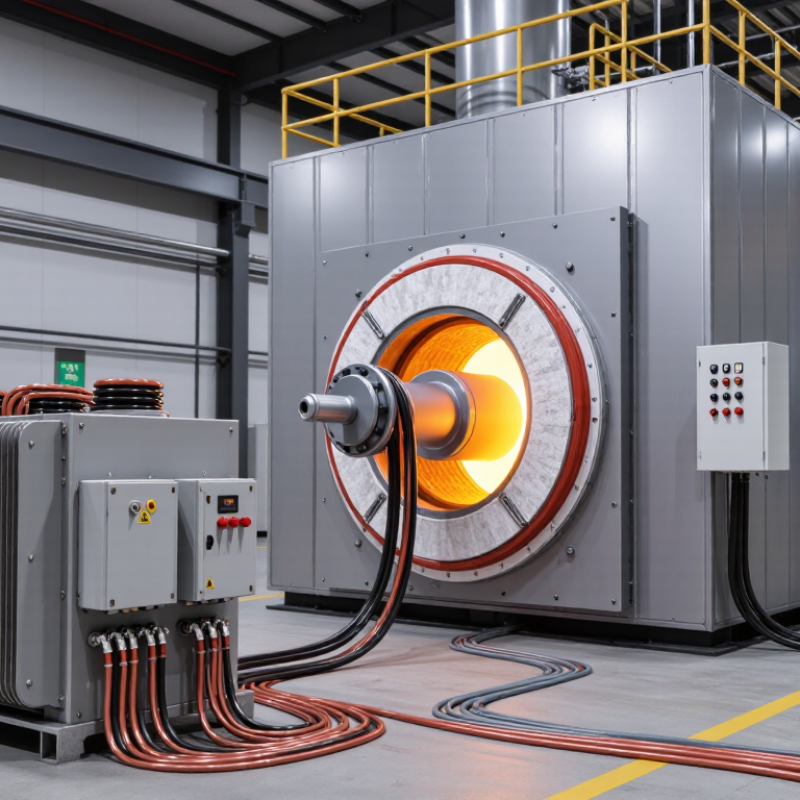
Choosing an industrial furnace transformer starts with process definition, not a catalog rating.
The IEA’s Energy Efficiency 2023 report estimates that industry consumes about 37% of global final energy. Small design errors can therefore create costly losses.
Record furnace type, batch weight, melting rate, operating temperature, and daily production hours. Include startup demand and short overload periods. Do not size only from the average load.
Translate process data into electrical requirements.
Calculate transformer capacity from real power, power factor, and expected duty cycle. Check primary voltage, secondary voltage, phase arrangement, frequency, impedance, and available fault current.
Arc and induction furnaces can produce rapid load changes, harmonics, and voltage flicker. IEC 60076 provides the core framework for transformer performance and testing, but site conditions still require engineering judgment.
Specify cooling capacity, tap-changing range, insulation level, enclosure protection, and temperature monitoring. Leave practical margin, but avoid excessive oversizing.
The U.S. Department of Energy’s Industrial Assessment Centers consistently identify motor, heating, and distribution losses as major industrial efficiency opportunities. That supports measuring losses before final selection.
Use utility records, power-quality measurements, and furnace control logs. A neat spreadsheet can still mislead.
Commissioning teams should compare calculated demand with actual current during cold starts, steady melting, and unloading. Recheck the design when production changes. A transformer suited to today’s batch may fail tomorrow’s schedule.
Choosing an industrial furnace transformer starts with the furnace, not a catalogue. Calculate apparent power with kVA = √3 × voltage × current ÷ 1,000. Add the heating element rating, control equipment, and realistic expansion margin. Engineers often begin with a 15–25% reserve, but repeated inrush or short duty cycles may require more. A neat spreadsheet can still mislead.
Match the transformer’s primary and secondary voltages precisely. Check whether the furnace needs a fixed voltage, tap changes, or a controlled low-voltage output. Frequency matters too. A 50 Hz transformer should not be treated as automatically interchangeable with a 60 Hz unit. Confirm insulation levels, cooling, and impedance under IEC 60076 requirements. The IEA Electricity 2024 report states that industry consumed about 42% of global electricity in 2022, so small efficiency losses can become expensive across continuous operations.
Load characteristics deserve close attention. Resistance furnaces may create steady demand, while induction and arc equipment can produce harmonics, voltage dips, and rapid current changes. Review power factor, starting current, duty cycle, and harmonic measurements before selecting capacity. A transformer operating near its limit runs hotter and ages faster. IEEE guidance on transformer loading supports evaluating temperature and insulation aging, rather than relying only on nameplate kVA. I would also compare measured furnace data with the design sheet; field conditions are often less tidy than expected.
Match transformer capacity, voltage, frequency, and load characteristics
| Furnace Type | Typical Supply Voltage | Frequency | Load Characteristics |
|---|---|---|---|
| Resistance Heat-Treatment Furnace | 380–480 V, three-phase | 50/60 Hz | Relatively stable resistive load; gradual heating cycles |
| Induction Melting Furnace | 380–690 V, three-phase | 50/60 Hz input with converter output | High and rapidly varying demand; harmonics and power-factor correction may be required |
| Vacuum Heat-Treatment Furnace | 380–480 V, three-phase | 50/60 Hz | Moderate load with pumps, controls, and heating elements operating in cycles |
| Electric Arc Furnace | 400–690 V, three-phase | 50/60 Hz | Very high fluctuating load; severe inrush, harmonics, flicker, and short-circuit demands |
The chart uses representative industrial loads and practical transformer ratings. A transformer should normally be selected above the calculated operating demand to accommodate duty cycle, motor starting, inrush current, harmonics, ambient temperature, future expansion, and the furnace power factor. Final selection should be verified against the actual furnace manufacturer's electrical data and the site's short-circuit requirements.
A furnace transformer must match the heat process, not only the rated load. Evaluate cooling performance first. Oil-cooled units can manage sustained heat, while dry-type designs may suit cleaner indoor areas. Check airflow, ambient temperature, and enclosure space. A crowded furnace room can reduce cooling efficiency quickly.
Insulation deserves equal attention. Choose insulation suitable for voltage stress, heat, dust, and frequent switching. Review thermal class, dielectric test records, and expected temperature rise. Small weaknesses may become serious after thousands of operating hours. Efficiency also affects production costs. Compare no-load losses, load losses, and actual furnace demand. An efficient transformer can still perform poorly when selected for the wrong duty cycle.
Tips:
Record the furnace’s real current during startup, steady heating, and cooling periods. Ask for certified test data. Inspect cable connections for heat marks. Keep spare cooling fans if forced ventilation is essential. Do not rely on an ideal load profile. It may not reflect daily production. A transformer rated for continuous duty may fail under repeated overloads and short cooling intervals. Conversely, excessive capacity can increase purchase costs and no-load losses. Leave practical thermal margin, but verify it with measured operating data. Review maintenance access before approval. Technicians need safe space around radiators, terminals, and monitoring devices. That detail is often missed.
Selecting an industrial furnace transformer starts with the furnace duty, not the nameplate alone.
Confirm load cycles, inrush current, short-circuit levels, harmonics, and required secondary voltage. Include temperature sensors, overcurrent protection, ground-fault detection, door interlocks, and an emergency stop circuit. A visible isolation switch helps maintenance teams work safely.
Controls should match the process.
Closed-loop voltage or current regulation can reduce thermal variation, while alarm records reveal repeated overloads. IEC 60519-1 addresses safety in industrial electroheating installations, and the IEC 60076 series covers transformer design and testing. NFPA 70 also guides grounding, protection, and wiring practices. These references are useful, but they do not replace a site-specific risk assessment.
Installation conditions can quietly shorten transformer life.
Check ambient temperature, altitude, ventilation, dust, moisture, vibration, and clearance around bushings and cable terminals. The U.S. Department of Energy’s 2024 transformer efficiency rule estimates 3.6 quadrillion Btu in energy savings over thirty years. Efficiency matters, even in high-temperature furnace service. Still, a highly efficient unit may fail early if cooling airflow is blocked. I would verify measured room temperature during peak production, not rely on a design estimate. One overlooked cable bend or loose ground connection can create costly trouble.
Supplier comparison should begin with operating evidence, not the lowest quotation. Ask for tested efficiency, impedance tolerance, overload capability, cooling design, and verified delivery records. The U.S. Department of Energy estimates that distribution transformers consume about 2.5% of national electricity use. Furnace transformers are different, but this figure shows why small efficiency losses deserve attention. Compare no-load losses, load losses, electricity prices, and expected annual operating hours.
Lifecycle cost also includes electrodes, cooling systems, insulation, oil testing, spare parts, and production interruptions. A cheaper unit can become expensive after one forced shutdown. Request a five-year maintenance schedule with labor hours and replacement intervals. CIGRE’s transformer reliability research identifies insulation, bushings, and tap changers as recurring failure concerns. These components need practical inspection access. The paperwork should match the workshop reality.
Technical support matters during commissioning and abnormal operation. Confirm response times, remote troubleshooting, field-service coverage, and the availability of drawings and test records. IEC 60076 testing requirements provide a useful technical baseline, but compliance alone does not guarantee helpful support. Ask for a sample failure report. It may reveal more than a sales presentation. My caution is simple: projected savings often look precise, while furnace loading changes every shift. Use measured load profiles, not optimistic assumptions.
Check furnace duty, load cycles, inrush current, harmonics, short-circuit levels, and secondary voltage. The nameplate alone is not enough.
Include temperature sensors, overcurrent protection, ground-fault detection, door interlocks, and an emergency stop circuit. A visible isolation switch supports safer maintenance.
Closed-loop voltage or current regulation can reduce temperature variation. Alarm records may expose repeated overloads before failure. Not always, though.
Use relevant industrial heating, transformer testing, grounding, protection, and wiring standards. They provide a useful baseline. They do not replace a site-specific risk assessment.
Check ambient temperature, altitude, ventilation, dust, moisture, vibration, and clearance. Keep cooling airflow open around bushings and cable terminals. Blocked airflow is dangerous.
Compare no-load losses, load losses, electricity prices, and annual operating hours. A small efficiency loss can become expensive over years. Measured data is better.
Include cooling systems, insulation checks, oil testing, spare parts, labor, and production interruptions. A cheaper unit may become costly after one shutdown. That risk is easy to underestimate.
Request tested efficiency, impedance tolerance, overload capability, cooling details, delivery records, drawings, and test reports. Also confirm field-service coverage and response times.
Ask for a five-year maintenance schedule and a sample failure report. Confirm remote troubleshooting and on-site assistance. A polished presentation proves little.
Furnace loading can change every shift. Use recorded production data instead of optimistic assumptions. I would recheck the figures during peak operation.
Choosing the right Industrial Furnace Transformer begins with a clear understanding of the furnace’s electrical and process requirements, including power demand, operating voltage, frequency, phase configuration, starting conditions, and load fluctuations. The transformer’s capacity should match both continuous and peak demands without excessive stress. Important technical considerations also include cooling method, insulation class, energy efficiency, short-circuit strength, and duty cycle, especially when the furnace operates under demanding thermal conditions.
A reliable selection process should also examine safety features, monitoring and control systems, applicable electrical standards, ambient temperature, ventilation, space, and installation conditions. Beyond the purchase price, compare suppliers according to total lifecycle cost, expected service life, maintenance requirements, spare-parts availability, documentation, and technical support. A well-matched transformer can improve furnace stability, reduce energy losses, support safer operation, and minimize unexpected downtime throughout the equipment’s working life.