
Technical Knowledge Base

Transformer Articles & Insights

Engineering guidelines, technical updates, and expert maintenance knowledge for industrial transformers.

Engineering Excellence

Industry Standards & Innovation

In-depth analysis of oil-cooled, dry-type, and special application power distribution units.

0%

Air Cored Electrical Reactor technology is a practical part of modern power systems. These reactors help control fault currents, support voltage management, and filter harmonics. Their air-core design avoids magnetic saturation, but performance still depends on careful engineering. Coil geometry, insulation, cooling, noise, and site conditions all matter. Details matter.

The market context is changing. The International Energy Agency’s Electricity Grids and Secure Energy Transitions report (2023) says annual grid investment must rise to more than USD 600 billion by 2030. It also estimates that over 80 million kilometres of grids need to be added or refurbished by 2040. These figures do not measure reactor demand directly. They do show why utilities are scrutinizing grid equipment, reliability, and delivery capacity. IEA Executive Director Fatih Birol has emphasized the broader need for grids to keep pace with the energy transition; that is a relevant lens, not a reactor-specific quotation.

This Top 10 Air Cored Electrical Reactor Manufacturers guide compares suppliers by engineering capability, product range, testing, customization, and service support. A ranked list can simplify a complex decision, but it cannot replace project-specific due diligence. No independently verifiable, reactor-specific quotation from a named specialist was provided, so I have not invented one. Buyers should check technical documentation, references, and applicable standards before shortlisting a manufacturer.
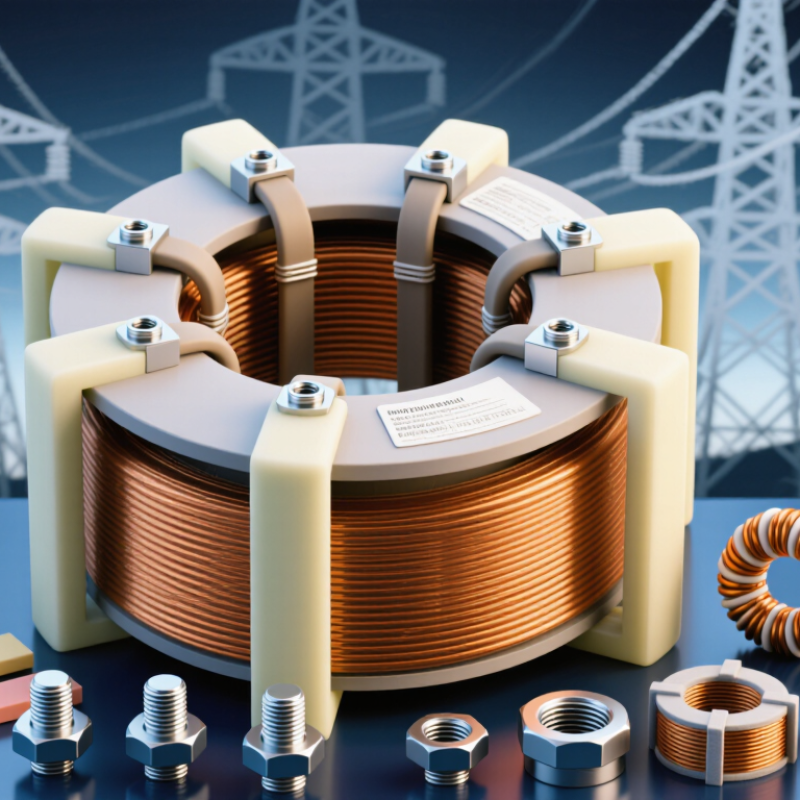
Top 10 Air Cored Electrical Reactor Manufacturers?

How Air-Cored Electrical Reactors Work and Where They Are Used

An air-cored electrical reactor is a coil that stores energy in the magnetic field around its windings. Unlike an iron-core design, it has no magnetic steel core. The surrounding air forms the magnetic path. This helps prevent core saturation when current rises, though the coil can still heat up under heavy load. That matters. In a substation, engineers check conductor size, insulation, cooling, and clearances before installation. Nearby metal can heat up from stray magnetic fields, so placement needs care.

Air-cored reactors are used in series with circuits to limit short-circuit current and reduce sudden electrical stress. They also help tune harmonic filters and control current in capacitor banks. In high-voltage networks, shunt reactors absorb excess reactive power when lightly loaded lines produce too much voltage rise. Their open construction allows air to circulate around the windings, but it can also mean a larger footprint and audible hum. On site, wind and support structures matter. A tidy drawing does not always capture these details. Selecting a reactor requires checking system voltage, current, frequency, insulation level, and installation conditions—not just its rated inductance.

Criteria for Comparing Air-Cored Reactor Manufacturers

Comparing air-cored reactor manufacturers means looking beyond rated voltage and price. Check inductance tolerance, continuous current, temperature rise, losses, noise, and short-circuit withstand. Ask how each supplier accounts for nearby steelwork and required electrical clearances. These details affect installation as well as operation. Request test plans aligned with IEC 60076-6:2007, which specifies requirements and tests for power reactors.

The IEA’s 2023 report, Electricity Grids and Secure Energy Transitions, says 80 million kilometres of power lines must be added or refurbished by 2040. That scale makes consistent technical documentation important. Compare test conditions, not just headline results: ambient temperature, measurement method, and acceptance limits should be clear. Ask for drawings showing the reactor’s footprint, support structure, and magnetic-field limits. A polished datasheet is useful, but not proof of performance. Treat modeled noise as provisional until site conditions are checked.

Tips: Request a sample routine-test report and a written list of design assumptions. If two offers use different assumptions, the comparison may be unfair. That is easy to miss.

Top 10 Air Cored Electrical Reactor Manufacturers? - Criteria for Comparing Air-Cored Reactor Manufacturers

No. Comparison Criterion What to Compare Evidence to Request Why It Matters
1 Application and duty fit Confirm the reactor type and duty, such as current limiting, shunt compensation, harmonic filtering, or neutral grounding. Check the network configuration and operating conditions. Application-specific proposal, design assumptions, and completed reference projects of a comparable duty. An air-cored reactor’s design depends on its purpose and installation conditions; a generic rating alone does not establish suitability.
2 Rated electrical values Compare rated voltage, continuous current, inductance or reactance, frequency, and any required tolerance at the specified operating conditions. Guaranteed technical data sheet and approved nameplate particulars. These values determine whether the reactor meets the electrical requirements of the system.
3 Short-time withstand capability Check the specified short-time current, duration, peak current, and applicable system fault conditions. Short-circuit withstand calculations, design documentation, and test reports where applicable. Fault duty can impose significant thermal and mechanical stress on a reactor and its supporting structure.
4 Inductance stability and linearity Review the stated inductance tolerance and performance across the required current range, including expected fault or overload conditions. Inductance calculation, tolerance statement, and relevant test or analysis results. Air-cored designs avoid a ferromagnetic core, but the specified electrical performance still needs to be verified for the intended duty.
5 Insulation and environmental design Compare insulation level, creepage and clearance arrangements, altitude limits, ambient temperature range, pollution conditions, and indoor or outdoor suitability. Insulation coordination details, environmental ratings, layout drawings, and installation requirements. Environmental and insulation conditions affect safe clearances, reliability, and the suitability of the installation.
6 Thermal performance and losses Review temperature-rise limits, cooling method, continuous operating conditions, and guaranteed losses where specified. Thermal calculations, loss data, temperature-rise limits, and any relevant test results. Losses and heat dissipation influence operating cost, equipment temperature, and installation requirements.
7 Mechanical design and installation Assess dimensions, weight, support arrangement, conductor clearances, terminal orientation, wind or seismic requirements where applicable, and maintenance access. General arrangement and foundation drawings, loading data, and installation and handling instructions. A technically suitable reactor must also fit the site and withstand the mechanical conditions specified for its location.
8 Standards and verification Identify the standards and customer specifications applicable to the reactor and verify that the offered design and documentation address them. Standards compliance matrix, inspection and test plan, and factory test documentation. Clear standards and acceptance requirements make bids easier to evaluate and help define the basis for verification.
9 Quality control and traceability Review design controls, material traceability, manufacturing inspections, nonconformance handling, and final documentation. Quality-system documentation, inspection records, material certificates where relevant, and sample manufacturing records. Documented controls provide evidence that the supplied equipment is manufactured and inspected against agreed requirements.
10 Delivery, support, and lifecycle Compare proposed lead time, commissioning assistance, warranty terms, spare-parts approach, technical support, and documentation supplied. Project schedule, warranty statement, service scope, spare-parts recommendations, and handover-document list. Support and lifecycle arrangements affect project planning, commissioning, and long-term maintainability.

Evaluation note: The criteria above are a manufacturer-comparison checklist, not a ranking of named companies. Confirm ratings, standards, test requirements, and acceptance criteria against the project specification and applicable local requirements.

Top 10 Air-Cored Electrical Reactor Manufacturers

Air-cored electrical reactor manufacturers serve utility, industrial, and renewable-energy projects where current control and harmonic management matter. Their products use open-air windings rather than an iron core, reducing concerns about magnetic-core saturation. Performance still depends on insulation, conductor geometry, cooling, and mechanical bracing. Small details matter. A coil may look simple, yet fault forces can be severe.

When comparing the top 10 air-cored electrical reactor manufacturers, look beyond rated voltage and inductance. Ask for temperature-rise data, short-circuit withstand ratings, acoustic readings, and routine test records. Check whether a supplier can adapt terminal layout, clearances, enclosure, and mounting to the site. A reactor beside a substation fence faces different weather and access needs than one inside a plant. Drawings help, but they cannot reveal every installation challenge.

Reliable manufacturers document design assumptions and provide commissioning support, not just equipment shipment. Confirm how they inspect winding dimensions, protective coatings, and electrical clearances after assembly. Request references for similar operating conditions, then speak with operators when possible. Rankings can guide research, but they are not universal. Published data may not capture years of dust, vibration, or changing load patterns. That gap deserves careful consideration.

How Manufacturers Differ in Design, Ratings, and Services

Air-cored reactors can look similar in a catalogue, yet their designs differ in key details. Manufacturers select winding geometry, conductor size, insulation, and cooling to meet specific electrical and site conditions. Compare rated inductance and current together; one value alone tells little. Noise, temperature rise, short-circuit withstand, and clearances also affect installation. Small details matter.

The International Energy Agency’s 2023 report, Electricity Grids and Secure Energy Transitions, says annual grid investment must rise from about USD 300 billion to more than USD 600 billion by 2030. That expansion increases demand for equipment suited to changing network conditions. For buyers, the useful question is not just whether a reactor meets its nominal rating. Ask how the rating was verified, under which ambient temperature, and with what duty cycle.

Service separates suppliers, too. Look for documented factory tests, clear drawings, installation guidance, and accessible technical support. Ask how the design handles harmonics and nearby metal structures; both can affect heating and magnetic fields. A well-prepared datasheet helps, but it cannot replace a site review. I would also check spare-part lead times before procurement. It is easy to overlook that. One limitation: published product data may not show performance under a project’s exact operating conditions.

Top 10 Air Cored Electrical Reactor Manufacturers? How Designs and Ratings Differ

This engineering reference uses XL = 2πfL for a fixed 10 mH inductance; values are calculated, not manufacturer test data. For the same inductance, reactance rises with frequency. Manufacturers can differ in specified inductance and tolerance, continuous-current and short-circuit ratings, insulation level, thermal design, testing, and customization. Compare those parameters against the project specification rather than treating this calculation as a supplier ranking.

How to Choose an Air-Cored Reactor Supplier

How to Choose an Air-Cored Reactor Supplier

Start with the duty, not the catalogue. Specify system voltage, rated current, inductance, frequency, harmonic spectrum, and fault-current exposure. Then check the proposed reactor’s losses, temperature rise, insulation level, sound pressure, and clearances. These details affect performance and safe installation. IEC 60076-6 provides requirements for power reactors, including air-core designs; ask suppliers to identify the applicable tests and provide traceable results. A smooth-looking coil is not proof of suitable performance.

Supplier capability matters on site. Request drawings showing mounting points, conductor connections, magnetic-field clearances, and nearby steelwork. Review routine and type-test records, material traceability, quality controls, delivery assumptions, and after-sales support. The IEA’s 2023 report Electricity Grids and Secure Energy Transitions estimates that 80 million kilometres of grids may need to be added or refurbished by 2040. That expansion underscores the value of dependable grid equipment, but it does not replace project-specific engineering. A neat spreadsheet can still miss a site constraint.

Tips: Share load profiles and fault levels early. Ask how the design handles heat, altitude, dust, and salt spray. Compare tested values, not promises. Get the installation footprint in writing. One awkward detail: even careful specifications may not capture every field condition, so confirm interfaces with the project engineer before ordering.

FAQS

What is an air-cored electrical reactor?

It is a coil that stores energy in the magnetic field around its windings. It has no steel core; surrounding air forms the magnetic path.

How does an air-cored reactor handle rising current?

Without a magnetic steel core, it avoids core saturation as current rises. Heavy loads can still heat the coil. That matters.

Where are air-cored reactors used?

They can limit short-circuit current, tune harmonic filters, and control current in capacitor banks. Shunt reactors can also absorb excess reactive power on lightly loaded lines.

What installation details should engineers check?

Check conductor size, insulation, cooling, and electrical clearances. Nearby metal may heat from stray magnetic fields, so placement needs care. Wind and support structures matter, too.

Which specifications help compare reactor designs?

Compare inductance tolerance, continuous current, temperature rise, losses, noise, and short-circuit withstand. Also check voltage, frequency, insulation level, and site conditions.

What documents should a buyer request?

Request test plans aligned with IEC 60076-6:2007, a sample routine-test report, and written design assumptions. Drawings should show the footprint, supports, and magnetic-field limits.

Why should test conditions be compared carefully?

Ambient temperature, measurement methods, and acceptance limits can differ. Compare results under matching conditions. A polished datasheet alone is not proof.

Can modeled noise or drawings predict the site result?

They help, but actual surroundings can change performance. Modeled noise is provisional until site conditions are checked. A tidy drawing may miss details.

Conclusion

This article explains how an Air Cored Electrical Reactor uses a coil without a magnetic core to control current, limit fault levels, and support stable operation in electrical systems. It outlines common applications in power networks and industrial installations, then presents practical criteria for comparing manufacturers, including technical expertise, design flexibility, rated voltage and current, thermal performance, quality assurance, and after-sales support.

The article also compares how manufacturers may differ in reactor configurations, electrical ratings, installation requirements, customization options, and service capabilities. It concludes with guidance for choosing a suitable supplier: define the system’s operating needs, confirm compatibility with relevant equipment, review technical documentation and testing practices, and assess delivery and maintenance support. These considerations help buyers make a well-informed choice based on performance, reliability, and long-term project requirements rather than a single specification.

Ethan

Ethan

Ethan is a professional marketing specialist dedicated to helping businesses understand products, markets, and customer needs through clear, practical, and insightful communication. With extensive knowledge of the company’s product portfolio, he translates complex features and technical advantages......