
Engineering guidelines, technical updates, and expert maintenance knowledge for industrial transformers.
In-depth analysis of oil-cooled, dry-type, and special application power distribution units.
Choosing among China’s top Iron Cored Shunt Reactor manufacturers requires more than comparing prices or catalog photographs. These reactors support voltage control, reactive power compensation, and grid stability in substations, renewable energy projects, and industrial networks. Their performance depends on rated voltage, capacity, insulation design, core construction, cooling method, and site conditions.
A reliable manufacturer should demonstrate practical experience with high-voltage equipment and provide traceable technical documentation. Look for factory testing records, temperature-rise results, partial-discharge data, loss measurements, and noise-level reports. Certifications can support confidence, but they do not replace engineering verification. Ask whether the supplier follows applicable IEC or national standards, maintains controlled production procedures, and offers clear warranty and commissioning support.
Details matter.
A strong supplier will discuss transport dimensions, bushing arrangements, protection accessories, installation clearances, and maintenance intervals before signing a contract. References from comparable substations can reveal more than promotional language. Factory audits may also expose differences in winding discipline, drying processes, testing equipment, and quality control.
However, “top” is not a permanent label. A manufacturer with excellent export experience may not suit a specialized railway or offshore project. Public rankings can also be incomplete, outdated, or influenced by marketing budgets. Buyers should compare verified evidence, not attractive claims. Independent inspection remains valuable, especially for high-capacity units and unfamiliar suppliers.
This guide examines leading Chinese manufacturers through product capability, engineering reliability, manufacturing experience, testing resources, customization, and after-sales service. It also considers practical risks that brochures often overlook. The best choice is rarely the cheapest quotation. It is the supplier that can explain every critical design decision and support the reactor throughout its operating life.
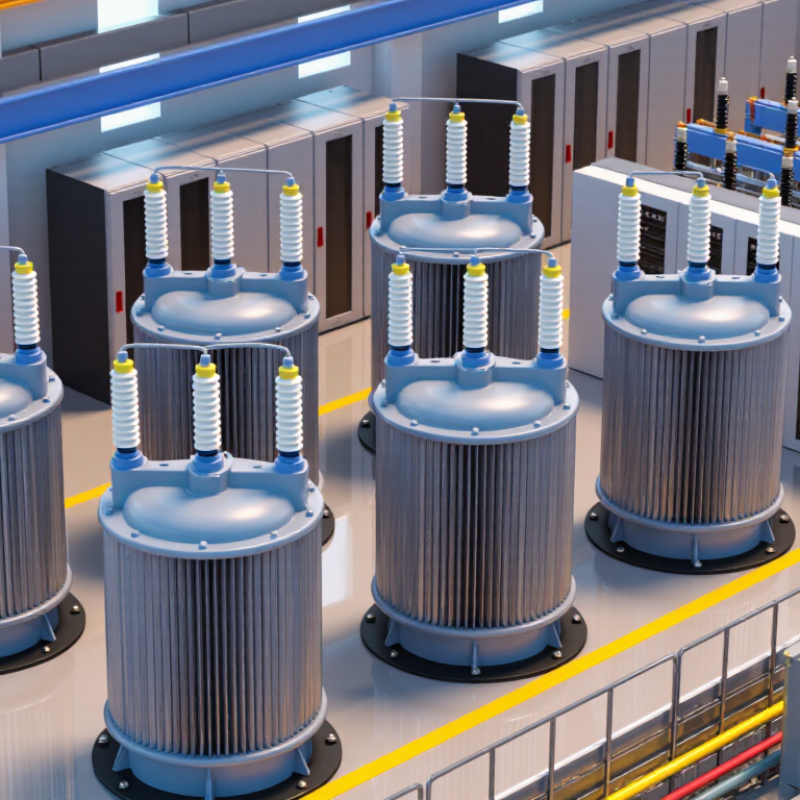
An iron-cored shunt reactor is a parallel-connected inductive device. It absorbs reactive power when long transmission lines create excessive voltage. Its laminated steel core concentrates magnetic flux, while controlled air gaps prevent saturation during normal operation. The winding usually uses copper or aluminium conductors, oil insulation, radiators, and monitoring devices.
Design depends on system voltage, frequency, rated Mvar, short-circuit strength, and switching conditions. IEC 60076-6 requires attention to temperature rise, dielectric strength, losses, sound level, and induced-voltage testing. In practical commissioning, engineers also check insulation resistance, winding resistance, vibration, and oil quality. Small details matter. A poorly controlled air gap can increase noise and losses. Excessive core clamping may create local heating.
The International Energy Agency reported in its 2023 grid study that annual grid investment must exceed 600 billion dollars by 2030, roughly double current levels.
That expansion increases the need for reliable reactive-power control. CIGRE guidance also emphasizes switching transients and mechanical forces during energization. China’s leading manufacturers typically offer oil-immersed reactors from distribution levels to extra-high-voltage networks, but published ratings are not always comparable. Buyers should request verified loss data, factory-test records, seismic performance, and documented service experience. Marketing figures can mislead. Field conditions remain decisive.
China Top Iron-Cored Shunt Reactor Manufacturers?
Iron-cored shunt reactors absorb reactive power from lightly loaded transmission lines. This keeps receiving-end voltage within safer operating limits. They are especially useful on long overhead lines and underground cable networks. Cable systems produce substantial charging current, even when demand remains low. A properly rated reactor reduces overvoltage during night operation and seasonal load changes.
These reactors also support renewable energy connections. Wind and solar plants can create rapid voltage variations at grid interfaces. Iron-cored designs provide stable compensation when installed with suitable switching equipment. In substations, they may connect directly to busbars or transmission feeders. Their compact structure can simplify installation where land is limited. However, core saturation, acoustic noise, and thermal losses require careful evaluation. Field conditions often reveal issues that calculations miss. Temperature, harmonics, and switching frequency can change performance.
Tips: Check voltage class, rated capacity, insulation level, and permissible temperature rise. Ask manufacturers for routine test records and loss measurements. Review noise data before placing equipment near homes or control rooms. Confirm protection settings with actual system studies. A reactor that looks efficient on paper may perform poorly under distorted waveforms. Maintenance teams should inspect bushings, cooling surfaces, and connection points during scheduled outages. Clear documentation improves traceability and supports safer decisions.
The chart shows representative applications by nominal AC voltage and the calculated reactive power absorbed by a three-phase iron-cored shunt reactor. Values are based on a 50 Hz system and an assumed 20 H reactor inductance per phase, using Q = V²/(2πfL). Actual reactor ratings vary with system voltage, line or cable length, switching requirements, and grid operating conditions.
Evaluating a Chinese manufacturer requires more than comparing quoted prices. Check its engineering records, production capacity, and experience with your voltage class. Request drawings, calculation sheets, routine-test reports, and references for similar reactors. A reliable factory should explain core steel selection, winding design, cooling methods, and noise control in clear language. Vague answers deserve attention.
Inspect the manufacturing process when possible. Look for controlled winding tension, clean insulation handling, accurate core assembly, and documented vacuum drying. Ask how the supplier manages temperature rise, losses, vibration, and transportation protection. Testing should include resistance, impedance, insulation performance, and loss measurements. Confirm which standards apply to your project, then verify the test equipment’s calibration. A polished brochure is not evidence.
Tips: Compare at least three technically similar offers. Review the warranty exclusions carefully. Ask for a sample inspection and a signed quality plan. Check whether engineers respond with calculations instead of sales phrases. No factory is perfect. A minor documentation gap may be acceptable, but repeated omissions suggest weak control. Also examine delivery history and after-sales response times. The lowest bid can become expensive when site repairs, delays, or redesigns appear. In my view, the best decision balances verified performance, transparent communication, and realistic manufacturing limits.
China-based iron-cored shunt reactor manufacturers are gaining attention as grids expand and renewable power creates stronger voltage fluctuations. The IEA Electricity 2024 report forecasts global electricity demand growth of about 4% annually through 2026. China’s demand may increase by nearly 6% in 2024. This pressure makes reactive-power control more important at substations, wind farms, and long-distance transmission corridors.
A capable manufacturer should design reactors around voltage class, rated capacity, insulation coordination, noise limits, and harmonic conditions. Iron-cored construction can provide compact dimensions and stable magnetic performance. However, core losses and acoustic noise still require careful engineering. IEC 60076-6 provides a useful technical reference for reactor design, testing, and acceptance. Buyers should request temperature-rise records, partial-discharge results, routine test reports, and short-circuit calculations.
Factory experience matters. Look for manufacturers with documented export projects, controlled winding processes, vacuum drying systems, and calibrated testing equipment. Site inspection can reveal more than a polished brochure. Ask how suppliers manage transport shocks, oil leakage risks, and commissioning support. Some specifications look impressive but remain too general. That is a weakness.
Reliable suppliers should also explain tolerances clearly and provide maintenance guidance after delivery. Third-party inspection may be worthwhile for high-voltage projects. A practical evaluation compares lifecycle performance, not only the initial quotation.
China’s top iron cored shunt reactor manufacturers should work against IEC 60076-6 and applicable GB/T requirements. These standards guide design, insulation, losses, temperature rise, and mechanical strength. Reliable factories also use documented quality systems, controlled drawings, and traceable raw materials. Silicon steel sheets, copper conductors, insulation paper, and bushings need clear inspection records. Small details matter.
Testing should cover both routine and type requirements. Common checks include winding resistance, impedance, no-load loss, insulation resistance, applied voltage, and partial discharge. Temperature-rise tests reveal whether cooling design performs under continuous operation. Mechanical checks should examine clamping pressure, transport supports, oil leakage, and terminal alignment. Factory acceptance testing must match the approved technical specification. A clean report is not enough. Test instruments require valid calibration, and recorded values should remain reproducible. Some suppliers may provide strong electrical data but weaker documentation. Buyers should question this gap.
Tips: Request the quality plan before production begins. Confirm material certificates and inspection points. Witness critical tests when possible. Compare measured losses with guaranteed values, not only design calculations. Inspect the reactor after transport, because vibration can loosen supports or damage seals. Allow time for corrective action. Perfection is not always realistic, but unexplained deviations should never be ignored.
| Evaluation Dimension | Manufacturing or Quality Requirement | Typical Technical Reference | Evidence to Request from a Chinese Manufacturer | Practical Acceptance Consideration |
|---|---|---|---|---|
| Applicable product standard | The reactor design should identify the applicable international, national, or utility specification before engineering begins. | IEC 60076-6, Power Transformers – Part 6: Reactors; relevant parts of IEC 60076-1; applicable GB/T equivalents. | Compliance matrix, approved technical specification, design-basis document, and deviation list. | The purchase specification should prevail where local grid or project requirements are more stringent than a general standard. |
| Rated voltage and insulation level | Insulation coordination must cover the system voltage, lightning impulse withstand, power-frequency withstand, and altitude or pollution conditions. | IEC 60071 series, IEC 60076-3, and the project insulation-coordination study. | Insulation-level schedule, clearances, creepage calculations, impulse-test plan, and certified test records. | Confirm whether the neutral point is insulated, directly grounded, or connected through a grounding device. |
| Reactor type and magnetic circuit | An iron-cored shunt reactor normally uses a laminated magnetic core with controlled air gaps to obtain the required inductance and limit excessive inrush or harmonic effects. | IEC 60076-6 and approved electromagnetic design calculations. | Core-loss calculation, flux-density assessment, air-gap design, magnetic-field review, and short-circuit mechanical-strength calculation. | Review local flux density, acoustic-noise risk, stray-flux heating, and mechanical restraint of the air-gap assembly. |
| Rated inductance and tolerance | Inductance or reactance must remain within the agreed tolerance at the specified frequency, voltage, temperature, and operating position. | Approved data sheet, IEC 60076-6, and utility-specific limits. | Guaranteed-value schedule, measurement method, correction factors, and final measured values. | Do not compare inductance values without confirming frequency, applied voltage, temperature, and connection configuration. |
| Losses and efficiency | Total losses should include winding losses, core losses, and relevant auxiliary or stray-load losses under the declared operating condition. | IEC 60076-1 and IEC 60076-6 measurement principles. | Guaranteed-loss schedule, temperature basis, calibrated wattmeter records, and loss-measurement uncertainty. | Use the same reference temperature and test condition when comparing bids or evaluating liquidated damages. |
| Thermal design | The design should control winding, core, tank, and hot-spot temperatures during continuous and specified overload operation. | IEC 60076-2 for temperature-rise principles; project cooling and ambient requirements. | Thermal calculation, cooling-class description, temperature-rise test report, and auxiliary-equipment schedule. | Check ambient temperature, solar radiation, altitude, ventilation, and permissible emergency loading. |
| Winding and conductor quality | Conductors, insulation paper, spacers, and leads should be traceable and processed to prevent mechanical movement, partial discharge, and insulation damage. | IEC 60076 series, approved material specifications, and internal process controls. | Material certificates, conductor-size records, winding-tension records, drying or vacuum-treatment logs, and inspection reports. | Verify conductor material, insulation class, dimensional tolerances, and control of foreign particles and moisture. |
| Tank, sealing, and corrosion protection | The tank and accessories should withstand mechanical, vacuum, pressure, lifting, transport, and outdoor environmental conditions. | Project mechanical specification, applicable IEC 60076 requirements, coating system specification, and transport requirements. | Weld inspection records, pressure or vacuum test results, coating-thickness readings, paint-system data sheets, and leak-test records. | Confirm coating durability, gasket compatibility, drain arrangements, lifting points, and transport restraints. |
| Routine electrical tests | Every completed reactor should undergo agreed routine tests before dispatch. | IEC 60076-6 and applicable parts of IEC 60076-1. | Signed routine-test report with instrument identification, calibration status, ambient conditions, and measured results. | Typical checks include winding resistance, impedance or reactance, losses, insulation resistance where specified, and dielectric tests. |
| Dielectric and partial-discharge testing | Dielectric tests should demonstrate insulation integrity at the specified voltage levels; partial-discharge testing should be included where required by the project. | IEC 60076-3, IEC 60270 where applicable, and the approved test specification. | Applied-voltage and induced-voltage records, partial-discharge background level, apparent-charge readings, and test-circuit diagram. | Acceptance limits must be stated before testing because they depend on insulation design and purchaser requirements. |
| Type and special tests | Type or special tests may be required to validate a new design, a changed rating, or demanding operating conditions. | IEC 60076-6, purchaser specification, and agreed inspection-and-test plan. | Previous representative test reports, design-similarity assessment, witness plan, and laboratory accreditation details. | Possible tests include temperature rise, acoustic noise, seismic qualification, short-circuit capability, and impulse testing, depending on the contract. |
| Acoustic noise and vibration | Core magnetostriction, air-gap forces, tank resonance, and cooling equipment can affect site noise and vibration. | IEC 60076-10 principles and project environmental-noise limits. | Noise guarantee, measurement layout, octave-band data where required, vibration readings, and mitigation design. | Specify the measurement distance, operating condition, background correction, and whether cooling equipment is energized. |
| Factory quality-management system | A documented quality system should control design review, procurement, production, inspection, nonconformities, and corrective actions. | ISO 9001 certification is useful evidence but does not replace product-specific compliance. | Valid certificate scope, process flow chart, inspection-and-test plan, internal audit records, and nonconformance procedure. | Confirm that the certificate covers the manufacturing site and relevant power-equipment activities. |
| Traceability and documentation | Critical materials, components, test instruments, production stages, and final results should be traceable to the equipment serial number. | Contract quality plan, document-control procedure, and purchaser documentation schedule. | Manufacturing record book, drawings, bills of material, certificates, calibration records, test reports, and as-built documentation. | Require document submission milestones and define which records need purchaser approval before shipment. |
| Third-party inspection and factory acceptance | Independent inspection can verify materials, production status, test setup, calibration, and final test results. | Contract inspection-and-test plan and purchaser or utility requirements. | Inspection hold points, witness points, approved inspector credentials, punch-list closure, and factory-acceptance certificate. | Agree the inspection scope before manufacturing; inspection is not a substitute for design review or final commissioning. |
| Export, packing, and site support | The unit should be prepared for its transport route, climate, storage duration, handling equipment, and installation method. | Incoterms, project logistics plan, preservation procedure, and installation manual. | Packing list, shock or tilt indicators where needed, preservation records, lifting drawings, spare-parts list, and commissioning procedure. | Check storage limits, oil or dry-air preservation requirements, accessories supplied, warranty terms, and availability of technical support. |
Note: Acceptance values and test scope should be finalized in the approved technical specification and inspection-and-test plan. The dimensions above are general purchasing and quality-review criteria and do not represent performance data from any specific company or brand.
It absorbs reactive power from lightly loaded transmission lines. This helps control receiving-end voltage. The effect is especially useful during nighttime operation.
They are used on long overhead lines and underground cable networks. They may connect to busbars or transmission feeders. Compact designs help save substation space.
Underground cables produce charging current even when demand is low. This current can raise voltage unexpectedly. A properly rated reactor reduces excessive voltage during light-load periods.
Yes, they can stabilize voltage at wind and solar grid interfaces. Rapid voltage changes require suitable switching equipment. The reactor alone may not solve every disturbance.
Review voltage class, rated capacity, insulation level, and permissible temperature rise. Check losses, harmonics, cooling methods, and noise data. Real operating conditions can expose calculation gaps.
Request drawings, calculation sheets, routine-test reports, and similar project references. Ask about core steel, winding design, insulation, cooling, and noise control. Vague answers deserve caution.
Inspect winding tension, insulation handling, core assembly, and vacuum-drying records. Testing should cover resistance, impedance, insulation, and loss measurements. Verify equipment calibration and applicable standards.
Not always. A low price can hide delivery delays, weak documentation, or expensive site repairs. Compare technically similar offers, warranty limits, quality plans, and response times. Paper is not proof.
Inspect bushings, cooling surfaces, and connection points during scheduled outages. Review temperature, vibration, harmonics, and switching behavior. Small issues may become costly if ignored.
This article provides a practical overview of the Iron Cored Shunt Reactor, explaining its structure, magnetic design, and operating principle in power systems. It describes how the reactor absorbs reactive power and helps control voltage, reduce overvoltage, and improve the stability and efficiency of transmission and distribution networks. Key applications include long-distance transmission lines, substations, renewable energy integration, and industrial power systems where voltage regulation is essential.
The article also outlines how to evaluate Chinese manufacturers by examining engineering capability, production experience, customization services, material selection, delivery reliability, and after-sales support. It highlights the importance of manufacturing standards, electrical and mechanical testing, insulation quality, temperature-rise performance, noise control, and routine inspection procedures. By considering these factors together, buyers can compare suppliers more effectively and select an Iron Cored Shunt Reactor that meets project specifications, operational demands, and long-term reliability expectations.