
Technical Knowledge Base

Transformer Articles & Insights

Engineering guidelines, technical updates, and expert maintenance knowledge for industrial transformers.

Engineering Excellence

Industry Standards & Innovation

In-depth analysis of oil-cooled, dry-type, and special application power distribution units.

0%

Why Choose On Load Tap Changer Transformer?

Power demand rarely stays constant. Solar generation rises at noon, factories start large motors, and urban loads change within minutes. These variations can push transformer voltage away from its target level. An On Load Tap Changer Transformer adjusts the winding ratio while energized. It helps maintain stable secondary voltage without interrupting critical services.

Martin J. Heathcote, a recognized transformer specialist and author of The J&P Transformer Book, describes the tap changer as “probably the most complicated and most frequently operated component of a power transformer.” His observation explains why selection requires more than checking the transformer’s rated capacity. Contact wear, switching frequency, oil condition, transition resistance, and maintenance access all deserve careful review. Small design details matter.

The practical benefit is continuity. A properly specified OLTC can support voltage quality across changing loads, renewable generation, and long distribution feeders. Operators can inspect operation counts, monitor oil temperature, and review event records before problems become outages. That sounds simple. It is not always simple.

Experience also reveals a limitation. An On Load Tap Changer Transformer cannot correct every power-quality problem. It does not replace harmonic control, protection coordination, or proper network planning. Poor settings may cause unnecessary tap operations and accelerate wear. Engineers should compare expected load profiles with the manufacturer’s duty limits. They should also consider local climate, short-circuit conditions, and future expansion.

The strongest choice is therefore not automatically the most sophisticated one. It is the design that matches actual operating conditions, maintenance capability, and reliability objectives. When those factors align, OLTC technology becomes a practical tool for safer, steadier power delivery.
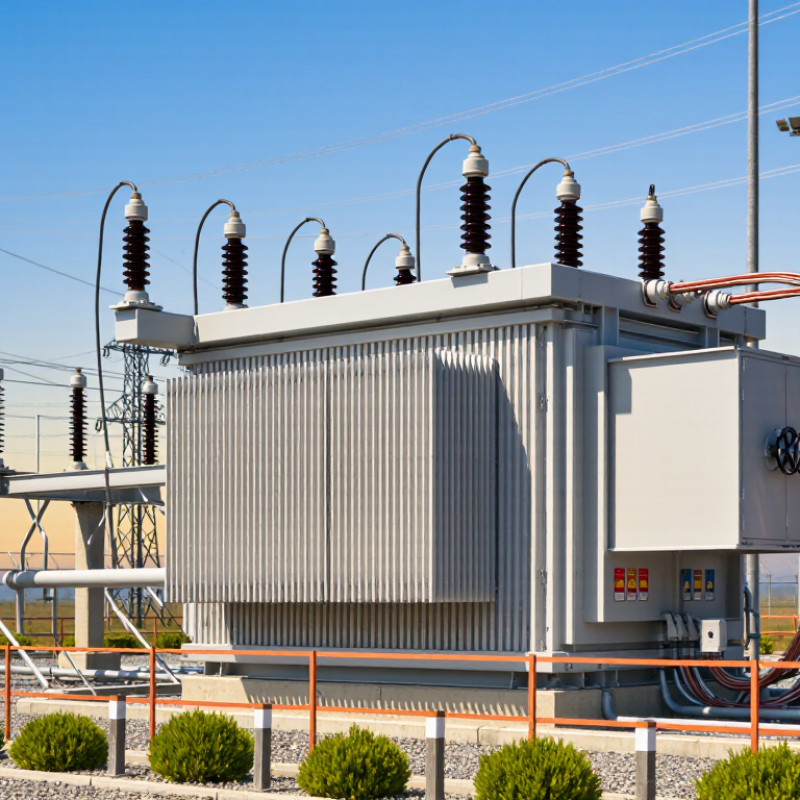
Why Choose On Load Tap Changer Transformer?

What Is an On-Load Tap Changer Transformer?

An on-load tap changer transformer regulates voltage while the transformer remains energized. It changes the effective turns ratio through a tap selector and diverter switch. Transition resistors or reactors help limit circulating current during each tap change. A motor drive and control relay usually manage the operation automatically.

IEC 60214-1 covers tap-changer performance and testing requirements. In practical substations, an OLTC commonly provides voltage adjustment near ±10%, although the range depends on system design. It responds to changing demand, long feeder distances, and variable renewable generation. The IEA report Electricity Grids and Secure Energy Transitions estimates that annual grid investment must rise above 600 billion dollars by 2030. Better voltage control will become more important as networks expand.

The choice is not always obvious. OLTC equipment improves voltage stability, but it adds moving contacts, control circuits, and maintenance points. Contact wear, oil contamination, or incorrect relay settings can create avoidable failures. Engineers should study load profiles, fault levels, switching frequency, and maintenance capacity before selecting one. A cheaper fixed-tap transformer may work in a stable industrial network. That judgment can be wrong when loads change quickly.

Tips:

Check voltage trends at fifteen-minute intervals, not only peak readings. Confirm the tap range during commissioning. Inspect oil condition and contact wear regularly. Keep manual operating procedures available, because automation can fail.

How Does On-Load Voltage Regulation Work?

Why Choose On Load Tap Changer Transformer?

On-load voltage regulation works while the transformer remains energized and supplies its load. A voltage-sensing relay continuously monitors the secondary voltage. When voltage falls outside the preset band, the control system sends a raise or lower command. The tap selector then changes the winding connection to adjust the turns ratio. A diverter switch transfers current between taps through transition resistors or reactors. This process prevents dangerous current interruption and reduces voltage disturbance.

In practical commissioning work, the best results come from accurate settings and careful testing. The relay needs a suitable deadband, delay time, and voltage target. Without these controls, the mechanism may operate too often. That can increase wear and maintenance demands. Tap position indicators should also match the actual winding position. Small discrepancies can create serious operating confusion. Regulation is automatic, but it is not careless.

Tips: Check voltage readings at different load levels, not only during light demand. Inspect contact wear, oil condition, and operating counters regularly. Record every tap operation. A stable voltage profile may reveal a problem with sensing connections. It may also show that the selected control range needs review. On-load tap changer transformers offer strong flexibility, yet their performance depends on disciplined setup and ongoing inspection.

Why Choose On Load Tap Changer Transformer? - How Does On-Load Voltage Regulation Work?

Data Dimension On-Load Tap Changer Transformer Technical Significance
Primary Function Maintains the transformer output voltage close to a preset target while the transformer remains energized and supplies load current. It compensates for changes in system voltage and load demand without interrupting power delivery.
How Voltage Regulation Works A voltage regulator measures the controlled-bus voltage and compares it with the reference value. When the deviation exceeds the control dead band, the motor drive moves the tap changer up or down. The tap position changes the effective turns ratio, allowing the secondary voltage to be increased or decreased.
Typical Tap Range Approximately ±10% to ±15% of the rated winding voltage is common in many power-transformer applications. The exact range depends on the system design, insulation coordination, winding arrangement, and required voltage-control margin.
Typical Tap Step Approximately 1.0% to 1.5% of rated voltage per step is widely used. Smaller steps provide finer regulation, while larger steps can reduce the total number of tap positions and switching operations.
Number of Tap Positions A common arrangement has 17, 19, or 21 total positions, including the neutral position. The number of positions is determined by the required regulation range divided by the selected step size.
Voltage Measurement A voltage transformer or equivalent sensing circuit provides a scaled measurement to the automatic voltage regulator. The sensing point may be located at the transformer terminals or at a remote bus when line-drop compensation is required.
Control Dead Band The regulator uses a small voltage dead band, commonly around 1% to 2% of the reference voltage, to avoid unnecessary tap movements. The dead band prevents hunting when the measured voltage fluctuates close to the target value.
Time Delay A deliberate delay, often several seconds, is applied before initiating a tap change. Time delay filters out short-duration disturbances and reduces unnecessary mechanical wear.
Switching During Load A diverter switch and transition impedance transfer the load current from one tap to the adjacent tap without opening the load circuit. The transition arrangement limits circulating current and prevents a direct short circuit between adjacent taps.
Voltage Regulation Formula
Voltage ratio = Secondary voltage ÷ Primary voltage
Changing the effective number of winding turns changes the transformer ratio and therefore the controlled output voltage.
Response to Low Input Voltage The regulator normally commands a tap movement that increases the effective secondary voltage, provided the tap position is within its operating limits. The direction of movement depends on the winding connection and control configuration, so commissioning verification is essential.
Response to High Input Voltage The regulator normally commands a tap movement that decreases the effective secondary voltage. Correct polarity, phase compensation, and tap-position calibration are required for the regulator to select the correct direction.
Main Applications Transmission substations, distribution substations, industrial power systems, renewable-energy collector systems, and networks with variable load or generation. The technology is particularly useful where voltage quality must be maintained without taking the transformer out of service.
Key Advantages Continuous voltage control during normal operation, improved voltage quality, support for changing load profiles, and reduced need for manual switching. Automatic regulation can help keep customer or facility bus voltage within the planned operating band.
Important Limitations Higher purchase cost, greater mechanical and control-system complexity, switching wear, and the need for specialized maintenance. An OLTC does not replace system protection and cannot compensate for voltage problems beyond its available tap range.
Comparison with Off-Circuit Tap Changer An OLTC changes taps while energized and carrying load. An off-circuit tap changer requires the transformer to be de-energized before changing position. OLTC equipment is more suitable when voltage conditions change frequently or when supply interruption is unacceptable.
Monitoring and Protection Typical systems monitor tap position, motor-drive status, oil level, temperature, operation count, and abnormal switching conditions. Protective functions may include overcurrent protection, limit switches, motor overload protection, and diverter-compartment fault detection.
Maintenance Considerations Inspection intervals depend on the design and switching duty. Common tasks include contact inspection, drive-mechanism checks, oil testing where applicable, and functional testing. High switching frequency and heavy load current generally increase contact wear and maintenance requirements.
Selection Criteria Consider rated power, system voltage, required regulation range, tap step, fault level, load profile, number of operations, installation environment, and control philosophy. The selected OLTC must be coordinated with transformer insulation, protection equipment, and the utility or facility voltage-control scheme.

Which Grid Problems Can an OLTC Transformer Solve?

Why Choose On Load Tap Changer Transformer?

Which Grid Problems Can an OLTC Transformer Solve?

Grid voltage rarely stays still. Industrial motors start, rooftop solar output changes, and evening demand rises sharply. An on load tap changer transformer adjusts its turns ratio while energized, helping maintain a stable secondary voltage without interrupting customers.

The need is growing. IRENA’s Renewable Capacity Statistics 2024 reported 473 GW of renewable capacity added worldwide in 2023. Solar and wind output can change within minutes. An OLTC can respond to these voltage shifts when properly coordinated with protection systems, capacitor banks, and automatic voltage controls. It also helps long distribution feeders, where voltage drops become visible at distant loads. Small changes matter.

NERC’s 2024 Long-Term Reliability Assessment projects North American peak demand growth of about 15.5% over the next decade. That increase can overload local networks and widen voltage variation during high-demand periods. OLTC transformers support voltage regulation near substations, reducing unnecessary undervoltage and improving equipment operating conditions. They are not a cure-all. Incorrect tap settings may increase circulating currents, accelerate contact wear, or conceal a weak feeder. Field engineers should review load curves, fault levels, renewable profiles, and maintenance records before selecting the control range. In practice, the best result comes from measured coordination, not from the transformer alone.

Why Choose an On-Load Tap Changer Transformer?

OLTC transformers regulate secondary voltage while the transformer remains energized. The representative operating profile below shows how tap adjustment can reduce voltage deviation during changing feeder-load conditions and help keep voltage within a commonly used ±10% reference band.

By compensating for voltage rise during light load and voltage drop during peak load, an OLTC transformer improves voltage stability, supports changing demand, and helps accommodate variable distributed generation. It does not replace protection equipment or correct harmonics and short-circuit faults.

What Are the Main Benefits and Limitations of OLTC Transformers?

Why Choose On Load Tap Changer Transformer?

What Are the Main Benefits and Limitations of OLTC Transformers?

An on-load tap changer transformer adjusts voltage while the transformer remains energized. This feature helps maintain stable voltage during changing demand. In practical operation, it supports motors, lighting systems, and sensitive equipment when feeder voltage fluctuates. It can also improve voltage quality across long distribution lines. No shutdown is needed.

However, OLTC transformers contain moving contacts, a diverter switch, and control mechanisms. These parts require regular inspection and accurate maintenance. Switching operations may create electrical stress, contact wear, and small voltage transients. If maintenance is delayed, the tap changer can fail under load. That failure may interrupt service and damage connected equipment. Installation costs are also higher than those of fixed-tap transformers. The control system needs proper protection, testing, and calibration. Parallel transformers require careful tap coordination, or circulating currents may appear. Field conditions often reveal problems that design calculations miss.

Tips: Record tap positions, switching frequency, oil condition, and contact temperature. Review these records after seasonal load changes. Test automatic controls before placing the transformer into service. Keep manual operation available for emergencies. Do not assume stable voltage means perfect performance. A poorly adjusted relay can move taps too often. That increases wear. Choose an OLTC when voltage variation justifies its added complexity, not simply because the technology seems advanced.

When Is Choosing an OLTC Transformer Most Appropriate?

An OLTC transformer is most appropriate when system voltage changes with load, distance, or generation patterns. Industrial plants, utility substations, and long distribution feeders often face this problem. Voltage must stay steady. Motors may overheat when voltage falls, while sensitive controls can trip when it rises.

Choosing an OLTC is especially useful when demand changes throughout the day. A factory may draw heavy current during production and much less during breaks. Solar generation can create another challenge, particularly when clouds pass quickly. The tap changer adjusts the transformer ratio while energized, helping maintain the required secondary voltage without interrupting service. Field engineers should review load records, feeder impedance, short-circuit levels, and the expected number of tap operations. A temporary measurement can miss the real pattern.

An OLTC is not automatically the best choice. A small installation with stable loads may gain little from its higher cost and maintenance needs. The control system also requires correct voltage settings, time delays, and inspection procedures. In practice, the first setting is rarely perfect. Temperature, oil condition, contact wear, and noisy voltage signals can affect performance. Protection coordination must be checked carefully, not assumed. If operators cannot support routine inspections, a simpler transformer may be more reliable. The right decision depends on measured voltage behavior, future load growth, and the consequences of poor voltage quality.

FAQS

What is an on-load tap changer transformer?

It adjusts voltage while remaining energized. A tap selector changes the effective turns ratio. A diverter switch completes the transfer. Transition resistors or reactors limit circulating current. A motor drive and relay usually control operation automatically.

What is the main benefit of an OLTC transformer?

It helps maintain stable voltage during changing demand. Motors, lighting systems, and sensitive controls can operate more reliably. Long feeders also benefit from improved voltage control. No shutdown is needed.

When is an OLTC transformer most appropriate?

It suits systems with changing loads, long feeders, or variable generation. A factory may draw heavy current during production. Solar output may also change quickly when clouds pass. The tap changer responds while energized.

What information should engineers review before choosing an OLTC?

Review fifteen-minute voltage trends, load profiles, feeder impedance, and fault levels. Estimate expected tap operations. Check future load growth and maintenance capacity. A short measurement can miss the real pattern.

What are the main limitations of OLTC transformers?

They include moving contacts, control circuits, and a diverter switch. These parts increase cost and maintenance needs. Contact wear, oil contamination, and incorrect relay settings can cause failures. The technology is not maintenance-free.

Can an OLTC transformer fail during normal operation?

Yes. Delayed maintenance can cause contact problems under load. Poor relay settings may trigger excessive switching. That increases wear. Oil condition and contact temperature should be recorded regularly. Stable voltage does not prove perfect performance.

Is an OLTC always better than a fixed-tap transformer?

No. A fixed-tap transformer may suit a small installation with stable demand. An OLTC adds value when voltage changes create real operational problems. Choosing advanced equipment without measured need can be a costly mistake. That judgment can fail.

How should an OLTC transformer be maintained and operated?

Confirm the tap range during commissioning. Test automatic controls before service begins. Inspect oil condition, contact wear, and operating records. Keep manual procedures available for emergencies. Field data matters. The first setting is rarely perfect.

Conclusion

An On Load Tap Changer Transformer is designed to regulate voltage while remaining connected to the electrical network and carrying its normal load. By changing the transformer winding tap position, it can adjust the voltage ratio without interrupting power delivery. This automatic regulation helps maintain a stable supply when demand, generation levels, or transmission conditions change. It is especially useful for managing voltage fluctuations, long distribution lines, renewable energy variations, and heavily loaded grid sections.

The main advantages of an On Load Tap Changer Transformer include improved voltage quality, greater grid flexibility, reduced interruptions, and more efficient use of existing infrastructure. However, its switching mechanism adds cost, maintenance requirements, operational complexity, and potential mechanical wear compared with fixed-tap transformers. Choosing this solution is most appropriate when voltage stability is critical, load conditions vary significantly, or continuous regulation is required. For simple systems with stable loads and limited voltage variation, a conventional transformer may be a more practical choice.

Oliver

Oliver

Oliver is a professional marketing specialist dedicated to helping businesses understand how thoughtful products and reliable services can create lasting value. With extensive knowledge of the company’s solutions, he combines market insight, customer research, and clear communication to explain......