1. Executive Technical Overview & Fundamental Mechanics of Detuned Reactors
In modern industrial electrical infrastructure, the proliferation of non-linear loads—such as variable frequency drives (VFDs), uninterruptible power supplies (UPS), arc furnaces, and heavy-duty LED driver matrix systems—introduces significant harmonic currents ($5^{\text{th}}$, $7^{\text{th}}$, $11^{\text{th}}$, and $13^{\text{th}}$ order harmonics) into low-voltage and medium-voltage distribution networks. When shunt power factor correction (PFC) capacitors are installed without inductive decoupling, the system inductance combined with the capacitor bank creates a dangerous series or parallel resonant circuit. This resonance amplifies harmonic currents exponentially, leading to severe thermal stress, premature capacitor dielectric breakdown, circuit breaker nuisance tripping, and transformer core saturation.
A Detuned Reactor (also designated as a harmonic filter reactor or series de-tuning inductor) is an iron-core or air-core inductive component connected in series with power factor correction capacitors. By precisely selecting the inductance value ($L$), the LC series circuit is intentional "de-tuned" to a resonant frequency below the lowest dominant harmonic frequency present in the system (typically below the $5^{\text{th}}$ harmonic, i.e., below 250 Hz for 50 Hz networks or below 300 Hz for 60 Hz networks).
Harmonic Resonance Prevention
Shifts the series resonance point of the PFC system safely below 189 Hz (for $p=7\%$) or 134 Hz (for $p=14\%$), ensuring that the system exhibits inductive behavior at all dominant harmonic frequencies.
CE & IEC Compliance
Engineered strictly to EN 60076-6, IEC 60076-6, and Low Voltage Directive 2014/35/EU, guaranteeing full thermal margin and high linearity up to 200% rated current ($I_n$).
Capacitor Life Extension
Attenuates peak inrush currents during step-switching by up to 90% and mitigates high-frequency voltage stress, extending capacitor operational life past 100,000 hours.
Mathematical Definition of De-Tuning Factor (p%)
The de-tuning factor ($p$) represents the ratio between the inductive reactance of the detuned reactor ($X_L$) and the capacitive reactance of the capacitor bank ($X_C$) at the fundamental grid frequency ($f_1$):
Where $f_r$ is the series resonant frequency of the LC combination:
For $p = 7\%$ ($f_r = 189\text{ Hz}$ at $50\text{ Hz}$): Used when $5^{\text{th}}$ harmonic (250 Hz) and $7^{\text{th}}$ harmonic (350 Hz) dominate. This is the standard industrial baseline.
For $p = 5.67\%$ ($f_r = 210\text{ Hz}$ at $50\text{ Hz}$): Offers higher reactive power output at fundamental voltage while keeping $5^{\text{th}}$ harmonic amplification blocked.
For $p = 14\%$ ($f_r = 134\text{ Hz}$ at $50\text{ Hz}$): Required when heavy $3^{\text{rd}}$ harmonic currents (150 Hz) are present due to single-phase non-linear loads or neutral phase imbalance.
2. Technical Evolution & Material Innovations in CE Certified Reactors
Modern electrical grids demand detuned reactors capable of continuous operation under extreme voltage waveform distortion without undergoing core saturation. Top-tier CE certified factories have shifted from standard silicon steel designs toward advanced metallurgy, precise air-gap distribution, and vacuum-pressure impregnation (VPI) techniques.
A critical requirement of the CE mark under EN 60076-6 is the inclusion of integrated thermal protection. Premium detuned reactors incorporate a normally-closed (NC) micro-thermostat embedded inside the center-phase coil winding. Calibration temperatures are typically set to 120°C for Class F insulation or 140°C for Class H insulation. Upon detecting localized overheating—caused by sustained harmonic distortion exceeding design thresholds—the thermostat triggers an alarm or opens the PFC step contactor, preventing cataclysmic coil breakdown.
3. Global Sourcing Trends & Procurement Intelligence (2025–2030)
As international energy efficiency standards tighten and industrial facilities transition toward automated Smart Grids, B2B procurement managers must navigate changing supplier dynamics. Key global market developments reshaping the detuned reactor and power transformer industry include:
Integration of Smart IoT Sensors: Tier-1 European and Asian manufacturers are embedding fiber-optic temperature sensors and micro-current transformers (CTs) directly into reactor core assemblies. This enables real-time harmonic current spectrum monitoring and predictive maintenance via Cloud-based Asset Management platforms.
Shift from Standard Capacitors to High-Voltage Rated Units: Because detuned reactors elevate the terminal voltage across connected capacitors according to $V_C = \frac{V_{\text{grid}}}{1 - p}$, standard 400V capacitors will rapidly fail in a 7% detuned system. Modern procurement specifications dictate minimum capacitor dielectric ratings of 440V, 480V, or 525V for 400V 50Hz networks.
Rigorous CE & Third-Party Laboratory Certification: Global EPC contractors increasingly mandate independent test reports from accredited laboratories (such as CPRI, KEMA, UL, or TÜV) validating short-circuit withstand capability, loss dissipation tests, and temperature rise tests.
Total Cost of Ownership (TCO) Evaluation: Leading industrial buyers prioritize low watt-loss reactor designs over low initial purchase price. A low-loss reactor saving 30 Watts per phase yields thousands of dollars in energy reduction over a 15-year operational lifecycle.
Building upon over three decades of power engineering heritage, Chetan Electric Pvt. Ltd. (also operating under the Jyoti Electric brand) stands as an authoritative leader in custom distribution transformer and reactor manufacturing. Based in Bangalore, India—one of the world's premier industrial and technological hubs—our facility combines rigorous metallurgical control, automated coil winding, and full electrical laboratory testing.
CPRI Tested & ISO 9001 Certified
Our entire product lineup—ranging from dry-type detuned reactors to 5000 KVA 33kV oil-immersed power transformers—is fully type-tested at the Central Power Research Institute (CPRI) in accordance with IS 2026, IS 1180, and IS 11171 / IEC 60076 standards.
600+ Global Enterprise Footprint
Trusted by premier industrial developers, public infrastructure agencies, defense establishments, and healthcare complexes. Our landmark installation footprint includes ISRO, BEML, BEL, Prestige Group, Sobha Developers, Puravankara, Brigade Group, Raheja Group, and Salarpuria Properties.
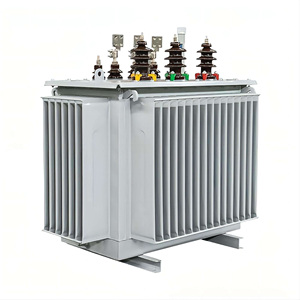
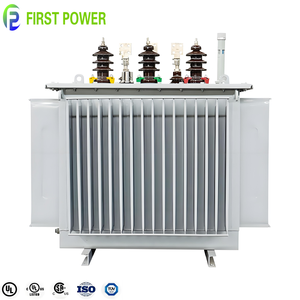
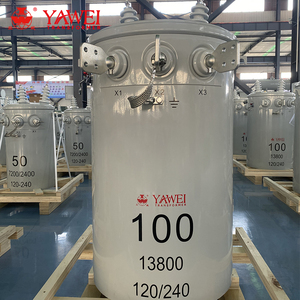
Whether manufacturing heavy-duty ONAN/ONAF oil-cooled transformers, custom cast resin dry-type distribution units, ferroresonant constant voltage transformers (CVT), or high-linearity detuned filter reactors up to 1000 KVAR—every unit undergoes 100% routine testing prior to dispatch. Routine testing encompasses winding resistance, voltage ratio, phase displacement, short-circuit impedance, load loss measurement, separate-source AC withstand voltage, and induced overvoltage testing.
5. Comprehensive B2B Procurement & Technical FAQ
To assist procurement managers, electrical design consultants, and system integrators in specifying the optimal detuned reactor configuration, our engineering team answers key practical questions below:
Q1: Why is a detuned reactor required in a power factor correction (PFC) capacitor bank?
Without a detuned reactor, PFC capacitors form a parallel resonant circuit with the upstream power transformer. When non-linear loads inject harmonic currents near this resonant frequency, the current amplifies drastically. This causes extreme voltage distortion, capacitor overheating, dielectric breakdown, fuse blowing, and circuit breaker tripping. The detuned reactor lowers the system resonant frequency below the $5^{\text{th}}$ harmonic, turning the capacitor bank inductive at harmonic frequencies and eliminating resonance risk.
Q2: How do I select between a 5.67%, 7%, and 14% detuned reactor?
Select $p = 7\%$ ($f_r = 189\text{ Hz}$) for standard industrial networks dominated by 3-phase non-linear loads like 6-pulse VFDs, rectifiers, and industrial drives ($5^{\text{th}}$ and $7^{\text{th}}$ harmonics). Select $p = 5.67\%$ ($f_r = 210\text{ Hz}$) when higher fundamental voltage output is desired under moderate $5^{\text{th}}$ harmonic levels. Select $p = 14\%$ ($f_r = 134\text{ Hz}$) when single-phase non-linear loads cause severe $3^{\text{rd}}$ harmonic currents (150 Hz) or neutral conductor overload.
Q3: What voltage rating should be specified for capacitors connected with a 7% detuned reactor?
A 7% detuned reactor increases the voltage across the capacitor terminal by approximately 7.5% under fundamental frequency operation ($V_C = V_{\text{grid}} / (1 - 0.07)$). On a standard 400V 50Hz grid, the continuous voltage across the capacitor reaches ~430V. To ensure thermal stability and dielectric longevity, capacitors connected to a 7% reactor MUST be rated for at least 440V to 480V continuous operating voltage.
Q4: What standards govern CE certification for detuned reactors?
CE certification for detuned reactors requires strict compliance with EN 60076-6 / IEC 60076-6 (Reactors), EN 61558-2-20 (Small reactors), and the European Low Voltage Directive 2014/35/EU. These standards mandate rigorous testing for thermal rise limits, harmonic current overload tolerance ($I_{\text{rms}} = 1.35 \times I_n$), short-circuit strength, and dielectric insulation integrity.
Q5: What is the significance of the Linearity Current Rating ($I_{\text{lin}}$)?
The linearity current ($I_{\text{lin}}$) is the current limit up to which the reactor's inductance remains linear ($L \ge 0.95 L_n$). If heavy system harmonics or grid overvoltages push the current past $I_{\text{lin}}$, an inferior core will enter magnetic saturation, causing inductance to drop precipitously. CE certified detuned reactors manufactured by Chetan Electric guarantee high linearity up to 1.8x to 2.0x rated current, ensuring full harmonic protection during worst-case line transients.
Q6: Can detuned reactors be customized for high-altitude or extreme ambient environments?
Yes. Standard reactors are rated for ambient temperatures up to 40°C and altitudes up to 1000m above sea level. For tropical, desert, or high-altitude installations, we offer customized Class H/N Nomex insulated reactors with reinforced VPI epoxy coating, thermal micro-switches, and derated copper density to withstand ambient temperatures up to 55°C and altitudes exceeding 3000m.
Speak directly with senior transformer and power quality specialists. We deliver customized CE certified detuned reactors and distribution transformers with rapid lead times and full CPRI certification compliance.