
Explore our factory-prefabricated, type-tested outdoor compact substations engineered for 10kV to 36kV distribution networks, municipal infrastructure, and temporary site power demands.
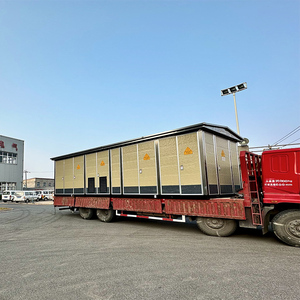
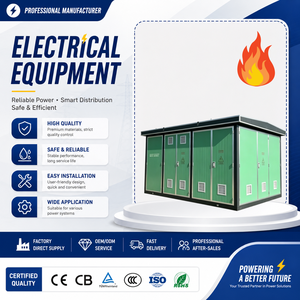
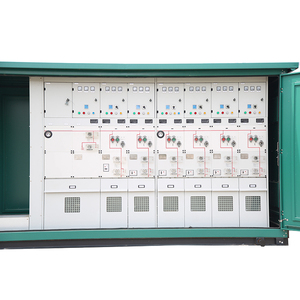
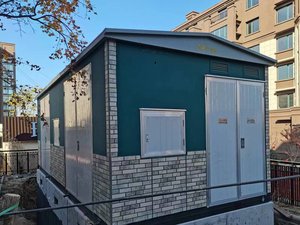
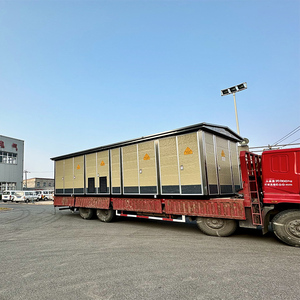
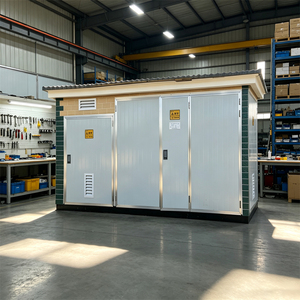
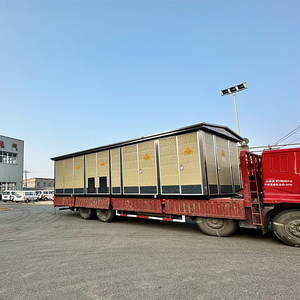
In the rapidly evolving landscape of global power distribution, the demand for CE Certified Power Substations has shifted from traditional civil-engineered brick-and-mortar installations to modular, factory-prefabricated outdoor compact substations. Modern industrial complexes, renewable energy farms, urban infrastructure, and utility networks require rapid-deployment grid solutions that combine high-voltage primary switchgear, power transformers, and low-voltage distribution panels into a single, environmentally isolated enclosure.
Compliance with European Conformity (CE) standards—specifically under IEC 62271-202 for high-voltage pre-assembled substations and relevant Low Voltage (LVD) and Electromagnetic Compatibility (EMC) directives—guarantees that prefabricated substations withstand internal arc faults, thermal stress under continuous peak loads, and severe environmental atmospheric conditions (such as C5-M marine corrosion profiles).
As electrical infrastructure transitions toward smart grids and decentralized renewable integration, sourcing managers and power engineers must evaluate suppliers based on total cost of ownership (TCO), short-circuit withstand capabilities, dielectric thermal insulation classes, and long-term modular upgradability.
Backed by over three decades of high-voltage manufacturing heritage established in 1994, our engineering facility specializes in custom-designed power transformers, distribution substations, dry-type units, and special application transformers built to rigorous global benchmarks.
Our state-of-the-art production facility incorporates precision winding machinery, vacuum pressure impregnation (VPI) units, oil purification plants, and fully automated high-voltage test bays.
Understanding global supply chain shifts, sustainability mandates, and technical specifications for next-generation substation procurement.
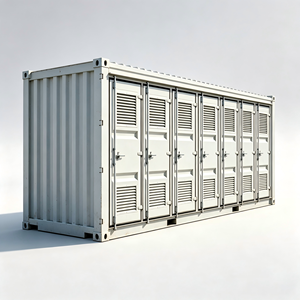
Global buyers are transitioning away from field-erected substations to 20ft/40ft ISO containerized mobile substations. These units allow rapid deployment for temporary site power, mining operations, and emergency grid recovery, yielding up to 60% lower field labor costs.
Driven by stringent EU fluorinated greenhouse gas regulations, CE certified substations increasingly utilize SF6 alternative gases (such as dry air or fluoronitril mixtures) and natural ester biodegradable transformer oils, improving fire safety and environmental compliance.
Modern RFQ requirements specify digital substation readiness with IEC 61850 protocol support, real-time Online Dissolved Gas Analysis (DGA), fiber-optic winding temperature sensors, and automated load tap changing (OLTC) control panels.
Safety engineering in modern CE certified compact substations prioritizes operator protection during catastrophic internal faults. Advanced enclosures feature pressure relief flaps, directional arc gas ducting, and reinforced double-layer metallic housings tested for IAC-AB 20kA 1s ratings. This prevents structural rupture and ensures personnel safety even in tight urban environments.
Integrating high-capacity transformers into confined prefabricated shells demands sophisticated thermal modeling. Engineers employ Computational Fluid Dynamics (CFD) to design labyrinthine ventilation louvers that maximize natural convective cooling (ONAN) while maintaining IP54 ingress protection against wind-blown dust, torrential rain, and vermin entry.
Global procurement strategies require understanding structural variations. European-style box substations utilize a walk-in or non-walk-in design with distinct insulated compartments for High Voltage Switchgear (RMU), Transformer, and Low Voltage Switchboard. In contrast, American-style pad-mounted substations feature a dead-front, tamper-resistant layout where transformer coils and high-voltage switches share a integrated oil compartment, delivering an ultra-compact footprint for subterranean distributions.
| Substation Architecture | Voltage Range | Footprint & Enclosure | Cooling Options | Primary Applications |
|---|---|---|---|---|
| European Box Substation (YBW) | 12kV – 36kV | Triple-compartment walk-in shell (GRC or Metallic) | ONAN / ONAF Forced Air | Urban grids, Commercial complexes, Industrial parks |
| American Pad-Mounted (YBM) | 10kV – 24kV | Dead-front cabinet, ultra-low profile | Self-Cooled Mineral / Synthetic Ester Oil | Residential subdivisions, Commercial plazas, Underground feeds |
| Containerized Mobile Substation | 6.6kV – 33kV | ISO 20ft / 40ft Heavy-duty steel container | Forced Air + Heat Exchanger | Mining sites, Temporary construction power, Emergency backup |
| Underground Prefabricated Unit | 10kV – 24kV | Submersible vault-rated waterproof casing | Submersible sealed ONAN | Dense metro centers, Historical districts, Green-space parks |
Expert technical insights addressing common queries encountered during engineering evaluation and supplier auditing.
CE certification requires rigorous type-testing in accordance with IEC 62271-202. Key mandatory tests include: 1) Temperature rise testing inside the enclosure for both transformer and switchgear components; 2) Internal arc fault verification (IAC test) to confirm structural integrity during a 20kA fault; 3) Mechanical operation tests on doors and interlocking mechanisms; 4) Degree of protection verification (IP ratings for water and dust ingress); and 5) Dielectric high-voltage impulse withstand tests.
Oil-immersed transformers (ONAN) offer superior thermal dissipation, higher kVA ratings in smaller physical volumes, and lower initial capital costs, making them ideal for outdoor installations. Dry-type (Cast Resin or VPI) transformers eliminate liquid leak risks, exhibit self-extinguishing fire performance (F1 rating), and are preferred for environmental sensitivity zones, indoor underground substations, or high-density commercial buildings.
For coastal installations exposed to high salt spray (C4 to C5-M atmospheric corrosion classifications), our manufacturing process incorporates hot-dip galvanized steel frames, aluminum-zinc alloy plates, or GRC (Glassfiber Reinforced Concrete) enclosures. Coating protocols include electrostatic zinc-rich primer followed by polyurethane powder coating exceeding 120 microns in thickness, alongside stainless steel 316 hardware and hermetically sealed transformer tanks.
Yes. Our prefabricated substations can be fully integrated with On-Load Tap Changers (OLTC) paired with Remote Tap Changer Cubicles (RTCC) and Automatic Voltage Relays (AVR). This allows real-time dynamic voltage stabilization under fluctuating industrial loads without interrupting downstream power supply, seamlessly connecting to SCADA networks via Modbus or IEC 60870-5-104 protocols.
Standard prefabricated designs are manufactured, assembled, and factory-tested (FAT) within 4 to 6 weeks. Containerized and customized units with special switchgear configurations require approximately 6 to 8 weeks. Modules are shipped pre-assembled and pre-wired in ISO-compliant skid bases, enabling plug-and-play installation upon arrival on site.
Every shipped unit includes a complete technical dossier comprising Factory Acceptance Test (FAT) routine reports, CPRI Type Test Certificates, CE Declarations of Conformity, dimensional GA drawings, electrical schematic diagrams, operation & maintenance manuals, and transformer oil dielectric breakdown test records.
Consult with our high-voltage application engineers to receive customized CAD drawings, full technical specifications, and competitive factory-direct quotations.