
Fully compliant with IEC 60076, IEEE C57, ANSI, and IS 2026 / IS 1180 standards. Built with high-permeability CRGO cores and Class A/F insulation for low total cost of ownership.
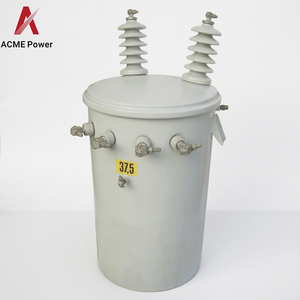
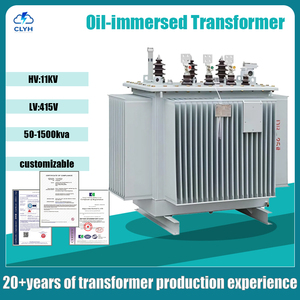
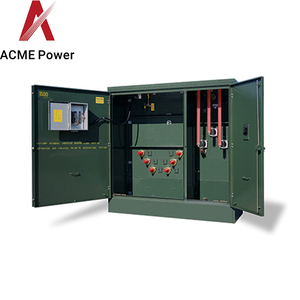
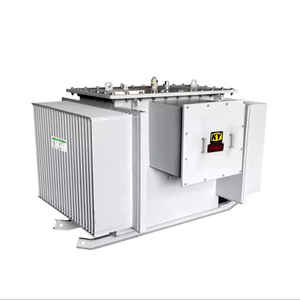
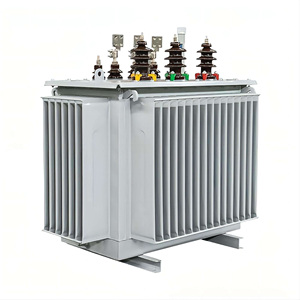
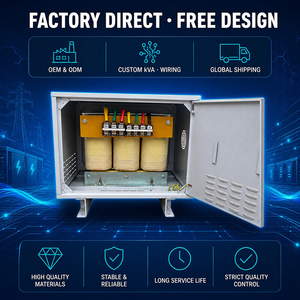
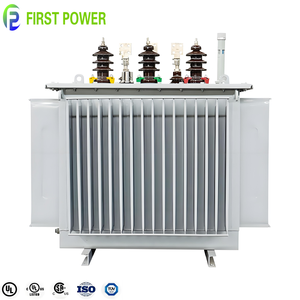
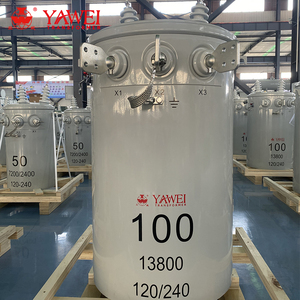
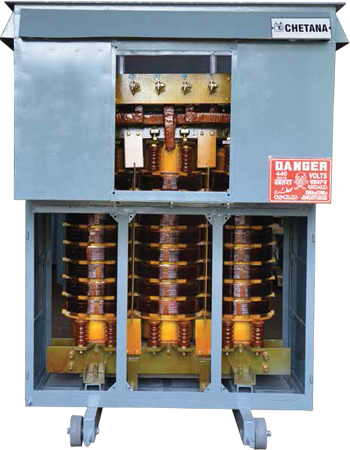
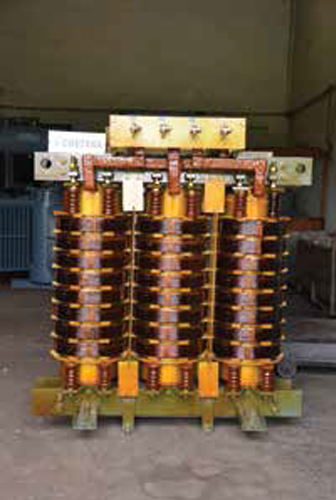
Established in 1994, our ISO 9001 certified manufacturing facility represents the pinnacle of modern electrical equipment engineering. With over three decades of continuous R&D and specialized production, we export high-performance substation transformers, dry-type distribution transformers, and special-duty rectifier transformers to over 600 utility, industrial, and infrastructure clients across North America, Latin America, Southeast Asia, the Middle East, and Africa.
Every substation transformer unit is manufactured under rigorous ISO quality control frameworks. Our designs undergo full routine, type, and special testing at independent national labs such as the Central Power Research Institute (CPRI), validating full compliance with IS 2026, IS 1180, IS 11171, IEC 60076, and IEEE C57 standards.
An authoritative technical analysis of magnetic flux control, step-lap miter core stacking, dielectric fluid dynamics, and short-circuit thermal endurance.
The core of a substation distribution transformer is the primary determinant of continuous operational efficiency. China’s leading substation transformer factories utilize high-permeability, domain-refined Cold-Rolled Grain-Oriented (CRGO) silicon steel (grades such as 23ZDMH, 23ZH90, and M4) alongside ultra-low-loss Amorphous Metal Alloys (Fe-Si-B).
By implementing a 7-stage step-lap miter joint core stacking technology with a 45-degree angle cut, the magnetic flux continuity across core joints is optimized, drastically suppressing eddy current loops and reducing magnetostriction noise. In comparison to conventional butt-joint core assemblies, step-lap CRGO configurations yield an 18% to 25% reduction in No-Load Losses ($P_0$) and lower the excitation current by up to 40%.
| Core Metallurgy Type | Saturation Flux Density ($B_s$) | Typical Core Loss (W/kg @ 1.5T 50Hz) | No-Load Loss Reduction | Recommended Application Scope |
|---|---|---|---|---|
| Standard CRGO (M4 / 0.27mm) | 2.03 Tesla | 1.05 - 1.15 W/kg | Baseline Standard | Commercial & Standard Industrial Substations |
| High-Permeability CRGO (23ZDMH) | 2.03 Tesla | 0.80 - 0.88 W/kg | 15% - 22% Lower Loss | High-Duty Utility & Heavy Industrial Step-Down |
| Amorphous Alloy (Fe-Si-B) | 1.56 Tesla | 0.20 - 0.28 W/kg | 65% - 75% Lower Loss | Renewable Solar/Wind Farms & Eco-Grid Projects |
Substation power transformers operating in utility networks are subjected to transient overvoltages, switching surges, and severe electromechanical short-circuit forces. High-reliability factories employ 99.99% pure electrolytic oxygen-free copper conductors insulated with high-density thermally upgraded Nomex paper or Class H enamel resin.
To ensure structural integrity under short-circuit radial expansion and axial compression forces (which can reach several tons per square inch during grid faults), windings are designed using continuous disc or transposed conductor (CTC) layouts with pre-compressed pressboard key spacers.
Cooling efficiency and dielectric insulation integrity dictate a transformer’s operating lifespan. Standard oil-immersed transformers use high-grade uninhibited or inhibited mineral oil meeting IEC 60296 Class I/II standards, providing dielectric breakdown voltages exceeding 60kV (post-degassing).
For indoor substations, high-density urban centers, and eco-sensitive utility sites, top Chinese exporters provide alternative Natural Synthetic Ester Fluids (such as FR3). Ester fluids feature a fire point exceeding 300°C (K-class dielectric fluid per IEC 61039), enabling self-extinguishing safety properties while being 99% readily biodegradable within 28 days.
Why low upfront purchase price is a trap: Quantitative loss capitalization math for utility substations over a 30-year lifecycle.
When sourcing substation power transformers from global manufacturers, smart procurement teams evaluate Total Cost of Ownership rather than simple CapEx. Because transformers operate continuously 24/7 for 30 to 40 years, the cost of electrical energy dissipated as heat (No-Load core losses $P_0$ and Load copper losses $P_k$) frequently exceeds the initial purchase price within 5 to 7 years.
TCO = C_{purchase} + (A \times P_0) + (B \times P_k) + C_{maintenance} - S_{salvage}
By upgrading from standard S9-series core geometry to high-efficiency S11-M or S13-M step-lap cores engineered by top China factories, an industrial facility operating a 1500kVA transformer saves approximately 14,000 kWh annually in core losses alone. Over a 25-year service period at $0.12/kWh, this yields net operational savings of $42,000 USD per transformer unit.
How digital twins, online DGA sensors, smart grid integration, and EU Tier 2 eco-design rules are redefining global procurement standards.
Modern substations are rapidly migrating toward digital monitoring. Top factories integrate multi-gas Online Dissolved Gas Analysis (DGA) sensors, fiber-optic real-time hotspot winding sensors, and RS485/Modbus telemetry modules directly into the control cubicle, enabling predictive maintenance before dielectric failure occurs.
Strict environmental policies (such as EU Tier 2 EcoDesign EU 2019/1783 and US DOE 2016 efficiency standard) require reduced peak load losses and zero hazardous chemical discharge. Chinese manufacturing lines utilize non-toxic vegetable ester oils and 100% recyclable silicon cores to meet global decarbonization directives.
The global surge in solar PV farms and wind energy plants requires specialized multi-winding step-up transformers capable of handling high DC bias, high-frequency harmonics from central inverters, and cyclic dynamic loading without insulation degradation.
Every transformer leaving the production floor undergoes stringent zero-defect factory testing per IEC 60076 specifications.
| Test Category | Standard Testing Protocol | Technical Acceptance Criteria |
|---|---|---|
| Routine Test (100% Units) | Winding Resistance Measurement | Resistance balance between phases within 2% deviation |
| Routine Test (100% Units) | Voltage Ratio & Vector Group Verification | Ratio tolerance within ±0.5% of nameplate rating |
| Routine Test (100% Units) | No-Load Loss ($P_0$) & Load Loss ($P_k$) Measurement | Guaranteed losses verified via digital power analyzer per IEC 60076-1 |
| Routine Test (100% Units) | Applied Voltage & Induced Overvoltage Withstand | Zero partial discharge or dielectric breakdown at 2x rated frequency |
| Type Test (Sample Basis) | Temperature Rise Test (ONAN/ONAF) | Top oil rise < 60K, winding rise < 65K at full load rating |
| Type Test (CPRI Certified) | Lightning Impulse Voltage Withstand (BIL) | Full wave 1.2/50µs impulse test (e.g. 75kV for 11kV, 170kV for 33kV) |
| Special Test (On Request) | Short-Circuit Mechanical Dynamic Withstand | Physical structural integrity verified at CPRI high-power test laboratory |
Clear engineering answers to common procurement, compliance, shipping, and customization questions asked by international buyers.
Standard distribution transformers (50kVA to 1500kVA) are produced within 15 to 25 calendar days. Custom-engineered power transformers up to 5000kVA or units with specialized On-Load Tap Changers (OLTC) generally require 30 to 45 days including complete Routine and FAT testing.
Yes. We regularly export single-phase and three-phase pole-mounted and pad-mounted transformers compliant with ANSI C57.12 and IEEE standards, supporting dual dual-voltage inputs (e.g., 13.8kV to 240V/480V or 6.3kV to 110V) with 60Hz grid frequency requirements.
ONAN (Oil Natural Air Natural) relies on natural oil convection and radiator airflow. ONAF (Oil Natural Air Forced) adds automated external cooling fans to boost heat dissipation, allowing the transformer to handle up to 25% to 33% overload capacity continuously without exceeding temperature rise limits.
Tanks destined for marine or high-humidity environments undergo grit blasting to Sa 2.5 cleanliness, followed by an ISO 12944 compliant multi-layer paint system (epoxy zinc-rich primer, intermediate polyurethane coating, and aliphatic topcoat) with total dry film thickness (DFT) exceeding 180–240 microns for C4/C5-M atmospheric durability.
Transformers are shipped sealed inside heavy-duty seaworthy wooden crates or secured directly onto flat-rack containers with steel tie-down chains. Nitrogen gas cushioning is maintained in large power transformer main tanks during transit to prevent internal oxidation and moisture ingress.
Yes. We provide complete technical documentation, remote video commissioning guidance, and on-site engineering supervision for major substation projects through our qualified international field service network.
Need customized technical drawings, factory acceptance test reports, or immediate FOB/CIF pricing for your power project? Our technical engineering team is ready to assist you 24/7.
Contact Us