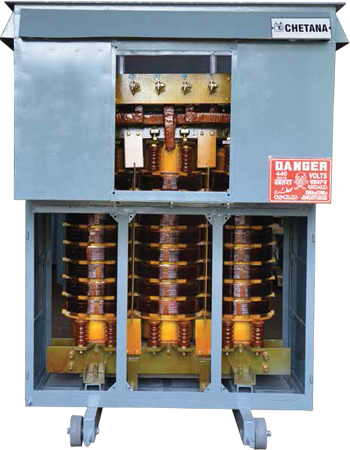
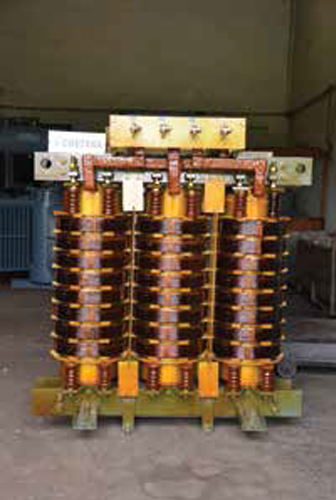
China Best Tap Changer Factories & Factory
Industry Whitepaper: Strategic Procurement Guide for On-Load Tap Changers (OLTC), Off-Circuit Tap Changers (OCTC), and Advanced Power Distribution Transformers
Featured Industrial Transformers & Tap Changer Solutions
Explore our engineering portfolio of high-efficiency oil-immersed, dry-type, and pole-mounted distribution transformers built to IEC 60076, IS 2026, IS 1180, and IEEE standards.
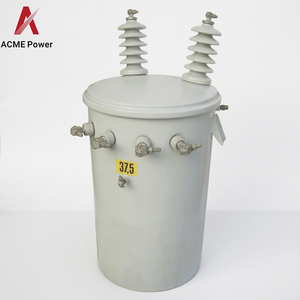
Latin America Compatible 25kVA Single Phase Pole Mounted Transformer 6.3kV to 110V
Key Specs: Single Phase, 6.3kV/110V, High Reliability, Overhead Pole-Mounted, IEEE/IEC Compliant.
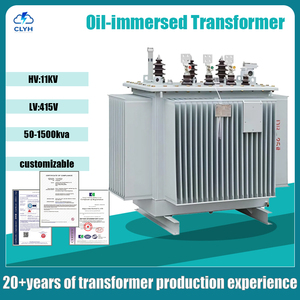
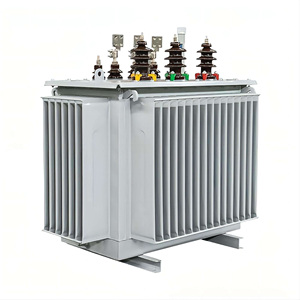
11kV to 415V 50kVA-1500kVA Three Phase Oil Immersed Step Down Transformer
Key Specs: 11kV/415V, ONAN Cooling, Low Loss Copper Winding, Industrial Step Down Power Unit.
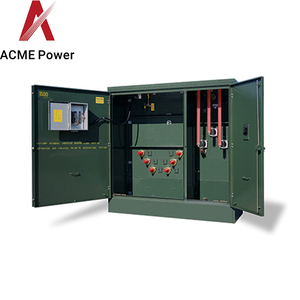
1500kVA Three Phase Pad Mounted Transformer ONAN/ONAF Cooling Dyn11
Key Specs: 1500kVA, Dyn11 Vector Group, ONAN/ONAF, High Efficiency Substation Unit.
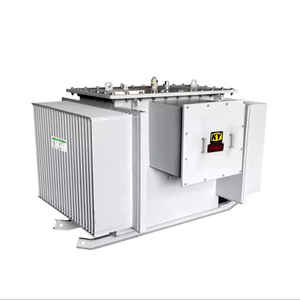
S11-M 80kVA Three Phase Hermetically Sealed Oil Immersed Transformer 10kV/0.4kV
Key Specs: S11-M Energy Saving, Hermetically Sealed, 10kV to 0.4kV, Maintenance Free.
200kVA - 800kVA Multi-Voltage Distribution Transformer (10kV/11kV/20kV/33kV to 0.4kV)
Key Specs: Multi-voltage Tappings, Custom Off-Load / On-Load Tap Changer, High Short-Circuit Strength.
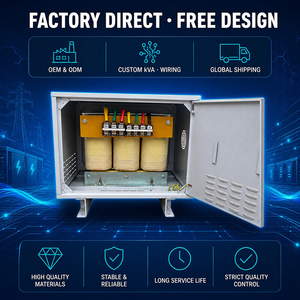
20kVA - 50kVA Three Phase Step Down Transformer (200V/400V/415V/11kV Options)
Key Specs: Compact Footprint, Low Noise Operation, Optimized Temperature Rise, Industrial Grade.
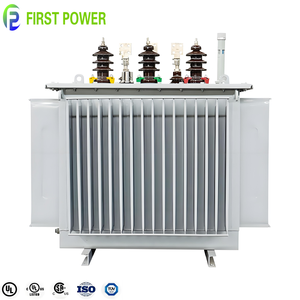
50kVA - 500kVA 20kV Medium Voltage Oil Immersed Power Distribution Transformer
Key Specs: 20kV Grid Compatible, Advanced Tap Changer Integration, CPRI & ISO Certified Quality.
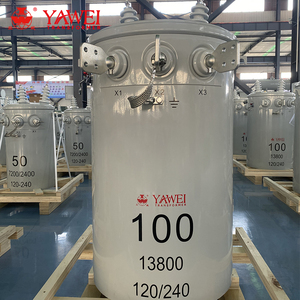
13.8kV 240V/480V 100kVA Oil Immersed Single Phase Pole Mounted Transformer
Key Specs: 13.8kV Input, Dual Secondary 240/480V, Mineral Oil Insulated, Rural Grid Optimized.
30+
Years Engineering Heritage
600+
Global Enterprise Clients
5000kVA
Max Transformer Rating (33kV)
100%
CPRI / ISO 9001 Compliant
Executive Summary: The Evolution of Tap Changer Technology & China's Manufacturing Leadership
Voltage stability is the cornerstone of modern electrical grid resilience and industrial power distribution. At the heart of dynamic voltage regulation stands the Tap Changer—a sophisticated electromechanical device designed to alter the winding ratio of transformers without interrupting current flow (On-Load Tap Changer, OLTC) or during scheduled de-energized states (Off-Circuit Tap Changer, OCTC). As renewable energy integration (solar PV, wind farms, and microgrids) introduces unprecedented voltage fluctuations into utility networks, the demand for high-reliability, low-maintenance tap changers has grown exponentially worldwide.
Today, sourcing from China's best tap changer factories and transformer manufacturing hubs represents a strategic imperative for global EPC contractors, power utilities, and industrial conglomerates. Over the past three decades, China's power equipment ecosystem has transitioned from high-volume assembly to state-of-the-art technological innovation, offering ultra-reliable vacuum tap changers, automated voltage relays (AVR), remote tap changer cubicles (RTCC), and eco-friendly distribution transformers engineered to rigorous international standards including IEC 60214, IEC 60076, IEEE C57.12, and IS 2026 / IS 1180 / IS 11171.
Information Gain Insight: Sourcing directly from verified Chinese OEM manufacturers reduces capital expenditure (CapEx) by 25% to 40% compared to traditional European suppliers, while delivering equivalent or superior mechanical endurance (up to 1,500,000 switching operations for vacuum OLTCs) and CPRI/KEMA certified short-circuit performance.
Core Capabilities of Premier Chinese Factories
- Precision Machining & Assembly: Dust-free cleanrooms for vacuum interrupter alignment and contact arm contact resistance testing.
- Advanced Metallurgy: Silver-cadmium oxide and tungsten-copper contacts designed to minimize arcing erosion.
- Rigorous Quality Testing: In-house impulse voltage test rigs up to 150kV, partial discharge measurement, and oil dielectric breakdown analysis.
- Digitalization & Smart Grid Integration: Modbus/IEC 61850 protocol compliance for SCADA remote monitoring.
Global Procurement Trends: Sourcing Tap Changers & Transformers (2025–2030)
The global power transformer and tap changer market is undergoing a seismic shift driven by decarbonization, grid modernization, and industrial electrification. Procurement directors and chief electrical engineers must align their procurement strategies with four critical industry trends:
1. Shift from Diverter Switch Oil-Arcing to Vacuum Tap Changers
Traditional oil-immersed OLTCs experience contact degradation and oil carbonization due to electrical arcing during tap transitions. Advanced Chinese factories are rapidly migrating toward Vacuum Interrupter Technology. In vacuum OLTCs, the electrical arc is completely contained within hermetically sealed vacuum bottles, eliminating oil contamination, extending maintenance intervals from 50,000 operations to 300,000 operations, and dramatically reducing lifecycle operating costs (OpEx).
2. Smart Grid Integration & IoT-Enabled RTCC Panels
Modern power distribution networks demand real-time visibility. Next-generation Remote Tap Changer Cubicles (RTCC) integrated with Automatic Voltage Relays (AVR) feature microprocessors capable of real-time voltage monitoring, tap position tracking, transformer oil temperature logging, and predictive maintenance diagnostics. Leading Chinese manufacturers incorporate RS485, Ethernet, and IEC 61850 communication interfaces to seamlessly connect with utility SCADA control rooms.
3. Customization for Renewable Energy & Industrial Duty
Off-the-shelf transformers no longer suffice for solar power plants, arc furnace operations, or heavy industrial rectifier plants. Solar farms experience severe voltage ramps during cloud cover, requiring high-frequency tapping without mechanical failure. Top factories specialize in custom-engineered OLTCs designed to handle up to 100+ tap changes per day under continuous load without thermal runaway.
Technical Architecture: Comparative Analysis of Tap Changer Mechanisms
Understanding the mechanical and electrical nuances between different tap-changing technologies is vital when specifying transformer parameters for procurement tenders. Below is an engineering comparison matrix evaluating key operational metrics across major tap changer configurations:
| Technical Parameter |
On-Load Tap Changer (Vacuum Type) |
On-Load Tap Changer (Oil-Arcing Type) |
Off-Circuit Tap Changer (OCTC) |
| Operating Condition |
Full Load (Energized Grid) |
Full Load (Energized Grid) |
De-Energized (No Load / Isolated) |
| Arc Quenching Medium |
Hermetic Vacuum Interrupter |
Transformer Mineral Oil |
None (No Switching Under Load) |
| Electrical Life (Operations) |
300,000 to 600,000 |
50,000 to 100,000 |
5,000 to 10,000 (Mechanical) |
| Maintenance Interval |
Every 300,000 switching operations |
Every 20,000 to 50,000 operations |
Routine annual inspection |
| Oil Contamination Risk |
Zero (Oil remains clean) |
High (Carbon soot accumulation) |
Zero |
| Voltage Stepping Range |
±10% to ±20% (17 to 33 Taps) |
±5% to ±15% (7 to 17 Taps) |
±2.5%, ±5% (3 to 5 Steps) |
| Primary Target Application |
Substations, Solar/Wind Farms, Steel Mills |
Regional Power Utilities, Grid Substations |
Standard Commercial Distribution Transformers |
Winding Integration & Vector Group Optimization
When custom-manufacturing oil-cooled or dry-type transformers (range up to 5000kVA 33kV), Chinese engineers pay meticulous attention to tap position positioning within the high-voltage (HV) winding layout. Positioned typically at the neutral point of star-connected windings or in coarse-fine tap combinations, optimal winding geometry minimizes stray flux losses, reduces electromagnetic stress during short-circuit faults, and prevents voltage distortion across phase angle shifts (e.g., Dyn11, Dyn5, Ynd11 vector groups).
Corporate Engineering Advantage & Global Manufacturing Credentials
With an engineering legacy spanning over 30 years (established 1994), our manufacturing enterprise has stood as a pioneer in power equipment innovation. As an ISO 9001 certified transformer & tap changer manufacturer, we provide turnkey solutions ranging from oil-cooled power transformers, dry-type distribution transformers, furnace transformers, and rectifier equipment to high-voltage testing units up to 150kV.
Why 600+ Global Enterprise Clients Trust Our Factory:
- CPRI & KEMA Type-Tested Rigor: Our transformers and tap changer assemblies undergo stringent type testing at the Central Power Research Institute (CPRI), verifying short-circuit withstand capability, temperature rise under peak overload, lightning impulse endurance, and acoustic sound level compliance.
- Strict Adherence to International Standards: Fully compliant with IS 2026 / IS 1180 / IS 11171 as well as IEC 60076 and IEEE standards, ensuring seamless grid synchronization across North America, Latin America, Europe, Africa, Middle East, and Asia-Pacific.
- End-to-End Manufacturing Integration: From in-house core slitting (high-grade CRGO steel) and vacuum pressure impregnation (VPI) of coils to precision CNC machining of tap changer contact switches and RTCC control cabinets.
- Proven Deployment Track Record: Trusted by premier infrastructure developers, defense organizations, space agencies (ISRO), heavy industry plants, and commercial real estate giants including Prestige Group, Sobha Developers, Brigade Group, BEML, and BEL.
Procurement FAQ: Critical Questions Answered for Industrial Buyers
Below are detailed engineering and commercial solutions to common inquiries encountered during tap changer and transformer procurement.
Q1
What is the primary difference between On-Load Tap Changers (OLTC) and Off-Circuit Tap Changers (OCTC)?
An On-Load Tap Changer (OLTC) enables dynamic voltage regulation while the transformer is fully energized and carrying load current. It uses transition resistors or vacuum interrupters to prevent short-circuiting between adjacent winding taps during switching. An Off-Circuit Tap Changer (OCTC), also called a De-Energized Tap Changer (DETC), requires the transformer to be isolated from the electrical grid prior to adjusting the tap position. OLTCs are essential for critical grid substations and industrial facilities, whereas OCTCs are cost-effective for standard distribution lines where voltage adjustments are infrequent.
Q2
Why should procurement teams prioritize Vacuum OLTC technology over traditional Oil-Arcing OLTCs?
Vacuum OLTC technology eliminates electric arcing within the transformer insulating oil. In traditional OLTCs, switching arcs break down mineral oil into carbon particles and dissolved gases, requiring frequent oil filtration, contact replacement, and downtime. In vacuum OLTCs, switching occurs inside hermetically sealed vacuum bottles. This extends mechanical life to over 300,000 operations, preserves oil cleanliness, prevents dielectric degradation, and delivers up to a 60% reduction in lifetime maintenance costs.
Q3
How does an Automatic Voltage Relay (AVR) work in conjunction with a Remote Tap Changer Cubicle (RTCC)?
The AVR acts as the intelligent brain of the voltage regulation system. It continuously measures secondary busbar voltage against a pre-programmed setpoint. When voltage deviates beyond a set deadband for a specified delay time, the AVR sends a step-up or step-down signal to the motor drive unit (MDU) inside the RTCC cabinet. The RTCC executes the mechanical movement of the tap changer and feeds back tap position indication to both local digital displays and central SCADA systems via Modbus or IEC 61850 protocols.
Q4
What quality compliance certifications should I demand when sourcing tap changers from China?
Industrial buyers should verify that the manufacturer holds ISO 9001 quality management certification, ISO 14001 environmental certification, and ISO 45001 safety certification. Product-level compliance must include short-circuit withstand type-test reports from accredited independent laboratories (such as CPRI, KEMA, CESI, or CNAS), temperature rise test records, lightning impulse test reports, mechanical endurance test logs (IEC 60214-1), and routine routine test certificates per IEC 60076 / IS 2026.
Q5
Can Chinese tap changer factories custom-design units for high-altitude or severe environmental conditions?
Yes. Premier Chinese factories customize tap changers and transformers for high altitudes (above 2000m requiring increased creepage distance and external insulation clearances), extreme ambient temperatures (-40°C to +55°C), corrosive coastal environments (C4/C5 marine anti-corrosion paint systems), and high-seismic active zones. Winding insulation, tank reinforcement, and gasket materials (FKM/viton) are specified accordingly.
Q6
What is the standard manufacturing lead time for custom OLTC distribution transformers?
Standard manufacturing lead times for customized distribution transformers with integrated OLTC (ratings from 250kVA up to 5000kVA, 11kV to 33kV) typically range from 4 to 8 weeks, including complete factory acceptance testing (FAT). Rapid-ship models for standard distribution voltages can often be dispatched within 2 to 3 weeks upon drawing approval.
Partner with China's Leading Tap Changer & Transformer Factory
Whether you require custom-engineered ONAN/ONAF oil-immersed transformers, dry-type cast resin units, vacuum OLTC retrofits, or high-voltage testing transformers up to 150kV—our expert engineering team is ready to assist your project.