
Precision-engineered oil-immersed, dry-type, and instrument power transformers manufactured in compliance with international standard specs (IEC 61869, IEC 60076, IEEE C57.13, IS 2026 / IS 1180).
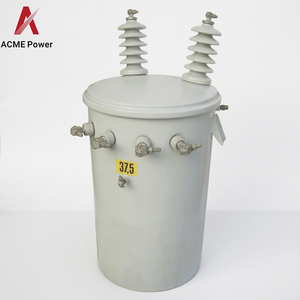
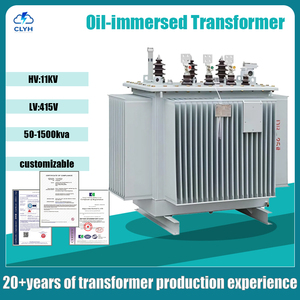
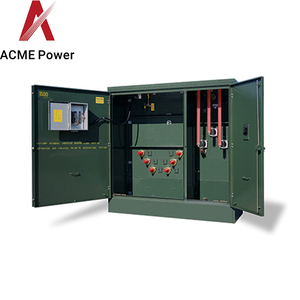
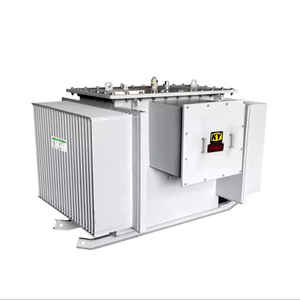
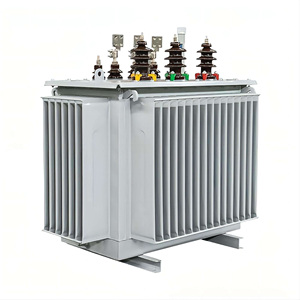
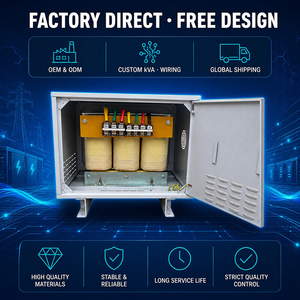
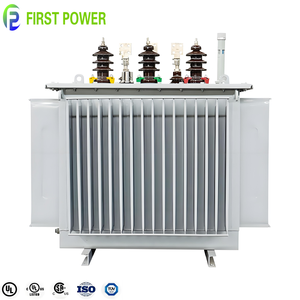
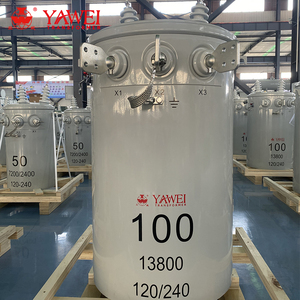
In modern high-voltage electrical grids, industrial automation infrastructure, and renewable energy integration projects, Current Transformers (CTs) and step-down distribution transformers serve as critical components for measurement precision, system protection, and energy management. As global utilities pivot toward smart grid telemetry and ultra-high-efficiency distribution networks, engineering decision-makers and global procurement directors require rigorous technical clarity when evaluating OEM manufacturing partners in China and Asia-Pacific markets.
This whitepaper synthesizes technical specifications, quality control frameworks (including Central Power Research Institute / CPRI verification and ISO 9001 quality management systems), and structural procurement benchmarks. From low-voltage metering instrument transformers to heavy-duty 33kV 5000 kVA ONAN/ONAF oil-immersed transformers, our core objective is to deliver actionable information gain to power utility engineers, procurement specialists, and EPC contractors worldwide.
Our current and power transformer series are fully type-tested by accredited laboratories including CPRI (Central Power Research Institute), verifying short-circuit withstand capabilities, lightning impulse endurance up to 170kV BIL, and temperature rise metrics under continuous overload operation.
Tailored winding ratios, dual secondary cores for simultaneous metering (Class 0.2S / 0.5S) and protection (Class 5P20 / 10P20), specialized core materials (high-permeability cold-rolled grain-oriented silicon steel & amorphous alloys), and custom vector configurations (Dyn11, Yyn0, YNd11).
Deep experience supplying real estate majors, national power utilities, defense installations, and heavy industrial facilities (including Prestige Group, Sobha, ISRO, BEL, BEML) across Latin America, Southeast Asia, the Middle East, and Africa with prompt delivery lead times.
To assist power engineers and procurement managers in drafting accurate RFQ parameters, the following data matrix outlines standard technical benchmarks across major categories:
| Parameter / Type | Instrument CTs (Low/Medium Voltage) | Oil-Immersed Distribution (S11-M Series) | Pad-Mounted Transformers (IEEE/ANSI) | Dry-Type Cast Resin Transformers |
|---|---|---|---|---|
| Voltage Rating | 0.66kV up to 33kV | 6.3kV, 10kV, 11kV, 20kV, 33kV | 13.8kV, 24.9kV, 34.5kV | Up to 11kV / 33kV indoor |
| Power Rating / Burden | 5VA to 50VA per core | 25kVA to 5000kVA | 500kVA to 2500kVA | 100kVA to 3150kVA |
| Accuracy Class / Vector Group | Class 0.2S, 0.5, 5P10, 5P20, PX | Dyn11 / Yyn0 | Dyn11 / Loop / Radial Feed | Dyn11 (VPI / Cast Resin) |
| Cooling Mechanism | Air / Epoxy Resin Cast | ONAN / ONAF Mineral or Ester Oil | ONAN Mineral Oil / Bio-fluid | AN / AF (Air Natural / Forced) |
| Insulation Class & BIL | Class B/F, BIL up to 170kV | Class A, BIL 75kV - 170kV | Class A, BIL 95kV - 150kV | Class H (180°C) / F (155°C) |
| Compliance Standards | IEC 61869-1/2, IEEE C57.13 | IEC 60076, IS 2026, IS 1180 | ANSI C57.12.28, IEEE C57.12.00 | IEC 60076-11, IS 11171 |
As international supply chains evolve and decarbonization mandates tighten, global buyers must account for strategic procurement shifts when engaging Chinese current transformer exporters and power equipment manufacturers:
Looking toward the next decade of electrical distribution and instrument transformer engineering, several transformative technologies are transitioning from commercial pilot phases to standard factory deployment:
1. Real-Time Online Dissolved Gas Analysis (DGA) & IoT Condition Monitoring: Modern medium and high-voltage power transformers are increasingly retrofitted with embedded fiber-optic temperature sensors and continuous online DGA sensors. By tracking hydrogen, acetylene, and moisture levels in real-time, predictive maintenance algorithms prevent catastrophic insulation breakdowns and extend asset lifespans by up to 40%.
2. Vacuum Tap Changer Technology for On-Load Tap Changers (OLTC): Traditional oil-switch OLTC systems require frequent contact maintenance due to arcing contamination. The industry-wide migration to vacuum switching technology isolates electrical arcing inside hermetically sealed vacuum interrupters, reducing maintenance intervals from 50,000 operations to over 300,000 operations.
3. Advanced Nanocomposite Solid Insulation: Cast resin dry-type transformers are benefiting from epoxy resins enhanced with nano-silica and alumina particles. These nanocomposites dramatically improve thermal conductivity, dielectric strength, and mechanical toughness, allowing compact indoor substations to operate under extreme partial discharge thresholds (< 5 pC at 1.2 Un).
Below are critical technical questions frequently raised by power engineers, utility auditors, and OEM buyers during technical compliance evaluations:
The "S" designation (e.g., Class 0.2S per IEC 61869-2) specifies high-accuracy performance down to 1% of rated primary current, whereas non-S Class 0.2 CTs are only tested for accuracy down to 5% of rated current. Class 0.2S CTs are mandatory for revenue metering at IPP interconnections, commercial sub-station feeds, and variable load environments where low-current accuracy directly impacts billing precision.
Knee-Point Voltage is the threshold where a 10% increase in secondary voltage results in a 50% increase in magnetizing current. In differential and distance protection schemes, $V_k$ must be calculated to ensure that under maximum symmetrical through-fault current ($I_{f}$), the CT core does not saturate due to secondary lead resistance ($R_l$) and relay burden ($R_b$). Formula: $V_k \ge 2 \cdot I_{f} \cdot (R_ct + R_l + R_b)$.
Dyn11 provides a delta-connected primary winding that traps third-harmonic currents, preventing harmonic distortion from polluting the upstream high-voltage transmission grid. Furthermore, Dyn11 allows full 100% neutral load unbalance on the secondary side without causing severe neutral point displacement, whereas Yyn0 can tolerate maximum neutral imbalances of only 25%.
Rated short-time thermal current ($I_{th}$) defines the maximum RMS primary current a CT can withstand for 1 or 3 seconds without damaging the insulation winding. In high-fault-level industrial plants (e.g., steel mills or chemical complexes), the CT's $I_{th}$ must match or exceed the system's maximum switchgear fault rating (e.g., 31.5kA / 3s or 40kA / 1s) to prevent catastrophic thermal explosion during system short circuits.
Oil-immersed (ONAN) transformers offer superior natural cooling capacity, higher maximum kVA limits (up to 5000kVA+), longer dielectric lifespan in severe outdoors, and lower initial capital outlay. However, they require oil containment pits and fire containment barriers. Dry-type units eliminate fire risk, contain zero toxic fluids, and are ideal for indoor commercial towers or underground installations, but carry a 20-35% higher initial cost and require clean, dust-free airflow.
Every production unit undergoes mandatory routine testing per IEC 60076 / IS 2026: (1) Winding resistance measurement, (2) Voltage ratio and vector group verification, (3) Short-circuit impedance and load loss test, (4) No-load loss and current measurement, (5) Separate-source AC withstand voltage test, (6) Induced overvoltage withstand test, and (7) Partial discharge measurement for dry-type/high-voltage units.
Standard transformer ratings assume a peak ambient temperature of 40°C and a 24-hour average of 30°C. In tropical or desert operating environments (e.g., 50°C ambient), the transformer must either be derated by approximately 1% per degree Celsius above standard limits, or designed with upgraded insulation classes (Class H) and forced air/oil cooling (ONAF/OFAF) to keep top-oil and hot-spot temperature rises within safe boundaries.
Partner with a trusted ISO 9001 certified manufacturer for your high-voltage instrument transformers, single-phase pole-mounted units, pad-mounted substations, and heavy-duty industrial transformers. Our engineering team provides full technical drawing support, type-test certification binders, and direct OEM pricing.