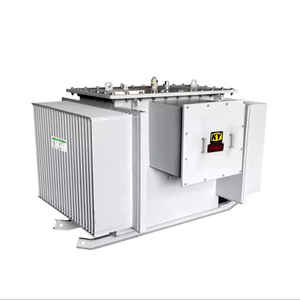
Direct factory-engineered distribution units, custom oil-immersed reactors, and high-voltage power transformers certified for industrial power grids.
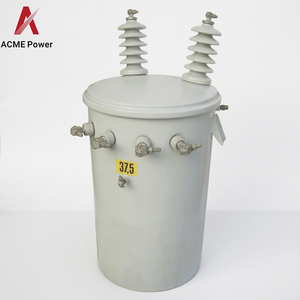
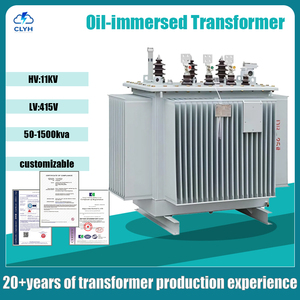
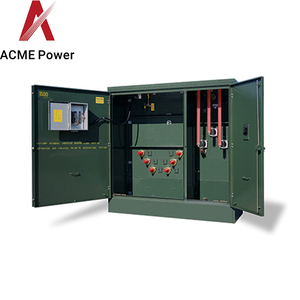
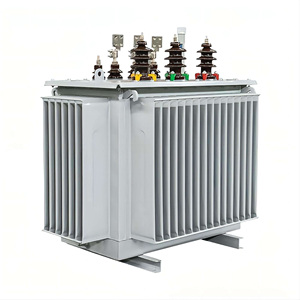
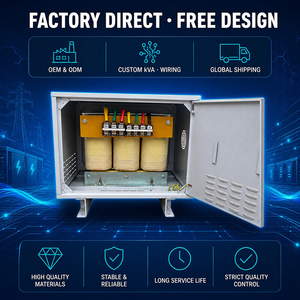
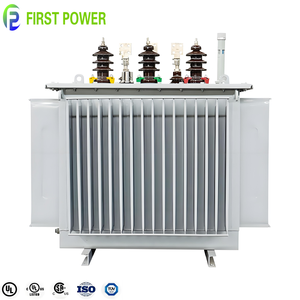
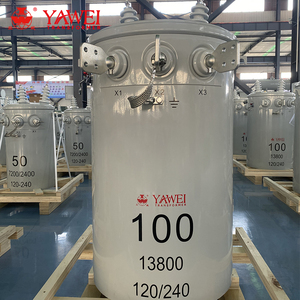
In high-voltage direct current (HVDC) transmission, industrial rectifier drives, and electric arc furnace operations, direct current ripple remains one of the most severe threats to grid stability, component insulation longevity, and system efficiency. A Smoothing Reactor (also designated as a DC inductor or ripple suppression reactor) acts as the primary magnetic defense mechanism. Connected in series with direct current systems, it limits the magnitude of harmonic ripple currents, prevents current interruption at light loads, buffers transient short-circuit currents, and decouples high-frequency power electronics noise from the grid.
As global power architecture transitions toward ultra-high-voltage direct current (UHVDC) interconnects and renewable energy microgrids, selecting a reliable vendor from a premier China Smoothing Reactor Factory is no longer merely a procurement exercise—it is a mission-critical engineering decision. Advanced Chinese manufacturers leverage state-of-the-art Vacuum Pressure Impregnation (VPI), high-permeability grain-oriented silicon steel (CRGO), and dry-type air-cored winding technologies to deliver unparalleled thermal stability, low acoustic emissions (<55 dB), and mechanical resistance to short-circuit electromagnetic stress.
Understanding the structural differences is essential for EPC engineers and procurement teams to evaluate Total Cost of Ownership (TCO) and installation constraints.
| Technical Parameter | Dry-Type Air-Cored Smoothing Reactor | Oil-Immersed Iron-Cored Smoothing Reactor |
|---|---|---|
| Core Saturation Dynamics | Linear inductance profile; linear characteristics up to infinity (No magnetic saturation). | Non-linear saturation curve; higher inductance per volume unit, saturates under extreme fault currents. |
| Dielectric & Insulating Medium | Fiberglass reinforced epoxy resin; environmental VPI coating; maintenance-free dry insulation. | High-dielectric mineral oil or synthetic ester fluid (IEC 60296 certified). |
| Short-Circuit Stress Withstand | Extremely high electro-dynamic force tolerance due to robust glass-fiber axial binding. | Dependent on tank structure and core clamping rigidity; highly constrained magnetic stray field. |
| Installation Footprint & Stray Field | Requires magnetic clearance distance due to open air magnetic field return path. | Compact layout; zero external stray magnetic field (shielded by iron core & tank). |
| Fire Safety & Environmental Impact | Self-extinguishing (Class F & H); zero oil leakage risk; optimal for indoor sub-stations. | Requires oil containment pits, nitrogen injection fire suppression, and environmental bunding. |
| Cooling Mechanism | Natural air cooling (AN) or forced air ventilation (AF). | ONAN, ONAF, OFAF, or OFWF forced oil circulating heat exchangers. |
Key macro trends shaping the selection, customization, and deployment of power smoothing systems over the next decade.
The global surge in solar PV farms, offshore wind projects, and high-voltage DC ties demands reactors capable of handling dynamic high-frequency current harmonics generated by megawatt-scale IGBT converters. High-inductance smoothing reactors ensure smooth DC current flow even under rapid solar irradiance fluctuations.
Leading Chinese suppliers are migrating from standard 0.27mm CRGO steel to ultra-thin amorphous and nanocrystalline ribbon cores. This engineering advance reduces core hysteresis and eddy-current losses by up to 45%, directly contributing to operational cost savings across 25-year design lifespans.
Integration of fiber-optic temperature sensors embedded directly within reactor winding layers allows continuous hotspot monitoring. Coupled with IoT gateway modules, modern smoothing reactors stream real-time thermal and vibration telemetry to central SCADA systems for predictive maintenance.
Addressing key engineering, compliance, and commercial queries for technical directors and procurement officers.
With over **30 years of engineering pedigree** since establishment in 1994, our manufacturing infrastructure stands as an ISO 9001 certified benchmark for high-voltage power components, distribution equipment, and custom reactors up to **5000 KVA at 33kV**. All power units undergo rigorous type testing at prestigious institutes like **CPRI (Central Power Research Institute)** and routine evaluations adhering to **IS 2026 / IS 1180 / IS 11171** guidelines.
Trusted by over **600+ tier-one global enterprise clients** across infrastructure, defense, real estate, and heavy industrial power systems—including industry leaders such as Prestige Group, Sobha Developers, Puravankara Projects, ISRO, BEML, and BEL—our factory delivers custom-tailored electromagnetic solutions designed for maximum reliability and operational longevity.
Speak directly with our senior application engineers to evaluate your inductance requirements, dynamic thermal load profiles, and custom design specs.
Contact Us