
Explore our core product lineup engineered for optimal galvanic isolation, harmonic mitigation, step-down voltage conversion, and severe environment reliability. Built to IS 2026 / IS 1180 / IEC 60076 standards.
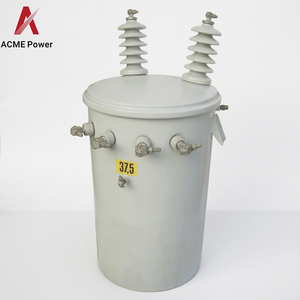
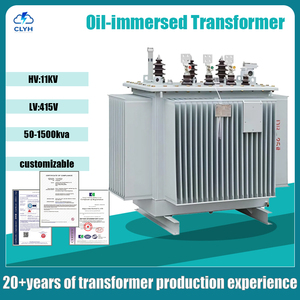
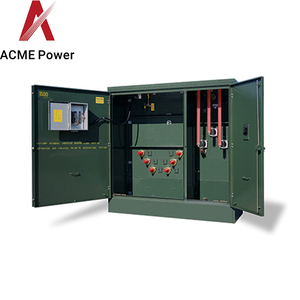
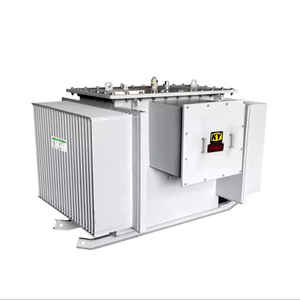
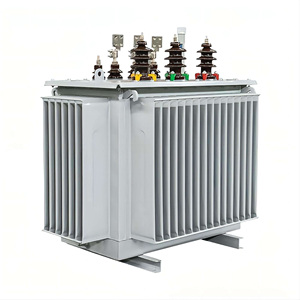
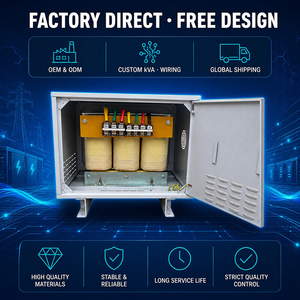
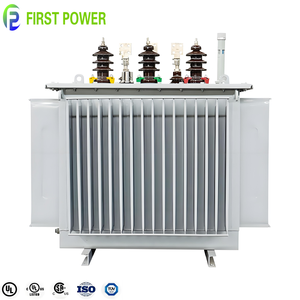
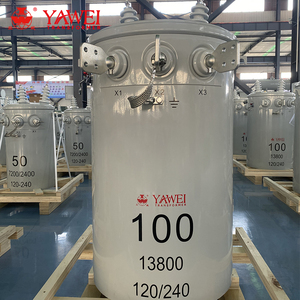
Backed by 30+ years of manufacturing authority, ISO 9001 certification, and CPRI type-testing, our enterprise delivers high-precision custom transformer solutions up to 5000 KVA 33kV for world-class infrastructure.
Our isolation transformers undergo comprehensive type-testing at the Central Power Research Institute (CPRI). Every unit manufactured in our state-of-the-art facility adheres strictly to IS 2026, IS 1180, and IS 11171 (IEC 60076 equivalents), guaranteeing structural integrity, short-circuit withstand withstandability, and minimal dielectric loss.
From specialized electrostatic shielding between primary and secondary windings to custom K-Factor ratings (K-4 to K-20) for non-linear industrial loads, our engineering team custom-builds units up to 5000 KVA / 33kV. Options include On-Load Tap Changers (OLTC), Remote Tap Changer Cubicles (RTCC), and Automatic Voltage Relays (AVR).
Trusted by over 600 prestigious industrial developers and state organizations—including Prestige Group, Sobha Developers, ISRO, BEL, BEML, and Raheja Group—our transformers power high-tech cleanrooms, defense radar installations, healthcare facilities, and heavy metallurgical plants nationwide.
An authoritative whitepaper breakdown on how industrial isolation transformers mitigate electrical noise, prevent ground loops, ensure personnel safety, and protect critical downstream electronics.
In modern industrial manufacturing and power distribution, electrical noise (common-mode and transverse-mode transients) poses a catastrophic risk to microprocessors, CNC machines, medical imaging apparatus, and sensitive industrial automation servers. An Isolation Transformer decouples the primary input circuit from the secondary output circuit using magnetic induction rather than direct electrical connection.
Our heavy-duty wholesale isolation transformers incorporate a copper Faraday Electrostatic Shield positioned between the primary and secondary copper windings. Grounded securely to the transformer chassis, this shield attenuates high-frequency common-mode spikes and lightning surges (suppressing up to 60 dB to 120 dB of electrical noise). This physical separation eliminates ground loops, neutral-to-ground voltage buildup, and capacitive coupling effects.
Non-linear loads such as variable frequency drives (VFDs), switch-mode power supplies (SMPS), and industrial rectifiers feed 3rd, 9th, and 15th order (triplen) harmonics back into the electrical grid. Selecting the appropriate vector group—most commonly Dyn11 (Delta Primary, Star Secondary with Neutral)—allows triplen harmonic currents to circulate inside the delta primary winding without propagating back into the primary utility distribution system.
| Vector Group | Primary Connection | Secondary Connection | Phase Shift | Primary Application Scenario |
|---|---|---|---|---|
| Dyn11 | Delta (Δ) | Star (Y) + Neutral | +30° Leading | Industrial step-down, factory power distribution, VFD isolation |
| Dyn1 | Delta (Δ) | Star (Y) + Neutral | -30° Lagging | Utility power coupling, parallel grid operations |
| Yyn0 | Star (Y) | Star (Y) + Neutral | 0° | Balanced 3-phase industrial supply, minimal harmonic loads |
| Dd0 | Delta (Δ) | Delta (Δ) | 0° | Heavy industrial motor isolation, isolated ungrounded systems |
When procuring from a wholesale China transformer factory, choosing between Vacuum Pressure Impregnated (VPI) / Cast Resin Dry-Type and Oil-Immersed Transformers is critical to operational safety and total cost of ownership (TCO):
As global energy grids transition toward decarbonization, high efficiency, and IoT intelligence, B2B procurement strategies are shifting. Here are the core technological trends defining the next decade of transformer manufacturing.
Next-generation industrial procurement emphasizes smart transformers equipped with fiber-optic thermal sensors, online Dissolved Gas Analysis (DGA), and Modbus/IEC 61850 communication interfaces. This empowers predictive maintenance, preventing unexpected insulation breakdown and zero-downtime manufacturing.
Strict global efficiency regulations (EU Tier 2 Eco-design, US DOE 2016, and China Level 1 Energy Efficiency) demand ultra-low no-load losses. Manufacturing trends favor high-permeability grain-oriented silicon steel (CRGO) and Amorphous Alloy Cores, reducing core losses by up to 70% compared to legacy transformer steel.
The rapid expansion of solar PV farms, battery energy storage systems (BESS), and megawatt-level EV fast-charging stations mandates heavy-duty isolation transformers designed to handle rapid load fluctuations, bi-directional power flows, and high ambient thermal stress without thermal degradation.
To ensure seamless international sourcing, engineering directors and EPC buyers must evaluate China transformer manufacturers using standardized verification protocols.
Before shipment, every isolation transformer must undergo stringent quality testing to verify electrical compliance and dielectric strength. Buyers should request certified test reports for the following:
When comparing wholesale quotations, evaluate the long-term capitalization of electrical losses using the TCO formula:
Where A represents the capitalized cost per kW of no-load loss ($4,000 - $8,000/kW over a 20-year lifespan) and B represents the capitalized cost per kW of load loss ($1,500 - $3,000/kW).
Expert technical answers addressing common procurement, installation, and custom engineering queries.
An isolation transformer features physically separated primary and secondary copper windings, establishing true galvanic isolation. This blocks DC offset, attenuates common-mode electrical noise, and prevents ground fault propagation. An autotransformer shares a single continuous winding with a center tap, providing voltage conversion without galvanic separation, making it unsuitable for sensitive noise-decoupling or safety-critical ground isolation applications.
K-Factor measures a transformer's capability to withstand harmonic eddy-current heating without exceeding insulation temperature limits. Standard linear loads require K-1. Microprocessor controls, telecommunication servers, and basic office UPS systems require K-4. Variable frequency drives (VFDs), induction heating equipment, and high-frequency switching rectifiers require K-13 to K-20 ratings.
Yes. We custom engineer single-phase and three-phase transformers for any global grid standard: primary voltages up to 33kV (e.g., 6.3kV, 10kV, 11kV, 13.8kV, 20kV, 33kV) to secondary outputs such as 110V, 200V, 220V, 380V, 400V, 415V, 440V, and 480V at 50Hz or 60Hz frequencies.
Our dry-type transformers utilize Class H (180°C) or Class F (155°C) high-grade insulation materials. Windings are vacuum-pressure impregnated (VPI) with high-temperature electrical varnish or cast in epoxy resin, delivering superior moisture resistance, flame retardancy, and dielectric strength.
Our minimum order quantity is 1 unit for custom-engineered industrial projects. Standard production lead time ranges from 15 to 25 business days depending on KVA rating and technical custom specs. All export units are packed in seaworthy, vacuum-sealed moisture-proof wooden crates reinforced with steel frames.
We provide a comprehensive 18 to 24-month warranty on all wholesale power and isolation transformers. Our engineering department offers 24/7 technical support, remote commissioning guidance, replacement spare parts dispatch, and complete factory test documentation.
Need specialized voltage ratios, custom K-factor ratings, or CPRI-certified isolation transformers for your upcoming infrastructure project? Speak directly with our senior transformer engineering team today.