
Explore our engineered range of single-phase, three-phase, pad-mounted, and oil-immersed hermetically sealed transformers built to IS 2026, IS 1180, IEC 60076, and ANSI/IEEE standards.
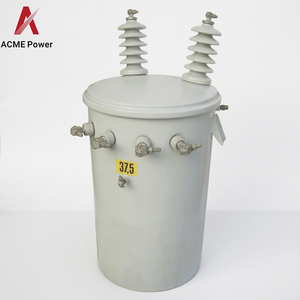
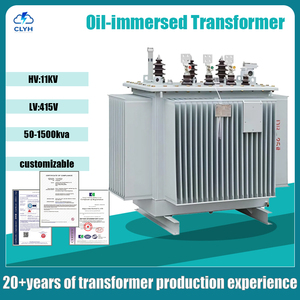
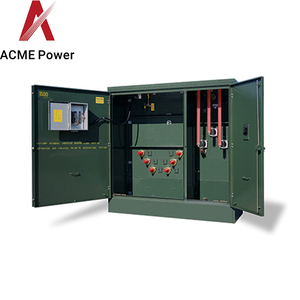
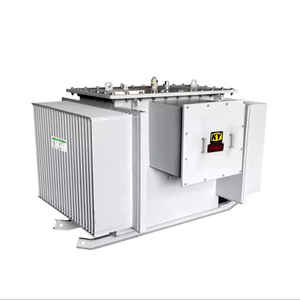
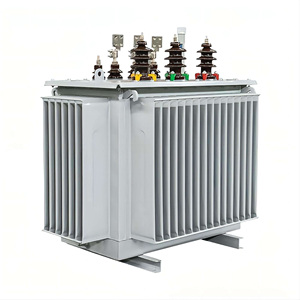
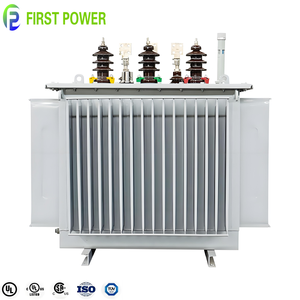
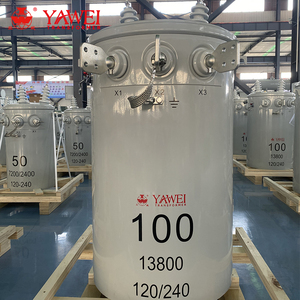
In modern electrical distribution networks, hermetically sealed transformers represent a crucial leap in reliability, longevity, and operational efficiency over traditional open-breather conservator designs. As global power grids encounter aggressive ambient environments, high humidity, chemical exposure, and remote deployment requirements, procurement teams and utility engineers prioritize OEM manufacturers capable of producing custom hermetic solutions.
Unlike standard oil-cooled transformers that feature a conservator tank exposed to ambient atmosphere via silica gel breathers, a hermetically sealed transformer isolates the dielectric oil completely from air and moisture. The thermal expansion and contraction of dielectric liquid during duty cycles are compensated using either corrugated flexible tank walls or a pressurized inert gas cushion (typically dry Nitrogen).
When an electrical transformer operates under varying loads, ohmic losses ($I^2R$) in the copper or aluminum windings generate heat, expanding the insulating mineral or synthetic ester fluid. In corrugated hermetic designs:
No silica gel desiccant replacements, no regular oil degasification, and zero conservator tank flushing required throughout the 30+ year lifespan.
Eliminating top-mounted conservator tanks reduces vertical overhead clearance by up to 25%, making hermetic units optimal for compact indoor sub-stations and pad mounts.
Dielectric breakdown voltage (BDV) remains stable above >60 kV, preserving dielectric margin even under severe emergency overloads.
When evaluating total cost of ownership (TCO) over a 25-to-30-year lifecycle, procurement directors must weigh initial capital expenditure against long-term maintenance, failure risk, and oil monitoring requirements.
| Performance Parameter | Custom Hermetically Sealed (Corrugated / Gas Cushion) | Free-Breathing Conservator Transformer |
|---|---|---|
| Atmospheric Contact | Zero Contact (100% Hermetic Seal) | Direct exposure via silica gel breather |
| Dielectric Fluid Degradation | Extremely low rate; zero oxidation or moisture absorption | Continuous oxidation & moisture absorption over time |
| Recommended Inspection Interval | 5 - 8 Years (Visual & External Connection Check) | Annual (Breather check, oil breakdown testing, silica replacement) |
| Internal Pressure Handling | Flexible corrugated panels flex under pressure changes | Atmospheric pressure inside tank; oil rises into conservator |
| Submersion & Extreme Environment Resistance | Exceptional (IP68 sealed tank options available) | Limited (Risk of moisture ingress during flooding/high humidity) |
| Overall Footprint & Height | Compact height (Ideal for low-headroom installations) | Taller profile due to conservator tank & pipework |
| Long-term TCO Savings | Up to 40% TCO reduction over 25 years | Higher cumulative maintenance and oil purification costs |
As global energy infrastructure transitions toward renewable power sources, distributed microgrids, and strict decarbonization targets, B2B transformer procurement criteria are shifting rapidly. Manufacturers are no longer evaluated solely on initial bid price, but on compliance with stringent efficiency standardizations, eco-friendly insulating fluids, and advanced thermal performance.
Traditional mineral oil is increasingly replaced by natural and synthetic ester fluids (such as FR3). Natural esters feature high fire points (>300°C), classifying them as K-class fluids under IEC 61100. This dramatically reduces fire containment infrastructure requirements in dense urban environments or indoor industrial facilities. Furthermore, ester liquids are fully biodegradable, shielding power utilities from environmental remediation liabilities in the event of accidental spills.
Regulatory authorities worldwide—including the European Union (EcoDesign Tier 2), US Department of Energy (DOE 2016 / IEEE C57), and Indian Bureau of Energy Efficiency (BEE Star Ratings / IS 1180 Level 3)—are mandating lower no-load (core) and load (copper) losses. OEM manufacturers utilize high-permeability, grain-oriented silicon steel (CRGO) or amorphous alloys to minimize hysteresis and eddy current losses:
Modern OEM hermetic transformers are increasingly integrated with digital sensor suites for real-time fleet management. Sensor packages include fiber-optic hot-spot temperature sensors, electronic pressure-vacuum transducers, moisture-in-oil sensors, and automated Dissolved Gas Analysis (DGA) monitors. These sensors transmit critical metrics via Modbus/IEC 61850 protocols directly to central SCADA systems, enabling predictive maintenance models before insulation failure occurs.
Established in 1994 and headquartered in Bangalore, India, Chetan Electric Pvt. Ltd. has established itself as an ISO 9001 certified engineering powerhouse specializing in custom power, distribution, and specialized application transformers up to 5000 kVA, 33kV.
Over three decades of precision manufacturing, our facilities at Veerasandra Industrial Area, Bangalore, have delivered custom-engineered electrical equipment trusted by over 600 global enterprise clients across real estate, infrastructure, defense, healthcare, and heavy process manufacturing sectors.
Every unit produced in our manufacturing line undergoes rigorous routine testing in accordance with IS 2026 / IS 1180 / IS 11171 / IEC 60076 standards. Our designs are fully type-tested at the prestigious Central Power Research Institute (CPRI), Bangalore, validating short-circuit withstand capabilities, impulse voltage endurance, and thermal temperature rise limits under max load conditions.
Our custom transformer installations are actively serving prominent industrial and defense organizations, including ISRO, BEML, BEL, Prestige Group, Sobha Developers, Puravankara Projects, Brigade Group, Raheja Group, Salarpuria Properties, Nagarjuna Constructions, Panacea Hospital, KHB Projects, KSSIDC, and KIADB Projects.
Key technical considerations for electrical engineering buyers, EPC contractors, and plant managers when specifying custom hermetic transformers.
Require custom kVA ratings, special primary/secondary voltages, low-loss specifications, or CPRI-certified hermetic units for your next engineering project? Consult directly with Chetan Electric's technical design team.