
Direct factory recommendations engineered for high reliability, low stray loss, and seamless integration with industrial non-linear loads and power distribution networks.
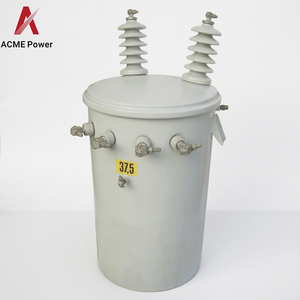
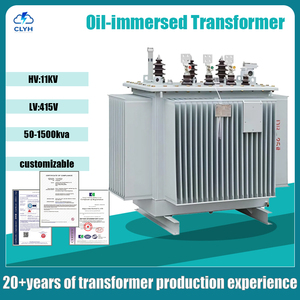
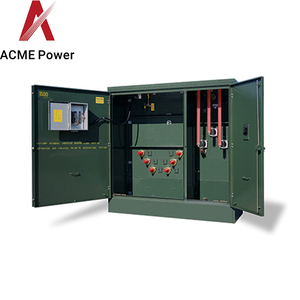
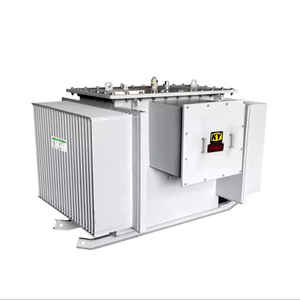
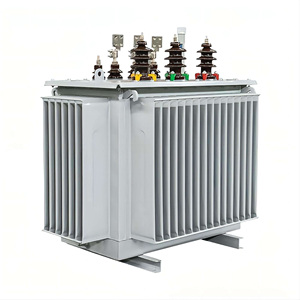
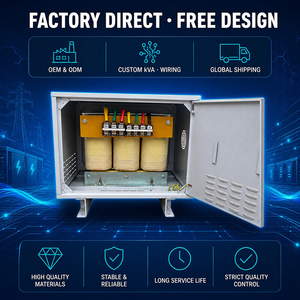
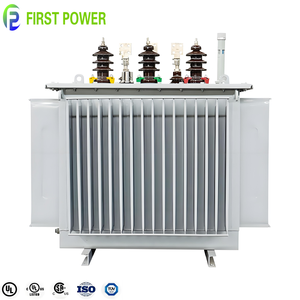
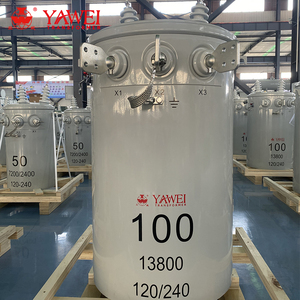
Combining over three decades of precision electrical engineering with rigid ISO 9001 quality controls, we supply custom power quality and harmonic suppression equipment tailored to international standards.
Every single unit undergoes rigid routine and type tests. Certified by the Central Power Research Institute (CPRI), our equipment meets stringent global specifications including IS 2026, IS 1180, and IS 11171, ensuring operational longevity under extreme electrical stresses.
From ONAN/ONAF cooling configurations to cast resin dry-type designs up to 11kV, our engineering team custom-configures copper/aluminum windings, On-Load Tap Changers (OLTC), and specialized phase displacement vector groups (Dyn11, Ddn0) to resolve client harmonic challenges.
Over 30 years of field deployments across demanding industrial sectors—ranging from steel melting electric arc furnace applications and high-frequency rectifier equipment to commercial real estate microgrids and high-voltage testing systems up to 150kV.
Our custom transformer and power quality engineering solutions power over 600 premier global and domestic institutions. Backed by state-of-the-art manufacturing at Veerasandra Industrial Area, Bangalore, our products ensure zero downtime and optimal total cost of ownership (TCO).
In modern industrial utility grids, the proliferation of non-linear loads—such as variable frequency drives (VFDs), thyristor-controlled furnace rectifiers, uninterruptible power supplies (UPS), and solar grid-tie inverters—has introduced severe electric power degradation. Non-linear currents inject non-sinusoidal harmonic frequencies into distribution transformers, resulting in thermal overload, core saturation, dielectric insulation breakdown, and voltage distortion across sub-distribution networks. For global procurement officers, plant operations directors, and electrical design engineers, sourcing from specialized OEM/ODM Harmonic Filter Factories & Suppliers is no longer merely an option; it is a critical mandate to satisfy IEEE 519 standards and mitigate costly utility non-compliance penalties.
This technical whitepaper explores the fundamental mechanics of harmonic distortion, evaluates active versus passive filtering topologies, outlines custom OEM/ODM manufacturing criteria, and details future procurement strategies designed to future-proof heavy power distribution networks.
Harmonics are sinusoidal voltages or currents having frequencies that are integral multiples of the fundamental power frequency (50 Hz or 60 Hz). When non-linear electronic switches chop AC waveforms, they generate odd-order harmonics—predominantly the 3rd, 5th, 7th, 11th, and 13th harmonics. The primary technical consequences within industrial distribution transformers include:
| Filtering Technology | Harmonic Cancellation Range | Power Factor Correction | Energy Efficiency / Loss Profile | Ideal OEM Custom Application |
|---|---|---|---|---|
| Passive Harmonic Filters (PHF) | Fixed Specific Orders (e.g., 5th, 7th, 11th) | Fixed Reactive Power Compensation | Very High Efficiency (>98.5%) | Pumping Stations, Constant-Load VFDs, HVAC HVAC Plants |
| Active Harmonic Filters (AHF) | Dynamic 2nd to 50th Order Simultaneously | Stepless Lead/Lag PFC ($\cos\phi \to 1.0$) | High Efficiency (~97%) | Automotive Robotic Lines, Data Centers, Microgrids |
| K-Factor & Phase-Shifting Transformers | Attenuates Triplen & Specific Phase-Shifted Orders | Inherent via Magnetics | Standard Transformer Efficiency (>98.8%) | Electric Arc Furnaces, Rectifier Drives, Medical Imaging |
| Hybrid Harmonic Filtering Systems | Broadband Dynamic Suppression | Dynamic Multi-Stage Compensation | Optimized Operating Balance | Heavy Metallurgy, Chemical Electrolysis Plants |
Standard off-the-shelf distribution transformers are poorly equipped to handle high total harmonic distortion (THD). When sourcing specialized power quality equipment from qualified original equipment manufacturers (OEM) or original design manufacturers (ODM), procurement teams must enforce strict engineering design parameters:
Unlike standard distribution transformers rated for linear loads ($K=1$), OEM harmonic-mitigating transformers are custom-engineered for $K=4, K=13, K=20,$ or $K=30$ load profiles. To achieve this, factory engineers employ transposed rectangular copper conductors or multi-strand foil windings to reduce skin effect impedance. Step-sectioned core structures with high-grade Cold-Rolled Grain-Oriented (CRGO) silicon steel minimize no-load losses even under high harmonic voltage stress.
By engineering multi-winding phase-shifting transformers (such as Dual-Output Star-Delta $+15^\circ / -15^\circ$ or Quad-Output Zig-Zag configurations), OEM suppliers enable physical cancellation of the 5th, 7th, 17th, and 19th harmonics before they penetrate the upstream high-voltage utility grid. This passive magnetic approach provides 100% maintenance-free operational life equal to the transformer's multi-decade lifespan.
Heavy dynamic load swings—common in steel rolling mills, industrial furnace installations, and large-scale mining operations—require continuous voltage regulation. OEM factory integration of On-Load Tap Changers (OLTC) paired with Remote Tap Changer Cubicles (RTCC) and Automatic Voltage Relays (AVR) guarantees stable secondary bus voltage without interrupting critical industrial processes.
The global transition toward industrial electrification, renewable energy integration, and stringent green building codes is radically redefining procurement metrics for harmonic suppression equipment and industrial power transformers:
Modern global buyers require OEM/ODM suppliers to integrate Modbus/RS485, Ethernet, and cloud-connected IoT sensors into harmonic filter panels and transformer cabinets. Real-time logging of THD-I, THD-V, temperature hot-spots, and dissolved gas analysis (DGA) empowers predictive maintenance and prevents catastrophic unplanned downtime.
As commercial plants deploy onsite solar PV arrays and Battery Energy Storage Systems (BESS), bi-directional power flows introduce complex inter-harmonics. Future harmonic filter procurements emphasize hybrid active filtering systems capable of fast transient responses (<5 ms) across fluctuating active/reactive power loads.
Environmental, Social, and Governance (ESG) mandates are driving rapid replacement of conventional mineral oils with synthetic and natural ester fluids in oil-immersed transformers. Ester fluids offer superior fire flash points (>300°C) and 100% biodegradability, reducing environmental compliance risks in sensitive municipal zones.
Next-generation Active Harmonic Filters (AHF) utilize SiC MOSFET semiconductor switches rather than traditional IGBTs. This technology boosts switching frequencies from 20 kHz to over 100 kHz, dramatically reducing internal power loss, footprint, and acoustic hum while enabling compensation up to the 50th harmonic order.
Leading transformer and power quality factories are heavily investing in advanced precision manufacturing capabilities. State-of-the-art production lines feature automatic computer-controlled foil winding machinery, vacuum pressure impregnation (VPI) plants for dry-type transformers, and automated laser-guided CRGO core cutting tables. These automated processes drastically reduce human error, minimize partial discharge levels (<10 pC), and guarantee optimal magnetic flux distribution.
Furthermore, fully integrated testing facilities equipped with high-voltage power frequency testing transformers up to 150kV allow factories to execute full impulse voltage withstand tests, temperature rise tests, and short-circuit withstand verifications in-house before export shipping.
Key technical insights and practical procurement answers compiled by our senior power quality engineering team.
Consult directly with our senior application engineering team to discuss your load profile, obtain technical CAD/drawing proposals, and receive competitive factory-direct quotations.
Contact Us