OEM/ODM Instrument Transformer Manufacturers & Custom Engineering Experts

High-Precision Current & Potential Transformers, Distribution & Power Units up to 5000 KVA 33kV — Engineered to ISO 9001, IS 2026, & IEC 61869 Standards.

Featured Power & Instrument Transformers

Explore our custom OEM/ODM distribution and special-application transformers engineered for ultra-low losses, high dielectric strength, and rigorous utility environments.
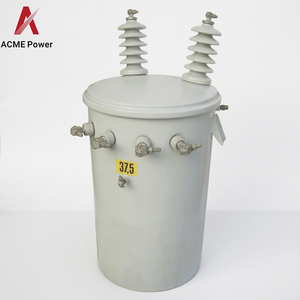
Latin America Compatible 25kva Single Phase Pole Mounted Transformer 6.3kv To 110v
Latin America Compatible 25kva Single Phase Pole Mounted Transformer 6.3kv To 110v High Quality Distribution Transformer
Inquire Now
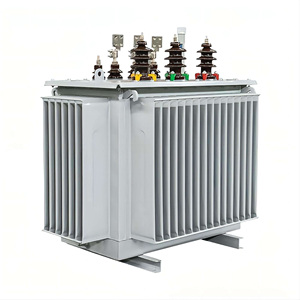
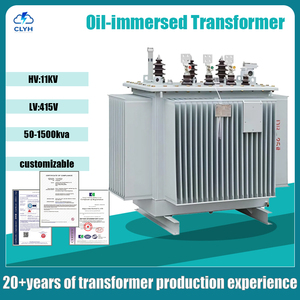
11kV to 415V Three Phase Oil Immersed Distribution Transformer
11kV to 415V 50kVA 160kVA 500kVA 1500kVA Three Phase Oil Immersed Distribution Transformer Industrial Step Down PowerTransformer
Inquire Now
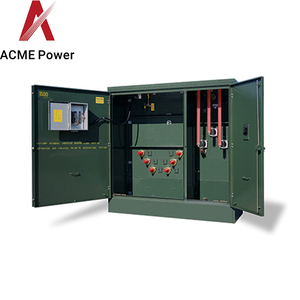
1500KVA Three Phase Pad Mounted Transformer ONAN/ONAF Cooling
1500KVA Three Phase Pad Mounted Transformer ONAN/ONAF Cooling 50/60Hz Dyn11 Vector Group High Efficiency For Industrial Power
Inquire Now
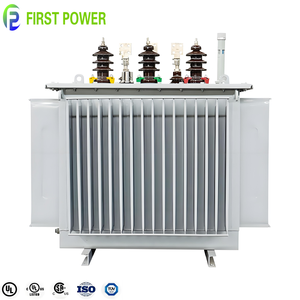
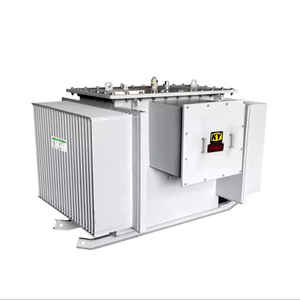
S11-M 80kVA Three Phase Oil Immersed Power Distribution Transformer
S11-M 80kVA Three Phase Oil Immersed Power Distribution Transformer 10kV/0.4kV
Inquire Now
Distribution Transformer Manufacturer 200kVA to 800kVA
Distribution Transformer Manufacturer 200kVA 250kVA 315kVA 400kVA 500kVA 630kVA 800kVA 10kV 11kV 20kV 33kV 0.4kV
Inquire Now
25kw 400kv Power Distribution Transformer
25kw 400kv Power Distribution Transformer 200/400 Volt 20kva 415volt 11kva 100kv 50 Kva 110v 240v 3 phase Transformer
Inquire Now
50KVA to 500KVA 20KV Oil Immersed Electrical Power Distribution Transformer
C/C 50KVA 100KVA 150KVA 200KVA 250KVA 300KVA 400KVA 450KVA 500KVA 20KV Oil Immersed Electrical Power Distribution Transformer
Inquire Now
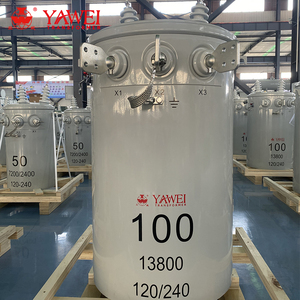
13.8KV Single Phase Pole Mounted Transformer
13.8KV 240V/480V 100KVA Oil Immersed Distribution Transformer Single Phase Pole Mounted Transformer
Inquire Now
30+
Years Engineering Heritage
600+
Global Industrial Clients
5000 kVA
Max Capacity Threshold
100%
CPRI / IS Standards Validated

Whitepaper: Industrial Architecture of OEM/ODM Instrument & Power Transformers

In modern electrical grid automation, transmission infrastructure, and high-demand industrial complexes, instrument transformers serve as the bedrock of measurement integrity, protective relaying, and systemic stability. As global energy grids transition toward decentralized renewable integration, smart metering, and digital substations, the demand for precision-engineered Current Transformers (CTs) and Potential Transformers (PTs)—alongside robust power distribution units—has escalated rapidly.

Selecting an established OEM/ODM instrument transformer manufacturer requires evaluating deep core material engineering, magnetic saturation dynamics, dielectric insulation endurance, and international compliance frameworks including IEC 61869, IEEE C57.13, IS 2026, IS 1180, and IS 11171. With over three decades of manufacturing excellence since 1994, Chetan Electric Pvt. Ltd. delivers custom-engineered liquid-immersed and dry-type transformer solutions optimized for global power utilities, heavy industrial facilities, commercial complexes, and EPC infrastructure projects.

"Precision in instrument transformer design is not merely a matter of stepping down voltages or currents; it is about guaranteeing absolute phase angle integrity, zero ratio error drift, and linear magnetic behavior under extreme fault conditions."

Technical Matrix: Current Transformers (CT) vs. Potential Transformers (PT)

Instrument transformers are specialized high-accuracy class transformers designed to transform high voltage or high current levels down to standardized, safe values (e.g., 1A/5A for CTs, 110V/100V for PTs) suitable for digital meters, protective relays, and SCADA monitoring units. Below is an engineering comparison matrix for OEM procurement specifications:

Parameter Instrument Current Transformers (CT) Instrument Potential/Voltage Transformers (PT/VT) Distribution & Power Units
Primary Function Current measurement & overcurrent protection Voltage measurement & insulation monitoring Step-down power delivery (MV to LV)
Accuracy Classes 0.2S, 0.5S for Revenue; 5P10, 10P20 for Protection 0.2, 0.5 for Metering; 3P, 6P for Protection ±0.5% to ±2% Voltage Regulation
Magnetic Core Material High-permeability Nanocrystalline / Mu-Metal Cold Rolled Grain Oriented (CRGO) M4 Steel High-grade CRGO / Amorphous Metal
Insulation System Cast Resin (VPI) / Oil-Immersed Kraft Paper Vacuum Epoxy Resin / Synthetic Ester Oil ONAN / ONAF Mineral Oil or Dry-Type Cast Resin
Overload & Short-Circuit High Thermal Short-Time Current (Ith up to 40kA/1s) 1.2x continuous, 1.9x for 8 hours (earthed systems) Designed for short-circuit withstand per IS 2026

Core Engineering Capabilities for Custom OEM/ODM Contracting

Custom Original Equipment Manufacturing (OEM) and Original Design Manufacturing (ODM) in the transformer sector demand extreme mechanical flexibility and rigorous material science. Chetan Electric’s dedicated manufacturing hub in Bangalore provides end-to-end custom engineering, including:

Tailored Coils & Magnetics

Precision winding using high-grade electrolytic copper and aluminum conductors with multi-layer enamel insulation for minimal stray loss.

CPRI Type-Tested Integrity

Validated at the Central Power Research Institute (CPRI), Bangalore for short-circuit, impulse withstand, and partial discharge compliance.

Advanced Thermal Management

Choice of ONAN/ONAF cooling fins, corrugated tank designs, or dry-type vacuum pressure impregnated (VPI) enclosures up to IP65.

Future Procurement & Technological Trends in Transformer Manufacturing

As energy networks evolve toward smart grids, utility buyers and industrial procurement leaders must align their OEM/ODM specifications with future-proof technological advancements. Over the next decade, five dominant trends will re-shape transformer procurement globally:

1. Transition to Smart Grid Compatible Merging Units (IEC 61869-9)

Traditional analog secondary outputs (5A, 110V) are increasingly giving way to Optical Current Transformers (OCTs) and Low-Power Passive Voltage Transformers (LPITs) integrated with digital Merging Units. These transmit Ethernet-based IEC 61850 sample values directly to digital substation busbars, eliminating copper wiring losses, avoiding open-circuit hazardous voltages in CT secondaries, and reducing panel footprint by up to 60%.

2. Eco-Friendly & Biodegradable Dielectric Fluids

Mineral transformer oils are being systematically replaced by natural and synthetic ester fluids (e.g., FR3). Ester fluids offer a flash point exceeding 300°C (K-class rating), rendering them virtually non-flammable, while offering 100% biodegradability within 28 days. This makes them ideal for high-density urban substations, indoor commercial developments, and ecologically sensitive installations.

3. Nanocrystalline Core Substrates for Ultra-High Accuracy (0.2S Class)

The rise of distributed solar and wind generation requires exact bidirectional energy metering at low load factors. Conventional CRGO cores suffer from non-linear permeability at loads below 5% of rated current. Next-generation instrument transformers utilize soft magnetic nanocrystalline cores, maintaining a linear magnetization curve down to 1% load and enabling 0.2S revenue-grade accuracy across fluctuating generation environments.

4. Real-Time Condition Monitoring & Edge IoT Sensors

Procurement frameworks now prioritize OEM equipment pre-fitted with digital sensors. Modern 5000 kVA power transformers and vital instrument transformer clusters incorporate Fiber-Optic Temperature Sensors (FOTS), dissolved gas analysis (DGA) micro-transmitters, and online partial discharge (PD) monitoring devices. These edge IoT modules stream asset health telemetry directly to enterprise predictive maintenance platforms.

Need Custom OEM/ODM Engineering Specifications?

Our engineering team designs transformers up to 5000 kVA, 33kV to exact customer drawings, vector groups, and dielectric insulation standards.

Inquire Now

Manufacturing Superiority: Chetan Electric Pvt. Ltd.

Founded in 1994, Chetan Electric Pvt. Ltd. operates state-of-the-art production facilities headquartered in Bangalore, India. Backed by ISO 9001 certification, rigorous quality assurance protocols, and a dedicated team of design engineers, Chetan Electric has earned an unimpeachable reputation over 30+ years of industrial service.

Every single transformer unit leaving our facility undergoes comprehensive routine tests as per IS 2026 / IS 1180 / IS 11171 standards, including winding resistance measurement, voltage ratio verification, vector group confirmation, separate-source AC withstand voltage testing, induced overvoltage testing, and insulation resistance audits. Our products are fully type-tested at the renowned Central Power Research Institute (CPRI), Bangalore, ensuring total compliance with global electrical utility guidelines.

Trusted by Industry Leaders & Global EPC Contractors

Over 600 loyal institutional clients across defense, aerospace, healthcare, real estate, and heavy infrastructure depend on Chetan Electric for uncompromised power reliability. Our key clients include:

Indian Space Research Organisation (ISRO) Bharat Electronics Limited (BEL) BEML Limited Prestige Group Sobha Developers Puravankara Projects Brigade Group Raheja Group Salarpuria Sattva Nagarjuna Construction Co. KSSIDC KIADB Panacea Hospital KHB Projects

Frequently Asked Questions (FAQ) for Transformer Sourcing & Procurement

Below are technical answers to common queries raised by industrial buyers, utility consultants, electrical engineers, and EPC procurement managers when evaluating instrument and power transformers.
Q1: What is the difference between Metering Class and Protection Class Current Transformers?
Metering CTs (e.g., Class 0.2, 0.5) require high accuracy from 5% to 120% of rated current and must saturate quickly above rated current (Instrument Security Factor ISF < 5) to protect delicate connected meters during system faults. Conversely, Protection CTs (e.g., Class 5P10, 10P20, Class PS) must maintain linear current ratio accuracy up to 10 or 20 times the rated nominal current without core saturation, allowing protective relays to trigger trip signals during severe short circuits.
Q2: How does Chetan Electric ensure compliance with IS 2026 and IS 1180 standards?
All Chetan Electric oil-cooled and dry-type distribution transformers undergo stringent routine testing in our fully equipped testing laboratory. We measure no-load losses, load losses at 50% and 100% load levels, impedance voltage, temperature rise, and breakdown voltage (BDV) of oil. Type tests for short-circuit withstand capabilities and lightning impulse withstand voltages are certified by CPRI Bangalore.
Q3: Can Chetan Electric manufacture custom OEM transformers for international voltage standards (e.g., 6.3kV to 110V, 13.8kV, 60Hz)?
Yes. As an established OEM/ODM manufacturer, we customize primary and secondary voltage ratings, frequency parameters (50Hz or 60Hz), vector configurations (Dyn11, Dyn5, Yyn0, etc.), and specialized mounting styles (pad-mounted, pole-mounted, or substation skid) for markets across Latin America, Africa, the Middle East, and Southeast Asia.
Q4: What are the key advantages of Cast Resin Dry-Type Transformers over Oil-Cooled Units?
Cast Resin Dry-Type Transformers (VPI or Epoxy Cast) eliminate liquid dielectric risks, rendering them fire-retardant, self-extinguishing, and maintenance-free. They are optimal for indoor facilities, commercial high-rise buildings, underground subways, and hospitals where oil-leak hazards or strict fire-safety regulations apply. Oil-cooled units, however, offer higher kVA capacities up to 5000 kVA at lower initial capital costs for outdoor environments.
Q5: What technical details are required when submitting an OEM/ODM Request for Quotation (RFQ)?
To obtain an exact technical quotation, buyers should provide: Rated Capacity (kVA/MVA), Primary & Secondary Voltages, Tapping Range (Off-circuit or On-Load Tap Changer OLTC), Vector Group, Impedance Percentage, Cooling Method (ONAN/ONAF/AN), Standard Compliance (IS/IEC/IEEE), Accuracy Class & Burden (for CTs/PTs), and Enclosure Protection Class (IP rating).
Q6: What is Knee-Point Voltage (Vk) in Protection Class CTs, and why is it critical?
Knee-Point Voltage is the secondary sinusoidal voltage applied to a CT core at which a 10% increase in voltage results in a 50% increase in magnetizing current. In differential protection (Class PS), specifying an adequate Knee-Point Voltage ensures the CT will not saturate during high-magnitude external fault currents, preventing false relay tripping.

Partner with a Certified OEM/ODM Transformer Manufacturer

Contact Chetan Electric Pvt. Ltd. today for technical consultancy, custom engineering drawings, and factory direct quotations for your global projects.

Inquire Now