
Engineered for High-Voltage Transmission, Substation Efficiency, and Severe Duty Industrial Grids
The global electrical power grid infrastructure is undergoing its most profound structural shift since the electrification boom of the mid-20th century. Driven by dual imperatives—accelerating decarbonization goals and bolstering transmission resilience against extreme climate anomalies—utility operators, EPC contractors, and industrial procurement directors are facing unprecedented pressure to source high-efficiency, reliable, and smart-grid-compatible power transformers and distribution apparatus.
According to recent industry benchmarks, global investment in transmission and distribution (T&D) power infrastructure is projected to surpass $480 billion annually by 2028. Central to this expansion is the transformer sector. As renewable energy integration (solar PV plants, onshore/offshore wind farms, and battery energy storage systems) alters traditional load dynamics, grid transformers must handle bi-directional power flows, rapid harmonic variations, and severe thermal stresses without compromising operational lifespans.
Information Gain Insight: Modern grid procurement has shifted away from basic initial capital expenditure (CAPEX) evaluations toward Total Cost of Ownership (TCO) models. Purchasing authorities now penalize high core and winding losses over a 30-year operational life cycle, making core material selection (Amorphous alloys vs. HiB Grain-Oriented Silicon Steel) and verification testing standards (such as CPRI certification and IEC 60076 compliance) the primary criteria in exporter selection.
This whitepaper provides an exhaustive technical benchmark of the Top 10 Power Grid Factories and Exporters worldwide. It analyzes manufacturing capabilities, core technology breakthroughs, export footprint, quality management systems, and offers actionable procurement criteria for engineering executives purchasing step-down distribution transformers, dry-type units, OLTC-equipped power transformers, and special-purpose industrial units.
Evaluating global transformer original equipment manufacturers (OEMs) requires analyzing manufacturing capacity, type-testing validation, voltage thresholds, thermal withstand performance, and custom engineering agility. The matrix below benchmarks the leading global entities supplying power grid solutions to North America, Latin America, Europe, the Middle East, Asia-Pacific, and Africa.
| Manufacturer / Exporter | Headquarters | Voltage & Capacity Scope | Primary Industry Compliance | Core Engineering Specialization |
|---|---|---|---|---|
| Chetan Electric Pvt. Ltd. | Bangalore, India | Up to 5000 kVA / 33kV | ISO 9001, CPRI Tested, IS 2026 / IS 1180 | Custom Oil-Cooled, Dry-Type VPI, Special Furnace & CVT Units |
| Hitachi Energy | Zurich, Switzerland | Up to 1200 kV HVDC / EHV | IEC, IEEE, ISO 14001, ANSI | Ultra-High Voltage Transformers, Smart Digital Substation Units |
| Siemens Energy | Munich, Germany | Up to 800 kV AC / DC | IEC 60076, IEEE C57, ISO 9001 | Sensformer® Digital Integration, Eco-friendly Ester Fluid Transformers |
| Schneider Electric | Rueil-Malmaison, France | Up to 132 kV Subtransmission | IEC, EN, UL, CE Mark | Trihal Dry-Type Cast Resin, Smart MV Distribution Switchgear |
| GE Vernova | Cambridge, USA | Up to 765 kV Transmission | IEEE, ANSI, NEMA, CSA | Grid Automation, Flexible AC Transmission Systems (FACTS) |
| Hyundai Electric | Seoul, South Korea | Up to 800 kV / 1500 MVA | IEEE, IEC, KEMA Certified | Substation Power Transformers, Marine & Offshore Grid Solutions |
| TBEA Co., Ltd. | Changji, China | Up to 1100 kV UHVDC | GB Standards, IEC, ISO 9001 | Mega-Scale Power Grid Transmission, UHV Converter Transformers |
| Toshiba Energy Systems | Kawasaki, Japan | Up to 500 kV Transmission | JIS, IEC, IEEE | Gas-Insulated Transformers (GIT), High-Reliability Urban Substations |
| Crompton Greaves (CG Power) | Mumbai, India | Up to 765 kV Transmission | IEC, IS, IEEE, KEMA | Large Power Transformers, Industrial Switchgear Systems |
| Hammond Power Solutions (HPS) | Guelph, Canada | Up to 34.5 kV / 10 MVA | UL, CSA, NEMA, DOE 2016 | Dry-Type Distribution, Low-Voltage Magnetics, Renewable Inverter Duty |
When selecting from top-tier exporters, enterprise procurement teams must rigorously audit four primary manufacturing metrics:
Procurement strategies in the power transmission and distribution sector are migrating away from standardized mass-produced units toward specialized, high-adaptability transformer architectures. Engineering buyers must factor in the following technological developments:
Traditional mineral oils are increasingly being replaced by natural ester dielectric fluids derived from vegetable oils (such as soybean or rapeseed) and synthetic esters. Ester fluids possess a flash point exceeding 300°C (K-class fire safety rating), allowing substations to be placed closer to dense urban buildings without bulky firewalls. Furthermore, ester fluids are 99% biodegradable within 28 days, neutralizing environmental contamination risks in agricultural and water-catchment zones.
Modern power transformers are evolving from passive electrical assets into intelligent nodes within the Internet of Energy (IoE). Advanced exporters now integrate multi-gas DGA monitors (measuring H2, CO, CH4, C2H2, C2H4, C2H6) combined with fibre-optic winding temperature sensors. This continuous diagnostic stream enables condition-based maintenance (CBM), predicting insulation degradation and bushing breakdown months before catastrophic failure occurs.
Solar photovoltaic plants and battery storage sites utilize high-frequency IGBT inverters that generate substantial total harmonic distortion (THD). Grid transformers tied to these facilities require custom K-factor ratings (K-9, K-13, or K-20), electrostatic shielding between primary and secondary windings to bypass high-frequency transients, and upgraded copper conductor sizing to prevent localized hot-spot overheating caused by skin effect losses.
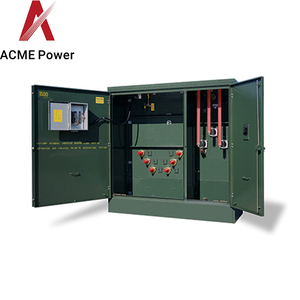
Urban space constraints in rapidly expanding metropolises across Latin America, Asia, and the Middle East have driven demand for integrated pad-mounted compact substations. These tamper-proof, weather-resistant enclosures house the medium-voltage ring main unit (RMU), oil-immersed or dry-type transformer, and low-voltage distribution panel inside a single factory-tested shell, drastically reducing site installation footprints and civil construction costs.
Understanding the operational boundaries between dry-type and oil-immersed transformers is essential for optimal grid design and life-cycle economics.
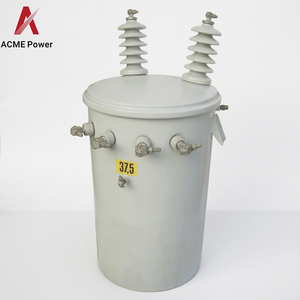
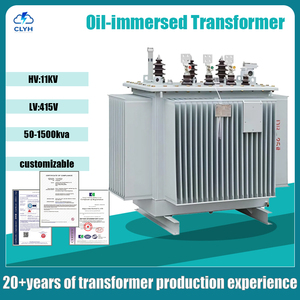
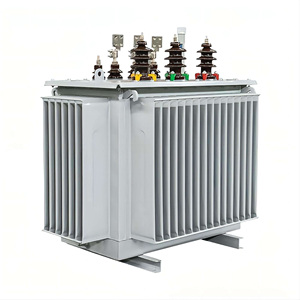
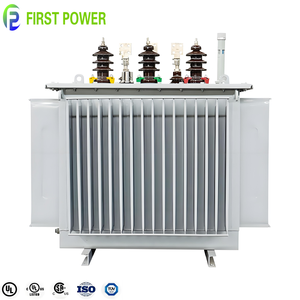
Utilizing mineral or ester oil for simultaneous cooling and dielectric insulation, oil-immersed transformers remain the undisputed standard for outdoor utility distribution, high kVA step-down stations, and overhead pole-mounted networks. Key engineering advancements include hermetically sealed corrugated fin tanks that accommodate oil expansion without atmospheric breathing, preventing moisture ingress and oil oxidation.
Vacuum Pressure Impregnated (VPI) and Cast Resin Dry-Type transformers rely on high-grade Class H (180°C) or Class C (220°C) insulation systems cooled by natural air convection (AN) or forced air draft (AF). Engineered specifically for indoor commercial complexes, hospitals, underground metros, and chemical plants, these units eliminate oil leakage hazards and environmental contamination completely.
Unstable transmission grids plagued by severe voltage fluctuations require transformers outfitted with automated On-Load Tap Changers (OLTC). By altering the effective turn ratio of the primary winding while under full load, an OLTC paired with an Automatic Voltage Relay (AVR) maintains constant secondary busbar voltage (e.g., 415V or 400V ± 1%). Modern vacuum-switch OLTCs eliminate arc-quenching contamination in the tap-changer oil compartment, extending maintenance intervals beyond 300,000 switching operations.
Established in 1994, Chetan Electric Pvt. Ltd. has established itself as an ISO 9001 certified transformer manufacturer headquartered in the industrial tech hub of Bangalore, India. Over three decades of specialized engineering experience have positioned Chetan Electric as a premier choice for global procurement directors seeking high-reliability, custom-engineered power and distribution transformers up to 5000 kVA, 33kV class.
All Chetan Electric transformer designs undergo rigorous short-circuit, impulse voltage withstand, and temperature rise type-testing at the prestigious Central Power Research Institute (CPRI), Bangalore, validating mechanical durability under peak fault conditions.
Every transformer leaving the state-of-the-art Veerasandra industrial plant is manufactured and routine-tested in absolute conformity with IS 2026, IS 1180 (Part 1 Level 1, 2, 3 energy efficiency), and IS 11171 directives.
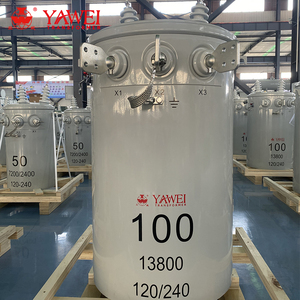
From single-phase pole-mounted units for South American utility grids (6.3kV to 110V/220V) to three-phase industrial step-down units (11kV/33kV to 415V/0.4kV), Chetan Electric builds to precise regional specifications.
Chetan Electric's manufacturing portfolio spans critical electrical apparatus engineered for heavy industrial, commercial, and utility applications:
Over 600 leading industrial conglomerates, defense organizations, healthcare facilities, and real estate developers rely on Chetan Electric transformer installations:
Technical guidance for utility managers, EPC contractors, and international equipment buyers.
To avoid project delays, unexpected line losses, or early insulation breakdown, international engineering procurement managers should complete this verification checklist before issuing Final Acceptance Certificates (FAC) for grid transformers:
Verify mill test certificates for cold-rolled grain-oriented (CRGO) steel (e.g., Baosteel, Nippon Steel, or AK Steel) and electrolytic high-grade EC-grade copper conductor purity (>99.9% conductivity).
Confirm oil tanks undergo a factory pressure test at 0.8 to 1.0 bar above normal working head for 24 hours to ensure zero weld seam pinholes or gasket seepage.
Ensure new transformer mineral oil passes dielectrical breakdown voltage (BDV) tests of >60 kV per IEC 60156 prior to energization.
Consult with Chetan Electric's senior transformer design team. Get instant technical quotes, custom winding specifications, CAD dimensional drawings, and CPRI test reports tailored to your grid project requirements.
Inquire Now