
Selecting an enterprise-grade Three Phase Transformer Factory and Supplier requires deep technical alignment with international power standards including IS 2026, IS 1180, IS 11171, and IEC 60076. Modern industrial networks demand robust step-down and step-up power distribution infrastructure capable of handling non-linear electrical loads, harmonic distortions, and extreme thermal stresses. This procurement analysis evaluates top factory suppliers, core material engineering, and short-circuit capability to optimize your Total Cost of Ownership (TCO).
Explore our top-performing industrial distribution units engineered for low loss, high dielectric strength, and extended operational lifespans.
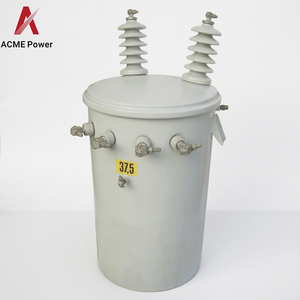
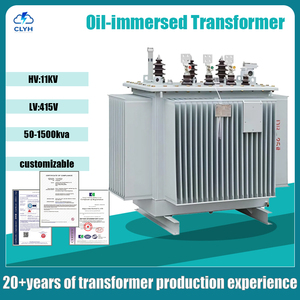
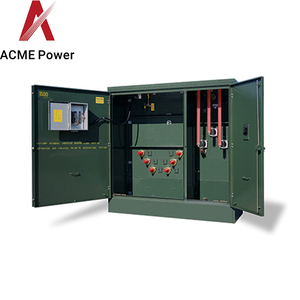
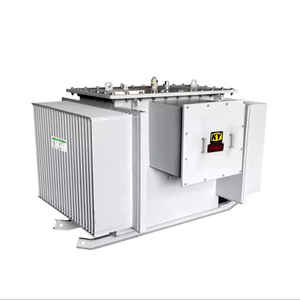
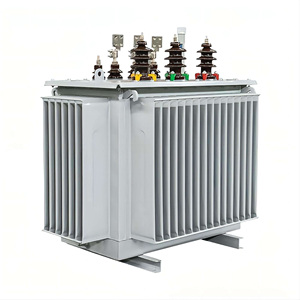
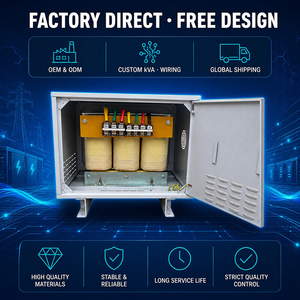
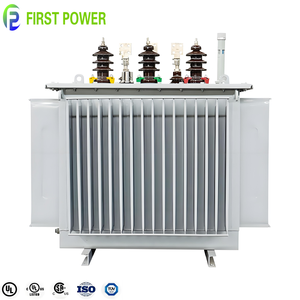
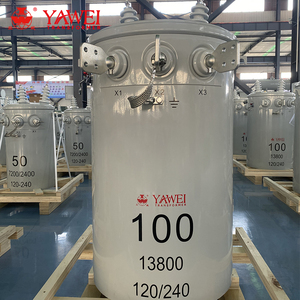
Three-phase electrical transformers serve as the critical backbone for power distribution in commercial complexes, industrial plants, and utility substations. Unlike single-phase transformers, a three-phase system establishes a continuous 120-degree electrical phase shift between currents, enabling consistent power transmission with significantly reduced conductor material requirements.
Top-tier factories utilize Cold-Rolled Grain-Oriented (CRGO) silicon steel laminations (such as M4, MOH, or laser-scribed grades). Step-lap core stacking reduces magnetic reluctance, lowering no-load losses (iron losses) by up to 25% compared to conventional stacked cores.
Industrial applications frequently specified vector groups such as Dyn11 (Delta primary, Star secondary with neutral brought out, 30-degree lead phase shift). Dyn11 suppresses 3rd harmonic voltages and supports unbalanced single-phase lighting and power loads efficiently.
Thermal management dictates transformer longevity. Transformer oil acts as both an electrical insulator and heat transfer medium:
When selecting a B2B transformer supplier, procurement teams must look beyond initial acquisition costs and evaluate manufacturing parameters that affect Total Cost of Ownership (TCO).
| Evaluation Parameter | Tier-1 Factory Standard (e.g., Chetan Electric) | Standard Commercial Grade | Impact on Industrial Operation |
|---|---|---|---|
| Core Laminations | Prime CRGO Steel (High Permeability, Step-Lap) | Commercial Grade Recycled / Secondary CRGO | Lower core losses, reduced noise levels (< 58 dB) |
| Conductor Material | 99.9% Electrolytic Grade Copper / ETP Aluminum | Mixed Grade Conductor Alloys | Minimizes I²R load losses, prevents winding hot-spots |
| Insulation Class & BDV | Class A / Class F (Oil BDV > 60 kV) | Class A (Basic Mineral Oil BDV ~ 40-50 kV) | Higher short-circuit withstand & impulse protection |
| Testing Rigor | CPRI Type Tested (Short-Circuit & Lightning Impulse) | In-house Basic Routine Test Only | Guarantees safety against severe grid surges & faults |
| Tap Changer System | On-Load Tap Changer (OLTC) / Off-Circuit 5-step | Manual Off-Circuit Switch Only | Maintains stable secondary voltage during supply fluctuation |
The global transformer industry is undergoing rapid technological shifts driven by energy transition mandates, renewable integration, and smart grid automation. Strategic procurement directors should incorporate these four emerging trends into their technical RFQs:
Traditional mineral oil is increasingly replaced by natural/synthetic ester fluids with flashpoints above 300°C (Class K liquid). Ester oils are non-toxic, eco-friendly, and allow higher thermal overloads while mitigating fire hazards in urban substations.
Modern 3-phase transformers are fitted with integrated IoT sensors for real-time Dissolved Gas Analysis (DGA), oil temperature indicator (OTI) telemetry, and winding thermal modeling, enabling predictive maintenance over reactive repairs.
Amorphous alloy cores feature non-crystalline atomic structures that reduce no-load magnetic losses by up to 70-80% compared to standard silicon steel, making them the preferred choice for green energy projects and zero-carbon grids.
Solar PV and wind farms generate variable AC/DC voltages requiring specialized step-up transformers up to 33kV with electrostatic shielding to block high-frequency inverter harmonics from entering the utility grid.
Established in 1994 in Bangalore, India, Chetan Electric Pvt. Ltd. is an ISO 9001 certified pioneer in custom transformer design and manufacturing. With over 30 years of engineering heritage, we specialize in high-reliability oil-cooled power transformers, dry-type units, industrial furnace transformers, and constant voltage equipment rated up to 5000 KVA at 33kV.
All Chetan Electric transformers are type-tested at the prestigious Central Power Research Institute (CPRI), Bangalore, and routine-tested in strict compliance with IS 2026, IS 1180, and IS 11171 standards.
To calculate the total kVA requirement, sum up the total active power load in kilowatts (kW), factor in the expected power factor (typically 0.8 to 0.95), and account for a 20-25% safety margin for future expansion and motor starting inrush currents. The formula is: kVA = Total kW / Power Factor × Safety Margin (1.25).
Dyn11 stands for Delta primary connection (D), Star secondary connection (y) with neutral brought out (n), and a 30-degree phase lead (11 clock position). This connection is preferred for commercial and industrial distribution because the neutral wire allows single-phase 240V lighting loads alongside 415V 3-phase power loads while isolating 3rd harmonic currents within the delta primary.
CPRI (Central Power Research Institute) certification verifies that the transformer design can physically withstand catastrophic short-circuit electrodynamic forces and high-voltage lightning impulses without mechanical breakdown or insulation failure. Sourcing CPRI type-tested units protects facilities from catastrophic grid failures and costly downtime.
An Off-Circuit Tap Changer (OCTC) requires the transformer to be completely de-energized before adjusting voltage ratio taps. An On-Load Tap Changer (OLTC) adjusts voltage taps automatically while the transformer is energized and delivering load power, ensuring uninterrupted continuous operations in regions with severe grid voltage fluctuations.
Standard transformers are designed for a maximum ambient temperature of 40°C or 50°C per IS 2026 / IEC 60076. Operating a transformer in ambient temperatures exceeding the design limit reduces thermal dissipation efficiency. For every 5°C rise above the rated ambient limit, the transformer must be de-rated by approximately 2.5-5% to prevent insulation thermal degradation.
Our team of senior electrical engineers delivers tailored transformer designs to match your precise voltage ratios, vector groups, cooling methods, and enclosure constraints. Get instant pricing, technical drawings, and lead-time estimation today.