Top China Custom Transformer Factories & Industrial Supply Solutions
A Comprehensive Technical White Paper & Global Procurement Guide for High-Efficiency Oil-Immersed, Dry-Type, Pad-Mounted, and Special Application Power Transformers
Featured Industrial Custom Transformers
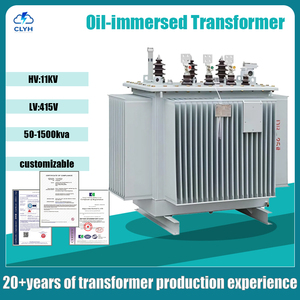
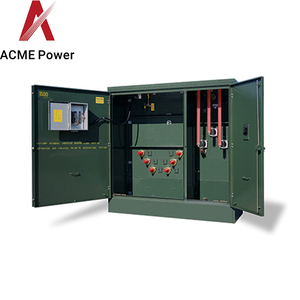
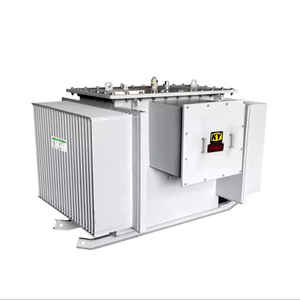
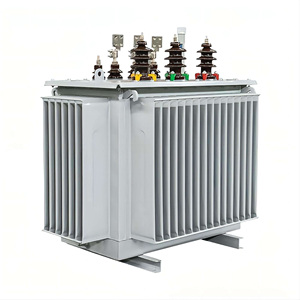
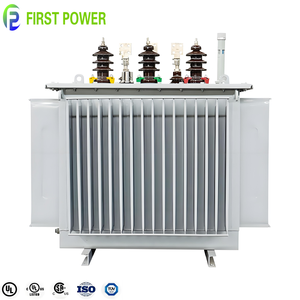
Precision-engineered step-down, distribution, and custom power transformers type-tested to international standards (IEC 60076, IEEE C57, IS 2026 / IS 1180).
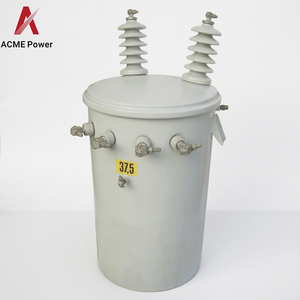
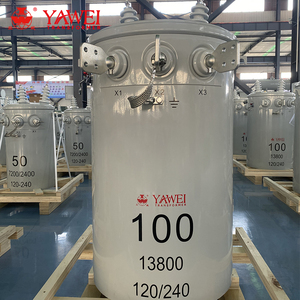
Single Phase Pole Mounted
Latin America Compatible 25kVA Single Phase Pole Mounted Transformer (6.3kV to 110V)
Engineering E-E-A-T Benchmark: What Defines a Tier-1 Custom Transformer Factory?
When engineering critical power infrastructure, procurement leaders cannot evaluate transformer manufacturers based purely on preliminary unit cost. High-voltage power distribution equipment represents the backbone of industrial plants, commercial real estate complexes, public utilities, and renewable energy substations. Achieving an operational lifespan of 30+ years with near-zero un-planned downtime requires strict compliance with international manufacturing benchmarks, premium raw material sourcing, and exhaustive quality validation protocols.
Technical Insight: A top-tier custom transformer manufacturer must maintain direct control over magnetic core fabrication, high-purity copper coil winding, vacuum pressure impregnation (VPI), and automated oil degasification to prevent dielectric insulation breakdown under transient thermal stresses.
Strict Adherence to Global Standards
Custom transformer factories operating at Tier-1 capability build units tested strictly to IS 2026 / IS 1180 / IS 11171, IEC 60076, and IEEE C57 standards. Type-testing verification by third-party accreditors—such as the Central Power Research Institute (CPRI)—validates short-circuit withstand performance, lightning impulse voltage resistance, and thermal rise limits under continuous maximum load conditions.
Cold-Rolled Grain Steel (CRGO)
Utilizing premium 30ZH120 or M4 grade silicon steel laminations with 45-degree mitered joints minimizes hysteresis losses, eddy current dissipation, and acoustic vibration (low noise operation).
99.99% OFC Copper Windings
High-purity Oxygen-Free Copper (OFC) wire and strip featuring thermally upgraded insulation paper ensure exceptional mechanical strength during electromagnetic short-circuit stresses.
Vacuum Oil Processing
High-vacuum oil filtering and degasification units remove dissolved moisture (<10 ppm) and air, maintaining high dielectric breakdown voltage (>60 kV) across all liquid-filled units.
Future Procurement Trends & Technological Evolution of Power Transformers (2025–2030)
The global transformer manufacturing industry is undergoing a structural transition driven by decarbonization, microgrid expansion, high-frequency harmonics from renewable integration, and smart grid automation. Industrial buyers and engineering procurement contractors (EPCs) must align their strategic specifications with the following critical technological shifts:
1. Transition to Ultra-Low Loss Cores: Amorphous Alloy vs. High-B CRGO
Energy efficiency mandates across Europe (EU Ecodesign Tier 2), North America (DOE 2016 / 2024 standards), and Asia have made core loss reduction paramount. While high-permeability domain-refined CRGO steel remains the industrial standard, amorphous alloy cores are increasingly deployed in rural distribution and light-load networks. Amorphous metals feature a non-crystalline atomic structure, lowering no-load losses (iron losses) by up to 70% to 80% compared to standard silicon steel, significantly lowering total cost of ownership (TCO) over a 30-year lifecycle.
2. Eco-Friendly & Fire-Resistant Esters Replacing Mineral Oil
Environmental regulations and urban safety codes are pushing commercial and industrial operators away from traditional mineral oil toward Natural Esters (vegetable-based oils) and Synthetic Esters. Key advantages include:
High Fire Point (>300°C): Classified as K-class insulating fluids, dramatically reducing fire risk in high-density urban areas, underground substations, and indoor installations.
Biodegradability: Non-toxic and 99% biodegradable within 28 days, mitigating chemical spill liability in coastal or ecologically sensitive zones.
Extended Insulation Life: Ester fluids absorb moisture released by paper insulation, slowing down cellulose degradation and extending transformer thermal longevity.
3. Smart Transformers & Digital Twin Maintenance (IoT Integration)
Modern custom transformers are shifting from passive hardware to active grid-node intelligence. Custom factories are embedding continuous online monitoring sensors, including:
Dissolved Gas Analysis (DGA): Real-time optical sensors tracking hydrogen (H2), acetylene (C2H2), and carbon monoxide (CO) to detect incipient arcing or overheating.
Fiber-Optic Hotspot Sensing: Direct winding temperature measurements providing true real-time dynamic thermal loading limits rather than calculated top-oil estimates.
Smart OLTC Controllers: Automated motorized on-load tap changers communicating over IEC 61850 protocol to stabilize voltage fluctuations from intermittent rooftop solar PV installations.
Comparison Matrix: Transformer Technologies for Global Procurement
With established production bases, such as our modern facility at Veerasandra Industrial Area, Bangalore, Chetan Electric Pvt. Ltd. and our affiliated manufacturing partners bring over three decades of engineering mastery to global industrial buyers. We specialize in non-standard primary and secondary voltage configurations, specialized vector groups, high-altitude derating designs, and severe ambient temperature adaptations.
Versatile Manufacturing Spectrum:
Power & Distribution Units: Up to 5000 kVA, 33kV class with automatic voltage relay (AVR) integrated OLTC setups.
Industrial Furnace Transformers: Purpose-built to endure massive current surges, harmonic distortion, and frequent short-circuit duty cycles in arc furnace and induction smelting plants.
Rectifier Transformer Systems: Multi-pulse (6-pulse, 12-pulse, 24-pulse) configurations paired with custom rectifier cubicles for electroplating, electrolysis, and DC traction networks.
High-Voltage Testing Equipment: Power-frequency testing sets up to 150kV for rigorous dielectric withstand lab testing.
Reactors & Special Units: Iron-cored shunt reactors up to 1000 kVAR, air-cored current limiting reactors, and constant voltage ferroresonant transformers (CVT).
Our solutions are field-proven across major infrastructure and enterprise projects, trusted by leading organizations such as Prestige Group, Sobha Developers, Brigade Group, ISRO (Indian Space Research Organisation), BEML, BEL, and KHB Projects.
How do I specify transformer impedance (Uk%) to balance short-circuit current and voltage drop?
Impedance voltage percentage (Uk%) determines both the short-circuit current capacity and the voltage regulation of the transformer. A lower Uk% (e.g., 4%) reduces internal voltage drop under heavy motor starting loads but increases maximum fault current, requiring higher rated downstream circuit breakers. Standard utility distribution transformers typically specify 4.0% to 5.75% Uk%. For high-capacity transformers (>2500kVA) or systems connected to stiff grids, higher impedance (e.g., 7% to 10%) is requested to limit fault energy. Custom factories optimize coil geometry and magnetic gap dimensions to achieve your exact target Uk% within +/- 10% tolerance per IEC standards.
What is the difference between Dyn11 and Ynd11 vector groups, and how do I choose?
Dyn11 signifies a Delta-connected primary, Star (Wye)-connected secondary with a neutral point, where the secondary voltage lags the primary voltage by 30 degrees (11 o'clock position). Dyn11 is the global standard for industrial distribution because the Delta primary traps 3rd harmonic currents generated by non-linear loads and allows unbalanced secondary neutral loading. Ynd11 features a Star primary with a Delta secondary, common in step-up applications (e.g., power generation or solar farms feeding high-voltage transmission lines).
Why is Factory Acceptance Testing (FAT) critical, and what routine tests are conducted?
FAT ensures that the custom transformer built at the factory meets all guaranteed loss parameters and dielectric insulation safety thresholds before ocean freight shipment. Per IS 2026 / IEC 60076, routine tests include: Winding Resistance Measurement, Voltage Ratio & Vector Group Verification, Short-Circuit Impedance and Load Loss Measurement, No-Load Loss and Current Testing, Separate-Source AC Dielectric Voltage Withstand Test, and Induced Overvoltage Withstand Test. Type testing (Short-circuit testing and Lightning Impulse tests) can be verified via CPRI or equivalent accredited laboratory reports.
How does high ambient temperature or altitude impact transformer rating?
Standard transformers are rated for ambient temperatures up to 40°C and altitudes below 1000 meters above sea level. At higher altitudes, thinner air reduces cooling efficiency and dielectric breakdown strength of external bushings. For every 100 meters above 1000m, thermal dissipation drops. Custom factories compensate by enlarging cooling radiator surface areas, increasing oil volume, using higher temperature class insulation (Class H or C), or derating total kVA output to maintain winding hot-spot temperatures below thermal degradation thresholds.
What are the advantages of On-Load Tap Changers (OLTC) vs. Off-Circuit Tap Changers (OCTC)?
OCTC requires the transformer to be completely de-energized on both primary and secondary sides before manually shifting the tap position (typically in +/- 2.5% or +/- 5% steps). It is suited for grids with stable primary voltages. OLTC allows automatic voltage adjustment while the transformer is actively supplying load power, utilizing an Automatic Voltage Relay (AVR) and Remote Tap Changer Cubicle (RTCC). OLTC is essential for industrial plants with sensitive automated equipment, fluctuating utility grids, or microgrids incorporating renewable generation.
Can Chinese custom transformer factories accommodate regional voltage standards like 13.8kV, 415V, 480V, or 110V dual secondary?
Yes. Established custom factories design core and winding layouts specifically for regional grid requirements across North America (60Hz, 13.8kV / 480V / 240V), Latin America (60Hz, 6.3kV / 13.8kV to 110V / 220V), Europe/Asia/Africa (50Hz, 11kV / 20kV / 33kV to 400V / 415V), and specialized mining/industrial split-phase setups. All units can be custom-wrapped with dual secondary windings or multi-tap primary switches.
What corrosion protection is applied for offshore or coastal industrial installations?
Transformers installed near coastal areas, chemical refining plants, or offshore platforms require C4 or C5-M (Marine Grade) multi-layer anti-corrosion paint systems per ISO 12944. The process includes sandblasting to Sa 2.5 standard, primer coating with zinc-rich epoxy, an intermediate epoxy tie-coat, and a polyurethane topcoat with a total dry film thickness (DFT) exceeding 240 to 300 microns. Stainless steel hardware, hermetically sealed corrugated tanks, and marine-grade brass valves are also integrated.
What is the typical manufacturing lead time for custom distribution and power transformers?
Lead times vary by complexity and raw material availability. Standard distribution transformers (50kVA - 1000kVA) typically take 3 to 4 weeks from approval of final dimensional engineering drawings. Complex power transformers (above 2500kVA up to 5000kVA) featuring OLTC, special furnace duty, or ester oil filling generally require 6 to 8 weeks, including complete factory routine acceptance testing. Fast-track production lines can be coordinated for emergency replacement procurement.
Partner with a Leading Custom Transformer Factory
Engineered to your exact technical specifications. Whether you require oil-immersed distribution transformers, dry-type units, or special furnace/rectifier systems up to 33kV / 5000kVA—our engineering team delivers world-class quality with verified CPRI test compliance and global delivery capability.