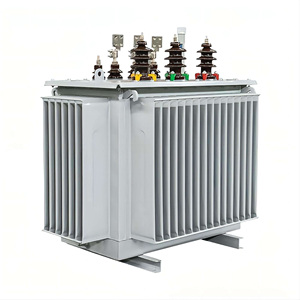
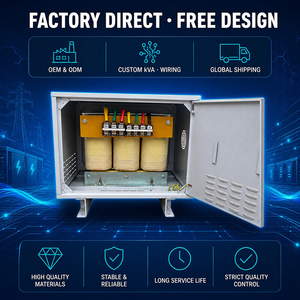
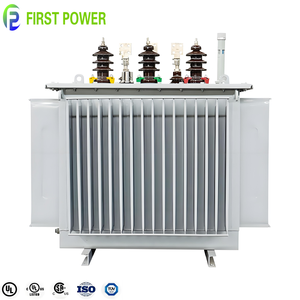
Technical Whitepaper & Global Sourcing Guide: Enterprise-Grade Oil-Immersed, Dry-Type, Pad-Mounted & Special Application Transformers Engineered for High Grid Reliability and IEEE/IEC Compliance.
Executive Sourcing Briefing: The Modern Power Transformer Landscape
As global power grids undergo unprecedented modernization—driven by renewable energy integration, high-voltage industrial electrification, and aging infrastructure replacements—procuring robust electrical distribution equipment has become a critical strategic objective. China has emerged as the premier international hub for power transformer design and manufacturing, combining raw material supply chain dominance (such as high-grade Grain-Oriented Electrical Steel and electrolytic copper) with state-of-the-art testing infrastructure.
This comprehensive industry guide evaluates structural transformer topology, core loss optimization algorithms, dielectric fluid thermodynamics, and procurement criteria required by Engineering, Procurement, and Construction (EPC) firms, utility operators, and industrial enterprises globally.
Information Gain Insight: Modern electrical equipment buyers must evaluate transformers beyond nameplate kVA rating. Total Cost of Ownership (TCO) models dictate that No-Load Loss ($P_0$) and Load Loss ($P_k$) evaluation over a 30-year operational lifecycle far outweigh initial capital expenditures (CAPEX). China's leading exporters utilize laser-scribed silicon steel laminations and automated foil winding machinery to reduce core eddy currents by up to 22%.
Flagship Power & Distribution Transformers
Certified, Type-Tested, and Custom-Engineered for Global Utilities & Heavy Industry
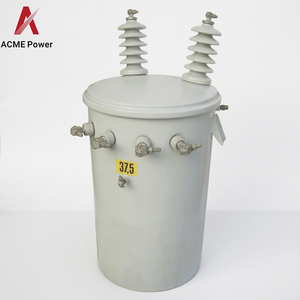
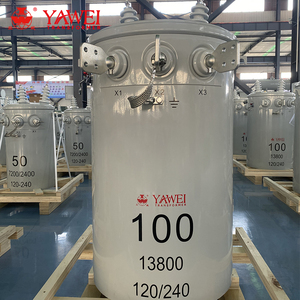
Latin America Compatible 25kva Single Phase Pole Mounted Transformer 6.3kv To 110v High Quality Distribution Transformer
Manufacturing low-loss, reliable transformers demands absolute adherence to rigorous metallurgical and thermodynamic principles. Our production lines integrate ISO 9001 certified quality control management with full compliance to IEC 60076, IEEE C57, IS 2026, IS 1180, and IS 11171 standard directives.
Core Lamination Metallurgy
Utilizes high-permeability, cold-rolled grain-oriented (CRGO) silicon steel sheets (e.g., M0H, M4 grades) assembled using full-mitred step-lap stacking techniques to drastically reduce magnetic reluctance and acoustic noise levels.
High-Grade Winding Technologies
Employs high-purity, oxygen-free electrolytic copper or electrical-grade aluminum conductors wrapped in thermally enhanced Nomex or Kraft paper insulation. Automatic foil winding machinery prevents axial short-circuit displacement forces.
VPI & Vacuum Drying Control
Dry-type transformers undergo Vacuum Pressure Impregnation (VPI) with Class H polyester resin. Oil-immersed units undergo deep vacuum moisture extraction (< 10 microns) followed by automated oil degasification.
Every unit leaving the manufacturing floor undergoes comprehensive routine testing per international standards, including Winding Resistance, Voltage Ratio & Vector Group verification, Impedance Voltage & Load Loss, No-Load Loss & Current measurement, and Separate-Source AC Withstand Voltage tests. Type testing (Short-Circuit Withstand and Lightning Impulse Voltage Tests) is validated at independent national laboratories such as the Central Power Research Institute (CPRI).
Engineering Comparison Matrix: Liquid-Filled vs. Dry-Type Transformers
To assist procurement teams in selecting optimal equipment for specific operational environments, the table below delineates the performance and structural parameters of primary transformer classes:
The global power transformer market is undergoing fundamental technological shifts. Global EPC buyers and utility procurement officers must factor the following five macro-trends into their multi-year equipment specification strategy:
1. Transition to Eco-Friendly Ester Fluids
Synthetic and natural ester fluids (derived from vegetable oils) are replacing traditional mineral oils in urban and ecologically sensitive installations. Ester fluids boast high flash points (> 300°C), eliminating fire hazards, and are 100% biodegradable within 28 days.
2. Smart Transformers with Integrated IoT Sensors
Industry 4.0 digitisation has made real-time condition monitoring standard. Next-generation Chinese power transformers integrate online Dissolved Gas Analysis (DGA), fiber-optic direct winding temperature sensing, and automated bushing health monitoring connected to SCADA systems.
3. Ultra-Low Loss Amorphous Metal Cores
For rural distribution and green energy microgrids, Amorphous Alloy core transformers are superseding silicon steel. Amorphous metals feature a non-crystalline atomic structure, lowering No-Load core losses ($P_0$) by up to 70% to 80% compared to standard CRGO cores.
4. Solid-State Transformers (SST) Integration
As EV charging corridors and direct-current (DC) microgrids expand, hybrid Solid-State Transformers incorporating power semiconductors (SiC/GaN) are emerging to manage bi-directional power flow and high-frequency voltage conversions.
Global B2B Procurement FAQ: Power & Distribution Transformers
Answers to critical engineering and logistical questions raised by global EPC contracts, procurement engineers, and utility buyers when sourcing Chinese electrical equipment.
Q1: How do Chinese transformer suppliers calculate Total Cost of Ownership (TCO) for utility bids?
TCO evaluation factors initial purchase price ($A$), capitalized cost of no-load loss ($A \times P_0$), and capitalized cost of load loss ($B \times P_k$). The standard formula applied is:
TCO = CAPEX + (A × P₀) + (B × Pₖ) Leading Chinese exporters optimize core cross-section geometry and select laser-scribed silicon steel grades to minimize $P_0$, ensuring the total 30-year operational cost meets stringent European Eco-design Directive (EU 2019/1783) and US DOE 2016 efficiency standards.
Q2: What vector group configurations are available for international distribution networks?
Transformers can be manufactured in any standard IEC or IEEE vector group based on system grounding and phase displacement requirements. Common configurations include:
Dyn11 / Dyn5: Standard for 3-phase 4-wire low voltage step-down distribution, providing a neutral point for single-phase loads and triplen harmonic mitigation.
Ynd11: Widely used in transmission step-down substations for system grounding flexibility.
Yyn0: Applied in balanced 3-phase industrial power distribution networks.
Q3: What altitude derating factors must be considered for high-altitude installations?
Per IEC 60076-2, standard transformer thermal performance and dielectric clearances are rated for operation below 1,000 meters (3,300 feet) above sea level. At higher altitudes, reduced air density impairs cooling efficiency and lowers external insulation dielectric breakdown strength. For altitudes above 1,000m, temperature rise ratings are derated by 0.4% to 0.5% for every 100 meters, and external bushing creepage distances are increased.
Q4: What is the difference between ONAN, ONAF, OFAF, and ODAF cooling designations?
These acronyms define the internal and external cooling mechanisms of liquid-immersed transformers:
ONAN (Oil Natural Air Natural): Thermosiphon oil circulation with natural air convection across external radiator tubes. Ideal for standard continuous ratings.
ONAF (Oil Natural Air Forced): Adds electric cooling fans to radiators, boosting transformer load capacity by 25% to 33%.
OFAF / ODAF (Oil Forced Air Forced / Directed): Uses oil pumps to direct high-velocity oil flow through core and winding ducts for heavy industrial and power station step-up applications.
Q5: How are transformers protected against short-circuit mechanical forces during fault conditions?
Short-circuit currents induce severe radial bursting and axial compression forces on transformer windings. Chinese quality manufacturers counter these stresses by using pre-compressed high-density pressboard insulation, radial cooling ducts with lock-strip construction, self-bonding transposed conductors (CTC), and hydraulic clamping structures held under permanent spring tension.
Q6: What Factory Acceptance Testing (FAT) procedure is performed prior to global shipping?
Prior to dispatch, every transformer undergoes FAT witnessed by client engineers or third-party inspection agencies (e.g., SGS, Bureau Veritas, Intertek). FAT protocols cover:
Insulation Resistance (Megger) & Polarization Index (PI) testing.
Voltage ratio, polarity, and vector phase relationship checks.
Winding resistance measurement across all tap positions.
No-load loss and load loss measurement at rated frequency.
Applied voltage AC withstand & Induced Overvoltage partial discharge tests.
Transformer oil breakdown voltage (BDV) and moisture content analysis.
Q7: Can tap-changer configurations be customized for frequent voltage fluctuation grids?
Yes. Transformers can be equipped with either an Off-Circuit Tap Changer (OCTC) for seasonal grid adjustment or an On-Load Tap Changer (OLTC) for dynamic, automatic voltage regulation under load. OLTC units can be paired with Remote Tap Changer Cubicles (RTCC) and Automatic Voltage Relays (AVR) to maintain strict output voltage stability.
Q8: How are transformers prepared for ocean freight packaging and anti-corrosion protection?
Export units feature C4 or C5-M industrial marine-grade multi-layer polyurethane or epoxy paint systems resistant to salt-spray and ultraviolet degradation. Radiators, conservator tanks, and delicate bushings are disassembled and packed in vacuum-sealed moisture-proof aluminum foil barriers within heavy-duty wooden crates (ISPM 15 heat-treated). Larger transformer tanks are shipped nitrogen-purged under positive pressure to eliminate moisture ingress.
Why Partner With Leading Chinese Power Transformer Manufacturers
Building resilient energy systems requires technical synergy between project designers and equipment manufacturers. By leveraging mature industrial infrastructure, end-to-end material integration, and rigorous compliance testing, top-tier Chinese power transformer suppliers provide unparalleled strategic advantages to global buyers:
Vertical Supply Chain Integration: Direct access to domestic high-purity electrolytic copper refineries and premier CRGO steel mills ensures stable pricing and minimized lead times.
Tailored Engineering Customization: Ability to adapt physical footprints, bush placement, terminal boxes, and dual-voltage primary windings to retrofits or greenfield substations.
Rigorous Quality Verification: State-of-the-art high voltage impulse test labs, partial discharge shielded rooms, and automated oil processing stations guarantee long-term field reliability.
Global After-Sales & Engineering Support: Dedicated commissioning support, spare parts availability, and technical documentation supplied in compliance with local utility standards.
Request a Customized Technical Quote & Engineering Consultation
Speak with our senior transformer design engineers today. We provide full technical proposals, single-line diagrams (SLD), losses datasheets, and competitive commercial bids tailored to your project requirements.