
Custom-engineered oil-immersed, dry-type, and pole-mounted power solutions certified to IEC 60076, IEEE, and ISO 9001 standards.
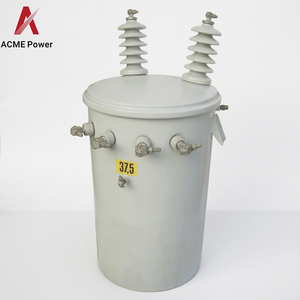
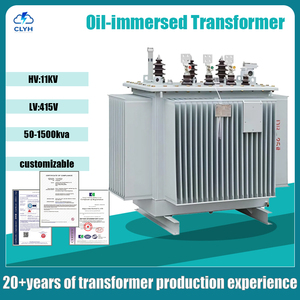
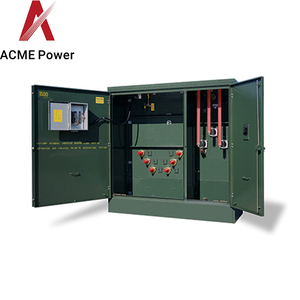
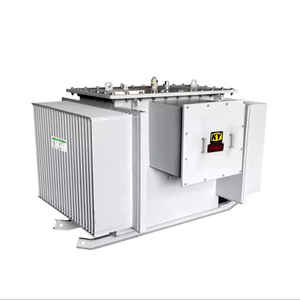
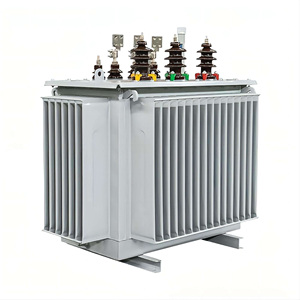

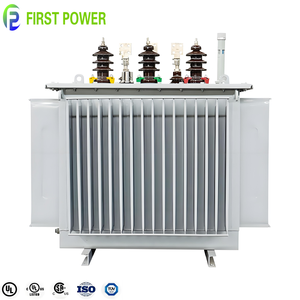
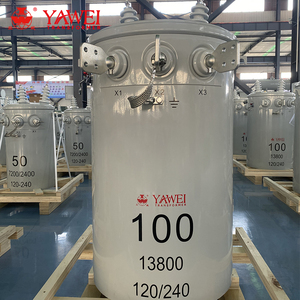
Established with over three decades of pioneering electrical engineering heritage, our advanced manufacturing infrastructure represents the pinnacle of high-voltage (HV) and extra-high-voltage (EHV) equipment design. As a premier ISO 9001 certified global supplier and exporter, we specialize in high-efficiency oil-immersed transformers, dry-type distribution units, custom furnace equipment, and state-of-the-art shunt reactors rated up to 1000 KVAR and high voltage ratings exceeding 33kV to 400kV grids.
In modern electrical grid power system stability, reactive power compensation is no longer optional—it is a critical imperative. Shunt reactors serve as the most effective compact device for absorbing reactive power (MVAr) generated by long, lightly loaded transmission lines or extensive underground cable networks. By counteracting line capacitance and preventing unacceptably high voltage rise (the Ferranti Effect), our shunt reactor architectures maintain network stability, reduce system losses, and safeguard sensitive sub-station apparatus.
E-E-A-T Quality Commitment: All custom power transformers and shunt reactors are type-tested and validated at recognized independent high-voltage laboratories, including CPRI (Central Power Research Institute). Routine tests adhere strictly to IS 2026, IS 1180, IS 11171, IEEE C57.121, and IEC 60076 series standards, ensuring absolute thermal integrity, low acoustic noise emissions, and structural durability against severe short-circuit electromagnetic forces.
Verified impulse withstand voltage, temperature rise, and short-circuit capability under harsh environmental parameters.
Precision-engineered radial iron cores with non-magnetic gap spacers for strict linear V-I response and low fringe flux loss.
Structural damping frames, elastomeric core pads, and low magnetostriction silicon steel minimize ambient operational decibels.
When evaluating high-voltage grid stability, understanding the difference between shunt reactors and conventional power transformers is essential. While a power transformer transfers energy between voltage levels, a shunt reactor acts as a single-winding inductive load permanently connected or switched via circuit breakers to high-voltage transmission lines or tertiary windings of power transformers. Its primary purpose is to absorb capacitive reactive power, suppressing voltage swells during low-load intervals.
Global procurement teams must select between oil-immersed gapped iron-core reactors and dry-type air-core reactors based on installation environment, footprint limitations, and system voltage limits:
| Technical Parameter | Oil-Immersed Gapped Core Reactor | Dry-Type Air-Core Reactor |
|---|---|---|
| Voltage Capability | Medium to Extra High Voltage (Up to 800kV) | Medium to High Voltage (Up to 145kV) |
| Magnetic Flux Path | Contained inside gapped silicon steel core & shields | Unconfined open magnetic field (Requires safety clear zone) |
| Substation Footprint | Compact enclosed tank design; minimal spatial footprint | Requires wide magnetic clearance away from steel structures |
| Cooling Medium | ONAN / ONAF Oil Immersion (Synthetic / Natural Ester option) | Natural Air (AN) forced ventilation |
| Acoustic & Vibration Mitigation | Heavy internal clamping, cushion dampers, low dB sound enclosure | Inherently quieter magnetic circuit; structural air frame vibration |
| Loss Evaluation & Maintenance | Ultra-low magnetic stray loss; oil sampling / DGA required | Zero dielectric fluid maintenance; higher air eddy losses |
Our manufacturing plant leverages cold-rolled grain-oriented (CRGO) silicon steel laminations stacked with precise millimeter-level gaps filled with high-rigidity ceramic or mineral-epoxy spacers. This core design prevents saturation even under emergency over-voltage conditions up to 1.5 per-unit (p.u.), guaranteeing linear reactive power absorption without generating detrimental odd-order harmonics into the transmission grid.
As global utility providers transition toward decentralized renewable generation (utility-scale solar PV arrays, offshore wind farms) and ultra-high-voltage direct current (HVDC) interconnectors, the demand for sophisticated shunt reactors from China is accelerating exponentially. Sourcing directors must align their procurement strategies with four key market evolutions:
Modern wind and solar farms exhibit highly fluctuating power output. Variable Shunt Reactors equipped with On-Load Tap Changers (OLTC) allow utilities to dynamically step reactive power absorption in real-time, eliminating discrete circuit breaker switching stress.
Environmental regulations are replacing conventional mineral oil with natural and synthetic ester fluids. Ester-filled shunt reactors provide high flash points (>300°C), superior fire risk mitigation, and zero toxic soil impact upon accidental spillage.
Global buyers now demand real-time telemetry. Our smart shunt reactors incorporate fiber-optic thermal sensors directly embedded within winding turns alongside online Dissolved Gas Analysis (DGA) monitors for predictive CBM (Condition-Based Maintenance).
China has firmly established itself as the global epicenter for electrical grid equipment manufacturing, offering an unprecedented balance of technological superiority, scale economies, and supply chain vertical integration. Top Chinese suppliers maintain state-of-the-art vacuum drying chambers, automated core-stacking lines, and fully shielded high-voltage test halls capable of performing full-scale lightning impulse and partial discharge (PD) testing below 5 picocoulombs (pC).
By partnering with an established exporter possessing comprehensive international certification (ISO 9001, CE, KEMA, CPRI testing compliance), international EPC contractors achieve up to 30% cost efficiency while securing equipment lifespans exceeding 40 years under extreme tropical, desert, or arctic service conditions.
To avoid delivery delays and expensive engineering change orders (ECOs), power system procurement engineers should prepare complete technical dossiers when requesting quotations from OEM suppliers. Below is the critical engineering verification matrix required for standard shunt reactor and transformer RFQs:
| RFQ Specification Item | Engineering Parameter Requirement | Operational Impact |
|---|---|---|
| Rated Voltage & Frequency | e.g., 11kV, 33kV, 132kV, 400kV @ 50Hz / 60Hz | Determines winding insulation thickness, creepage distance, and bushing selection. |
| Rated Reactive Power (MVAr / KVAR) | Continuous rating or variable tap range (e.g., 10 to 50 MVAr) | Defines thermal capacity, tank volume, and cooling radiator bank sizing. |
| Linearity Voltage Limit | Up to 1.2, 1.3, or 1.5 p.u. (per-unit overvoltage) | Prevents core saturation and flux leakage during grid fault events. |
| Basic Insulation Level (BIL) | Lightning Impulse & Power Frequency Withstand (kV peak) | Protects equipment against atmospheric surges and switching transients. |
| Cooling Class & Fluid Type | ONAN, ONAF, OFAF / Mineral Oil or Synthetic Ester | Affects thermal dissipation efficiency, fire safety, and maintenance intervals. |
| Acoustic Noise Limit | dBA level measured at 1 meter per IEC 60076-10 | Mandatory for substations located near residential zones. |
Customization Capability: Whether you require pole-mounted single-phase distribution transformers (6.3kV to 110V for Latin American utilities), 1500KVA Dyn11 pad-mounted units, or EHV iron-cored shunt reactors with remote tap changer cubicles (RTCC), our engineering team provides end-to-end electrical and 3D CAD mechanical drawings within 48 hours of RFQ submission.
Whether you require custom reactive power compensation reactors, CPRI type-tested oil transformers, or dry-type distribution units up to 5000 KVA 33kV, our engineering team is ready to support your technical specifications with factory-direct pricing.