
The global power transmission, renewable energy, and power electronics sectors are experiencing unprecedented growth driven by decarbonization, electric vehicle (EV) infrastructure adoption, and high-frequency power supply miniaturization. At the center of this transition lies magnetic core technology. Selecting top China transformer core suppliers requires evaluating raw material metallurgy, thermal performance stability, magnetic loss profiles, micro-level machining tolerances, and stringent quality assurance frameworks.
This technical whitepaper provides industrial engineers, procurement officers, and transformer manufacturers with an authoritative evaluation of high-performance magnetic cores—ranging from Manganese-Zinc (Mn-Zn) and Nickel-Zinc (Ni-Zn) soft ferrites to non-oriented silicon steel laminations and precision split-core instrument current transformers. Explore core geometry selection criteria, core loss calculation trends, and global supply chain risk mitigation protocols.
Explore high-permeability, low-loss magnetic cores engineered for switching power supplies, utility distribution, and high-precision current instrumentation.
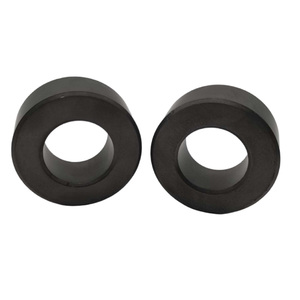
Material: Mn-Zn Soft Ferrite (P40, H6K, H10K)
Permeability: High $\mu_i$ up to 10,000
Feature: Adjustable Air Gap Value
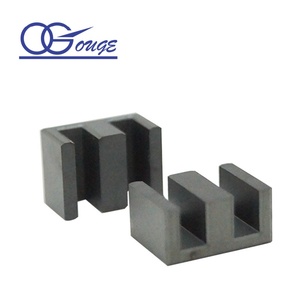
Material: DMT PC44 / PC95 Grade
Geometries: EE13 to EE55 Standard
Application: SMPS Flyback & Push-Pull
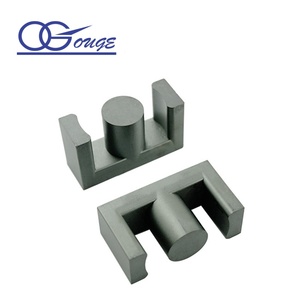
Geometry: ETD Series (Round Center Post)
Frequency: 20 kHz – 500 kHz
Advantage: Optimized Winding Area
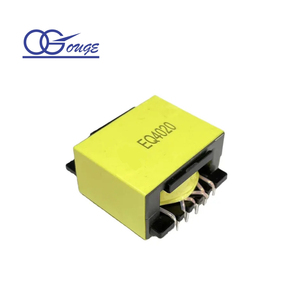
Topology: Compact EQ Geometry
Pin Configuration: Vertical Pin 5+5
Use Case: Low-profile AC-DC Converters
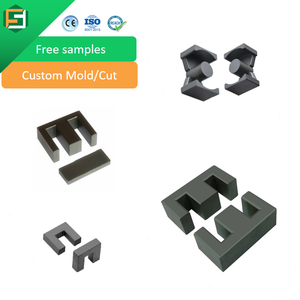
Structure: Classical E-I / E-E Shape
Composition: High Saturation Mn-Zn
Application: Industrial Power Supplies
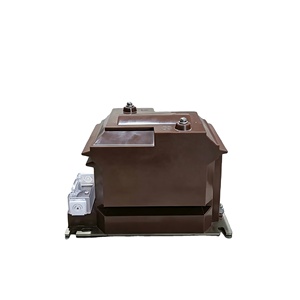
Voltage Class: 10kV Medium Voltage
Core Design: Precision Split-Core
Frequency: 50Hz / 60Hz Power Utility
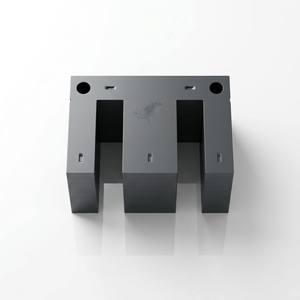
Material Grade: 50W470 Silicon Steel
Machining: Interlocking Stamping
Tolerance: Extreme Precision ±0.02mm
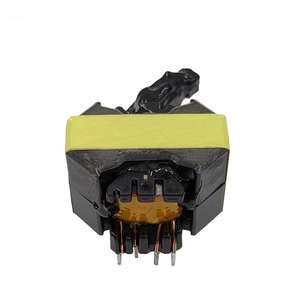
Core Form: RM (Rectangular Modular)
Accessory: Phenolic Bobbin Included
Voltage Range: 12V - 220V Switching
Understand how material characteristics dictate electrical efficiency, thermal management, and physical footprint in power conversion systems.
Mn-Zn ferrites offer high initial permeability ($\mu_i = 2000 \text{ to } 10000$) and high saturation induction. Materials like PC44 and PC95 maintain low power losses across temperature ranges from 25°C to 100°C, making them ideal for SMPS, flybacks, and resonant converters.
Cold-rolled non-oriented silicon steel laminations provide high electrical resistivity and superior magnetic flux density. Precision interlocking stamping with $\pm0.02\text{mm}$ tolerances ensures minimal eddy current losses in 50Hz/60Hz instrument current transformers.
Toroidal cores provide a closed magnetic path, virtually eliminating stray magnetic flux leakage. Custom adjustable air gaps prevent magnetic saturation in DC-biased chokes and energy storage inductors in renewable inverters.
When evaluating suppliers in China, comparing core specification tables is vital for selecting the right core for your switching frequency, thermal class, and saturation requirements.
| Material Grade | Material Type | Initial Permeability ($\mu_i$) | Sat. Flux Density ($B_s$ @ 25°C) | Curie Temp ($T_c$) | Optimal Freq. Range | Primary Industrial Application |
|---|---|---|---|---|---|---|
| PC44 / P40 | Mn-Zn Soft Ferrite | 2400 ± 25% | 510 mT | > 215°C | 25 kHz – 200 kHz | Main SMPS Transformers, Telecommunications |
| PC95 | Mn-Zn Soft Ferrite | 3000 ± 25% | 530 mT | > 225°C | 20 kHz – 500 kHz | High Efficiency Automotive & Industrial Power Supply |
| H6K / H10K | High-$\mu$ Mn-Zn Ferrite | 6000 – 10000 | 380 mT | > 130°C | 10 kHz – 100 kHz | EMI Noise Filters, Broadband Transformers, Chokes |
| 50W470 | Non-Oriented Silicon Steel | 1500 – 3000 | 1500 mT (1.5 T) | 740°C | 50 Hz – 400 Hz | Distribution Transformers, Instrument CTs, Motors |
| Nanocrystalline | Ribbon Core Alloy | 30000 – 80000 | 1200 mT (1.2 T) | 570°C | 10 kHz – 100 kHz | Common Mode Chokes, EV Charging Infrastructure |
The manufacturing ecosystem for transformer cores in China has shifted from low-cost mass production to high-precision engineering, compliant with global environmental and efficiency mandates (such as EU Tier 2 Eco-design standards and US DOE 2026 guidelines).
The transition from silicon MOSFETs to Gallium Nitride (GaN) and Silicon Carbide (SiC) semiconductors allows power supplies to operate at switching frequencies exceeding 500 kHz up to 3 MHz. This shift demands magnetic core materials with ultralow AC core loss densities. Suppliers are increasingly optimizing high-frequency soft ferrites and planar transformer cores (such as EQ and RM geometries) to minimize proximity effect losses and skin effect resistance.
In power factor correction (PFC) inductors and energy storage transformers, strict inductance ($A_L$ value) tolerances are required. Top Chinese exporters now utilize multi-axis CNC grinding machines capable of adjusting air-gap depths down to micron-level tolerances. For silicon steel laminations, interlocked stamping eliminates the need for manual riveted stacks, reducing eddy currents and vibration noise.
B2B buyers are migrating from purchasing raw magnetic cores toward sourcing turnkey magnetic assembly kits—combining cores, precision phenolic or PET bobbins, clip retainers, and insulation barriers. Sourcing integrated core-and-bobbin sets drastically lowers assembly labor costs for global OEMs.
Strict compliance with RoHS, REACH, and Conflict-Free Mineral standards has become mandatory. European and North American importers demand verifiable chemical test reports certifying zero lead, cadmium, or hazardous binding resin content in ferrite powders and lamination coatings.
Below are critical technical and commercial considerations for engineering teams and procurement specialists evaluating transformer core suppliers.
With over three decades of dedicated power engineering experience, our production and testing facilities meet the highest international standards. Fully ISO 9001 certified, our transformers and core assemblies undergo type-testing at the Central Power Research Institute (CPRI), complying strictly with IS 2026, IS 1180, and IS 11171 specifications.
Whether you require custom-engineered Mn-Zn soft ferrite cores (EE, ETD, EQ, RM, Toroidal), precision 50W470 silicon steel laminations, or high-voltage split-core instrument CT components, our expert engineering team delivers end-to-end technical support from prototype sampling to mass production.