Top Trusted Cast Resin Suppliers & Exporters

Global Industry Whitepaper: Advanced Polymer Formulations, Engineering Vacuum Casting Standards & Procurement Intelligence for B2B Enterprise Buyers

High-Performance Cast Resin Portfolio

Verified polymer casting solutions, polyurethane liquids, specialty furan resins, and ion-exchange systems engineered for demanding industrial applications.
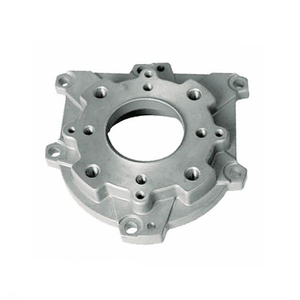
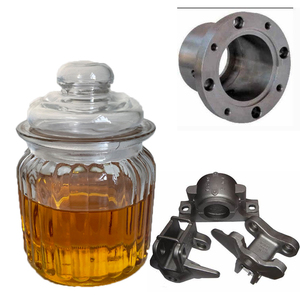
Custom OEM Auto Engine Block Resin Aluminum Die Casting Part

Custom OEM Auto Engine Block Resin High Pressure Aluminum Die Casting Part Automotive Parts Runpeng ISO9001 Certified

Send an Inquiry
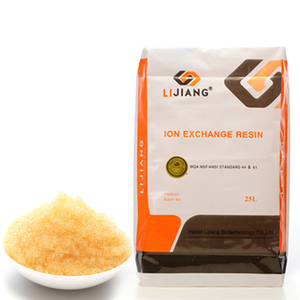
Water Treatment Resin Beads Food Grade Cation Resin

Great Quality Water Treatment Resin Beads Food Grade Cation Resin Portable Water Softening Purolite Ion Exchange Resin

Send an Inquiry
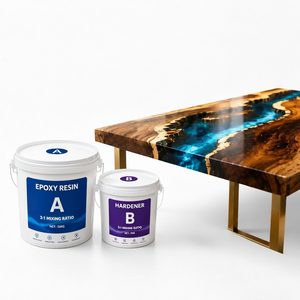
Epoxy Low Viscosity 3:1 Deep Casting Resin

Epoxy Low Viscosity 3:1 Deep Casting Resin for Packaging and Professional Woodworkers

Send an Inquiry
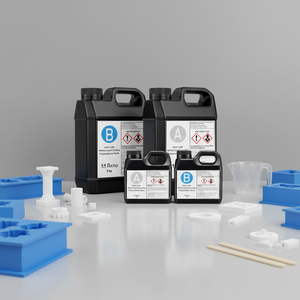
Polyurethane Fast Cure Casting Resin 75D

1:1 Polyurethane Fast Cure Casting Resin 75D Low Viscosity Low Odor For Anime Figure/Scale Model/Art Sculptures/Collectible Toy

Send an Inquiry
Foundry Resin Furan Resin CAS No. 25212-86-6

Wholesale Price CAS No. 25212-86-6 Foundry Resin Furan Resin/Furan Resin

Send an Inquiry
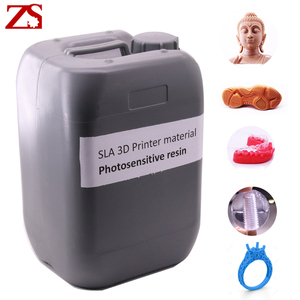
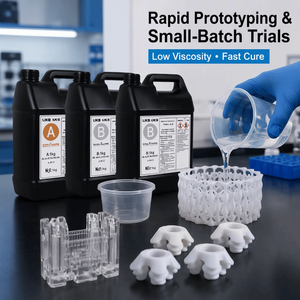
Casting Resin 3D Printing UV Resin

Casting Resin 3D Printing UV Resin Good Quality

Send an Inquiry
Polyurethane Liquid Plastic Casting Resin

Polyurethane Liquid Plastic Casting Resin

Send an Inquiry
Polyurethane Vacuum Casting Resin Heat Resistant PU Resin

1A:2B Polyurethane Vacuum Casting Resin Two Component Heat Resistant PU Resin For Figurines Statues Sculptures Industrial Parts

Send an Inquiry
30+
Years Manufacturing R&D
600+
Global Industrial Clients
ISO 9001
Certified Quality Facilities
100%
Batch Vacuum Tested

Enterprise Manufacturing Competence & Engineering Excellence

As a global pioneer in industrial polymer casting and specialty chemical formulation with over three decades of operational history (established 1994), our manufacturing infrastructure represents the pinnacle of reliability, custom engineering, and rigorous compliance. Operating under strict ISO 9001:2015 quality management standards, our facilities deliver high-performance cast resin formulations and die-casting components engineered to withstand extreme thermal, electrical, and mechanical stress.

Every batch of cast resin—from low-viscosity epoxy potting compounds and 75D polyurethane vacuum resins to high-purity food-grade ion exchange beads and foundry furan resins—undergoes comprehensive laboratory validation. Our in-house testing protocols mirror internationally recognized standards (including ASTM, IS 2026 / IS 1180 / IS 11171 specifications, and CPRI equivalent type-testing), ensuring that physical properties such as tensile strength, glass transition temperature (Tg), shore hardness, and dielectric breakdown voltage meet exact client tolerances.

Certified Batch Quality

Full batch traceability with complete GC-MS analysis, viscosity profiling, and moisture titration report included with every container shipment.

Custom Formulation R&D

Bespoke modification of pot life, gel time, flame retardancy (UL94 V-0), color tinting, and filler loadings (silica, alumina trihydrate) to exact specifications.

Global Export Logistics

Temperature-controlled iso-tank, flexi-bag, and sealed drum packaging engineered to prevent moisture contamination across international transit routes.

Technical Material Science: Categorization & Engineering Metrics

Selecting the optimal cast resin polymer system requires evaluating physical, mechanical, thermal, and electrical metrics against specific industrial processing constraints. Cast resins are broadly categorized based on their underlying polymer chemistry, curing mechanisms, and structural behavior during phase transition.

Information Gain: Controlling Exothermic Peak Temperatures
In mass casting applications (e.g., deep wood encapsulation or thick section transformer insulation), unmanaged exothermic reactions cause thermal shrinkage, internal bubble entrapment, and micro-cracking. Our proprietary low-viscosity 3:1 and 2:1 liquid casting systems utilize aliphatic amine hardeners that slow the gelation kinetics, maintaining peak exotherm below 65°C even in castings exceeding 50mm in thickness.

Cast Resin Polymer Comparison Matrix

The table below provides empirical physical property benchmarks across primary industrial resin classes supplied to global OEMs:

Resin Category Primary Chemistry Mix Ratio / Curing Viscosity (mPa·s @ 25°C) Shore Hardness Heat Deflection Temp (HDT) Key Target Applications
Deep Cast Epoxy Bisphenol A / Aliphatic Amine 3:1 or 2:1 by weight 250 – 450 80D – 85D 65°C – 85°C Woodworking, encapsulation, optical clarity art
Vacuum PU Casting Isocyanate / Polyol Blend 1:1 or 1A:2B by weight 600 – 1,100 75D – 82D 95°C – 120°C Rapid prototyping, anime figures, scale models
Liquid PU Plastic Polyurethane Prepolymer 1:1 by volume/weight 150 – 300 70D – 75D 70°C – 90°C Industrial parts, statuary, low-pressure molding
Foundry Furan Resin Furfuryl Alcohol / Formaldehyde Acid-catalyzed self-cure 15 – 45 N/A (Binder) > 1400°C (Sand Refractory) Metal casting sand molds, iron/steel foundries
3D Printing UV Resin Methacrylate / Photoinitiator 405nm UV Light Cured 150 – 350 80D – 88D 55°C – 75°C High-precision miniatures, dental models, jewelry
Ion Exchange Cation Crosslinked Polystyrene Sulfonate Bead form (Pre-hydrated) N/A (Spherical Beads) N/A (Gel matrix) Up to 120°C Water softening, demineralization, food grade processing

Technology Trends & Formulation Innovations in Cast Resins

The global synthetic resin industry is undergoing a structural transition driven by decarbonization mandates, workplace toxicity regulations, and the demand for higher mechanical performance under extreme operating environments. Leading manufacturers and exporters are investing heavily in five core technological vectors:

1. Bio-Based Monomer Integration & Decarbonization

Traditional epoxy and polyurethane casting systems rely almost exclusively on petrochemical feedstocks (such as Epichlorohydrin, Bisphenol A, and Toluene Diisocyanate). Advanced R&D has unlocked bio-based polyols derived from cashew nut shell liquid (CNSL), soybean oil, and lignin derivatives. Modern bio-cast resins now achieve up to 45% bio-carbon content while matching or exceeding the tensile strength (65 MPa) and thermal stability of 100% fossil-derived precursors.

2. Ultra-Low VOC & Odorless Polyurethane Chemistries

In closed-loop prototype production and indoor figurine manufacturing, solvent emissions and volatile organic compounds (VOCs) present severe occupational safety hazards. The development of solvent-free, zero-VOC 1:1 and 1A:2B polyurethane liquid plastic resins has eliminated harmful monomer vapor off-gassing. These formulations maintain ultra-low viscosity (<200 mPa·s) without relying on reactive diluents, ensuring complete air bubble escape prior to gelation.

3. Nano-Filler Reinforcement for High Thermal Dissipation

In heavy electrical casting (such as dry-type distribution transformers, switchgear bushings, and high-voltage motor potting), standard unfilled epoxy resins suffer from poor thermal conductivity (~0.2 W/m·K). Innovations in surface-modified nano-alumina, boron nitride, and micro-silica incorporation allow cast resins to achieve thermal conductivities exceeding 1.2 to 1.5 W/m·K while maintaining high dielectric strength (>22 kV/mm), preventing localized hot-spots and insulation breakdown.

4. High-Temperature Vacuum Casting PU (HDT > 120°C)

Historically, polyurethane vacuum casting materials were limited by low heat deflection temperatures (HDT < 70°C), restricting their utility in functional automotive under-the-hood components. Breakthroughs in cycloaliphatic isocyanate cross-linking now allow 2-component heat-resistant PU resins (such as 1A:2B formulations) to withstand continuous operating temperatures up to 120°C after post-curing, effectively bridging the gap between rapid prototyping and end-use production parts.

5. Eco-Friendly Foundry Furan Systems with Low Free Formaldehyde

In the foundry industry (CAS No. 25212-86-6), traditional furan resins emitted significant sulfur dioxide and free formaldehyde during the sand binder acid-curing process. Modern cold-box and self-curing furan resins feature reduced free formaldehyde contents (<0.05%), drastically lowering ambient emissions in iron and steel foundries while improving sand collapsibility and casting surface finish.

Future Sourcing & Global Procurement Trends

Procurement managers and supply chain directors in the automotive, electrical, water treatment, and manufacturing sectors are shifting from pure unit-cost purchasing to strategic lifecycle sourcing. Navigating raw material volatility and strict environmental compliance requires an understanding of key international procurement trends:

  • Supplier Audit Rigor & ISO/REACH Compliance: International buyers are consolidating orders with accredited direct manufacturers who maintain ISO 9001, ISO 14001, and REACH/RoHS documentation, ensuring uninterrupted export access into European and North American markets.
  • Total Cost of Ownership (TCO) Optimization: Factoring in scrap rates caused by air entrapment, uneven moisture absorption, or batch instability. Premium low-viscosity resins with extended pot life reduce part defect rates by up to 18%, yielding lower total production costs despite marginal resin unit premiums.
  • Custom Packaging & Cold-Chain Logistics: High-reactivity resins (such as fast-cure 75D PU and 3D printing photopolymers) require nitrogen-blanketed aluminum drums or UV-opaque HDPE containers to prevent premature degradation during sea freight transit.
  • Dual-Sourcing & Regional Hub Buffer Stocking: To mitigate global maritime delays, enterprise buyers are establishing dual-sourcing arrangements with leading Asian exporters who maintain overseas warehousing and consignment inventory programs.
Enterprise Procurement Checklist
Before issuing a purchase order for industrial cast resins, verify:
  1. Is the resin certificate of analysis (CoA) batch-specific for viscosity, density, and gel time?
  2. Does the polyurethane supplier guarantee low moisture content (<0.05% H2O) in polyol components to prevent foam voiding?
  3. For ion exchange resins, does the product meet FDA 21 CFR 173.25 for food-grade potable water contact?

Frequently Asked Technical & Procurement Questions

Expert answers to common engineering questions regarding cast resin chemistry, mixing protocols, shelf life, and international B2B ordering.

Q: What is the critical difference between 1:1 PU Fast Cure Resin and 3:1 Deep Cast Epoxy Resin?
A: Polyurethane (PU) 1:1 resins feature fast gel times (typically 5 to 15 minutes) and rapid demold times (30 to 60 minutes), making them ideal for high-speed small casting, figures, and prototypes. However, their rapid exothermic reaction limits maximum pour depth per layer (usually <15mm). Deep Cast 3:1 Epoxy Resin is formulated with slow-reacting aliphatic amines, allowing pour depths up to 50mm-100mm in a single mass without overheating, but requires 24 to 72 hours for full demolding.
Q: How do I prevent moisture-induced micro-foaming when vacuum casting polyurethane resins?
A: Polyurethane isocyanates react aggressively with ambient humidity, generating carbon dioxide (CO2) gas bubbles that cause surface pinholes and structural weakness. To prevent this, liquid PU resins should be mixed and poured under a vacuum (-0.095 MPa / 29 inHg) or in a humidity-controlled environment (<40% RH). Additionally, original drums should be sealed with dry nitrogen gas after opening.
Q: What standards apply to food-grade cation ion exchange resin beads for drinking water?
A: Food-grade cation resin beads used for potable water softening (such as Purolite-compatible strong acid cation resins) must comply with FDA regulation 21 CFR 173.25 and NSF/ANSI Standard 61. These certifications verify that the resin matrix yields zero organic extractables, heavy metals, or toxic monomer leaching into treated water systems.
Q: What role does Furan Resin (CAS No. 25212-86-6) play in foundry metal casting?
A: Furan resin is a cold-setting sand binder formulated from furfuryl alcohol. When blended with silica sand and an organic sulfonic acid catalyst, it polymerizes at room temperature to form rigid, highly refractory mold cores for casting iron, steel, and heavy aluminum die components. It provides exceptional dimensional accuracy, high hot-strength, and clean sand breakdown after metal solidification.
Q: Can polyurethane liquid plastic resins be colored or filled with metallic powders?
A: Yes. Liquid PU resins accommodate dry mineral fillers (e.g., calcium carbonate, aluminum trihydrate for flame retardancy), atomized metal powders (bronze, brass for cold-cast bronze effects), and non-water-based liquid pigments. All pigments and fillers must be thoroughly moisture-dried prior to mixing into Part A or Part B to prevent foaming reactions with the isocyanate component.
Q: What is the shelf life and ideal storage temperature for exported industrial casting resins?
A: Sealed, unopened casting resin drums generally feature a shelf life of 12 to 24 months from the date of manufacture when stored in cool, dry conditions between 15°C and 25°C (59°F to 77°F). Exposure to temperatures below 10°C can cause crystallization in epoxy Part A, which requires gentle warming to 50°C to re-dissolve without harming polymer integrity.
Q: How does post-curing affect the thermal and mechanical performance of heat-resistant PU resins?
A: Room-temperature curing only achieves 80-85% polymer cross-linking density in two-component heat-resistant polyurethane systems. Subjecting demolded parts to a staged thermal post-cure (e.g., 2 hours at 60°C followed by 3 hours at 100°C) elevates the heat deflection temperature (HDT) from ~70°C up to 120°C and increases flexural modulus by up to 25%.
Q: What customization options are available for OEM bulk buyers?
A: Bulk procurement contracts support complete custom chemical tailoring: adjusting gel times from 2 minutes to 120 minutes, modifying Shore hardness from Shore 40A (flexible) to Shore 85D (rigid), adjusting refractive index for optical clarity, adding UV stabilizers (HALS), and providing customized private-label packaging from 1kg kits to 1,000kg IBC totes.

Need Custom Resin Engineering or Bulk Supply Quotes?

Consult directly with our polymer chemical engineers. We provide rapid technical data sheets (TDS), safety data sheets (SDS), sample testing kits, and competitive global FOB/CIF freight quotations.

Send an Inquiry