
High-efficiency, type-tested transformers designed for heavy industrial melting, voltage reduction, and pole-mounted distribution applications.
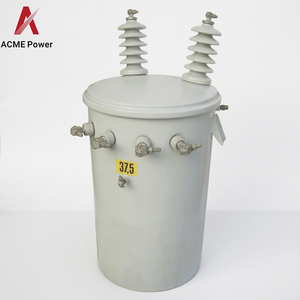
Engineered for extreme grid stability, single-phase step-down isolation, and weather-resistant outdoor pole installation.
Get a Quote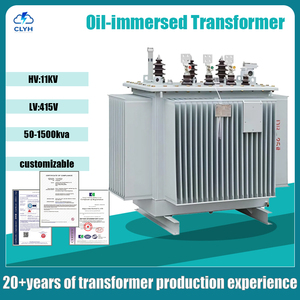
Heavy-duty oil-immersed step-down power unit designed for continuous industrial load operations and thermal efficiency.
Get a Quote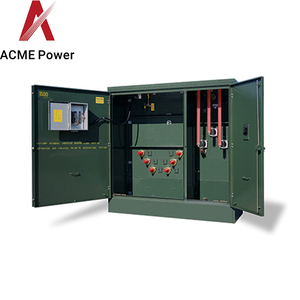
High-efficiency vector group Dyn11 unit featuring hybrid ONAN/ONAF cooling systems for heavy metallurgical & mining sites.
Get a Quote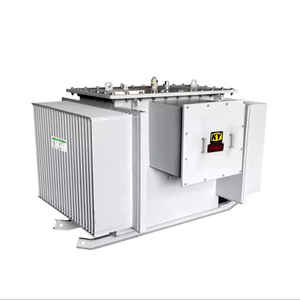
Ultra-low loss sealed oil-immersed architecture engineered to reduce structural core loss and withstand intense electrical surges.
Get a Quote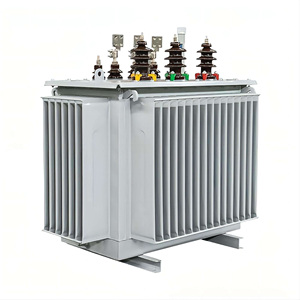
Customizable high-voltage multi-tap power distribution transformer tailored for furnace auxiliary feeds and steel mills.
Get a Quote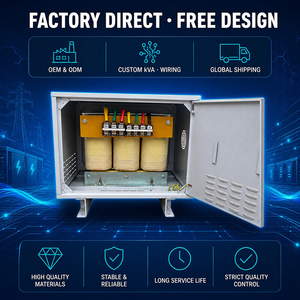
Wide voltage step-down regulation for complex manufacturing setups requiring dynamic secondary load voltage adjustments.
Get a Quote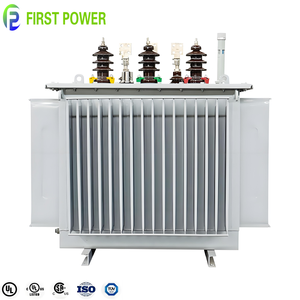
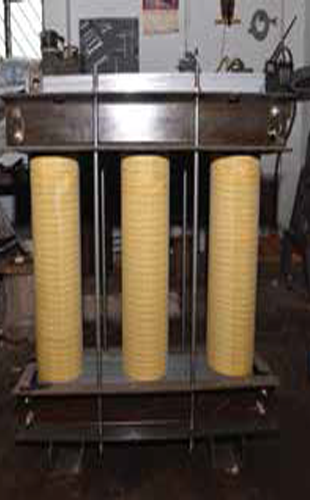
Built with reinforced coil bracing to prevent electromagnetic deformation during frequent heavy load current spikes.
Get a Quote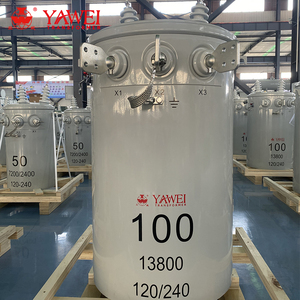
Rugged single-phase distribution system designed for heavy commercial and auxiliary industrial sub-station duty.
Get a QuoteIn modern metallurgical processing, steelmaking, scrap recycling, and chemical smelting, the furnace transformer serves as the critical thermal and electrical powerhouse. Unlike standard power distribution transformers that operate under relatively stable sinusoidal loads and static voltage ratios, industrial furnace transformers operate under some of the most punishing electrical environments in existence. They are subjected to repeated direct secondary short circuits, severe harmonic pollution (3rd, 5th, 7th, and 11th order harmonics), massive thermal transients, and rapid cyclic current swings exceeding 200% of nominal ratings multiple times per hour.
Selecting top trusted furnace transformer manufacturers and suppliers requires a comprehensive technical evaluation extending far beyond initial capital expenditure (CAPEX). Procurement managers, electrical plant directors, and consulting engineers must evaluate winding mechanical strength, short-circuit withstand withstand capability, oil-circulation cooling efficiency, and tap-changer response times. A single transformer outage in an Electric Arc Furnace (EAF) or Ladle Furnace (LF) plant can cost industrial operators tens of thousands of dollars per hour in lost production and molten metal freezing risks.
This whitepaper provides an exhaustive technical benchmark for sourcing, evaluating, and operating heavy-duty industrial furnace transformers. It incorporates structural design breakdowns, thermodynamic considerations, future procurement trends, and a comprehensive buyer’s FAQ to empower technical decision-makers worldwide.
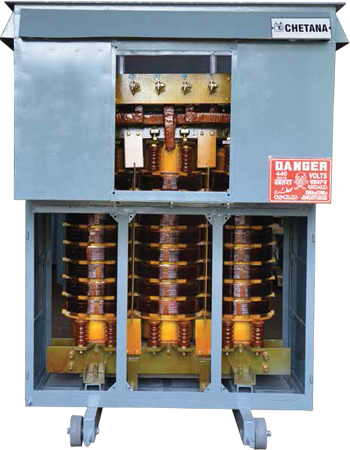
Reinforced epoxy-diamond dot insulated windings and rigid clamping structures withstand cyclic mechanical stress during severe arc-striking phases.
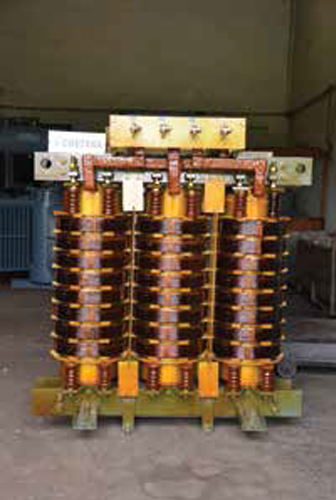
De-tuned core geometry and copper foil/strip conductors combat skin effect and localized hot spots caused by high-frequency furnace rectifiers.
Advanced OLTC mechanisms facilitate seamless multi-step low-voltage output adjustments under full load to maintain arc stability during melting cycles.
A frequent structural mistake made by non-specialized plants is attempting to repurpose a standard step-down distribution transformer for furnace operation. Standard distribution transformers are constructed under the assumption of stable continuous power delivery with balanced, low-distortion current waveforms. When exposed to an arc furnace load, several catastrophic failure modes emerge rapidly:
| Engineering Parameter | Standard Distribution Transformer | Industrial Furnace Transformer |
|---|---|---|
| Primary Application | Commercial & Utility Grid Step-down | Electric Arc / Submerged Arc / Induction Melting |
| Secondary Current Output | Moderate (100A – 2,000A) | Ultra-High (10,000A – 100,000A+) |
| Short-Circuit Withstand Capability | Standard IS 2026 / IEC 60076 (2 to 3 seconds) | Continuous cyclic short-circuit bracing; daily arc strikes |
| Voltage Regulation Method | Off-Circuit Tap Changer (OCTC) or modest OLTC | High-step On-Load Tap Changer (OLTC) with motor drive |
| Harmonic Tolerance (K-Factor) | Standard K-1 to K-4 rating | Extreme rating: K-13 to K-20 with harmonic filtering |
| Cooling Configuration | ONAN (Oil Natural Air Natural) | ONAF / OFWF (Forced Oil & Forced Water Cooling) |
| Busbar & Terminal Construction | Standard Porcelain Bushings | Heavy-Duty Water-Cooled Copper Busbar Terminations |
As global industrial sectors accelerate transition toward low-carbon manufacturing, smart factory automation, and higher operational uptime, the furnace transformer procurement landscape is undergoing rapid evolution. Key procurement trends shaping supplier selection over the next decade include:
Industrial buyers are no longer relying solely on scheduled maintenance intervals. Procurement specifications for furnace transformers increasingly mandate integrated multi-gas Dissolved Gas Analysis (DGA) sensors, fiber-optic direct winding hot-spot temperature monitors, and real-time vibration telemetry. By continuously tracking hydrogen, acetylene, and carbon monoxide levels in transformer oil, predictive AI systems warn plant engineers of arc breakdown or paper degradation long before catastrophic failure occurs.
Traditional mineral oil is being progressively phased out in high-value metallurgical installations in favor of synthetic and natural ester fluids. Synthetic esters exhibit flash points exceeding 300°C (compared to ~145°C for mineral oil), providing K-class fire safety rating. Furthermore, ester liquids absorb moisture far better than mineral oil, extending the insulation lifespan of furnace transformer paper by up to 300% under high operating temperatures.
With carbon tax mechanisms (such as the EU's CBAM) coming into full force, steel plants and chemical smelters face severe financial penalties for energy dissipation. Future furnace transformer procurement demands optimized amorphous or high-permeability grain-oriented silicon steel (CRGO) cores that minimize no-load hysteresis losses. Reducing core loss by even 15 kW on a 5000 KVA unit operating 24/7 translates into massive annual energy savings and CO2 footprint reduction.
The global move toward "Green Steel" via Direct Reduced Iron (DRI) powered by hydrogen gas, alongside expanded recycling of scrap metal in Electric Arc Furnaces, is placing unprecedented technical demands on transformer manufacturers:
When evaluating global manufacturing leaders, Chetan Electric Pvt. Ltd. stands as an industry benchmark in heavy electrical transformer engineering. Established in 1994 in Bangalore, India, the company brings over 30 years of specialized manufacturing experience, catering to over 600 global enterprise clients across metallurgy, infrastructure, defense, real estate, and power utilities.
Chetan Electric operates state-of-the-art manufacturing and testing facilities certified under ISO 9001:2015. Every transformer designed and manufactured in our Bangalore facility undergoes rigorous routine testing in strict compliance with IS 2026, IS 1180, and IS 11171 / IEC standards.
To assist procurement managers, electrical consultants, and plant engineers in making informed technical decisions, our senior engineering team has compiled answers to key procurement queries:
Calculating furnace transformer kVA requires evaluating the nominal furnace heat size (e.g., metric tons of steel), melting cycle time targets, active power factor ($\cos\phi$, typically 0.70 to 0.85 in arc systems), and secondary arc voltage steps. Engineers must incorporate a minimum 20% to 30% continuous thermal safety margin above nominal active power to accommodate massive secondary current surges during scrap cave-ins and initial arc ignition without triggering thermal overload trips.
The predominant root cause is cumulative mechanical looseness in the coil assembly caused by severe electrodynamic forces during repeated arc short circuits. If winding clamping pressure is not maintained, paper insulation suffers fretting abrasion, leading to turn-to-turn dielectric breakdown. Chetan Electric mitigates this by using pre-shrunk, thermally stabilized insulation components and spring-loaded/hydraulic dynamic axial clamping mechanisms.
Central Power Research Institute (CPRI) certification provides independent, third-party validation that a transformer design can withstand catastrophic short-circuit forces, lightning impulse surges, and extreme temperature rises without structural or electrical failure. Relying on CPRI-tested units eliminates procurement risk, verifies compliance with IS/IEC standards, and satisfies stringent insurance underwriting requirements.
For small-to-medium induction furnaces, ONAN (Oil Natural Air Natural) or ONAF (Oil Natural Air Forced) cooling may suffice. However, for high-tonnage EAF or submerged arc furnaces operating continuously, OFWF (Oil Forced Water Forced) or ODWF (Oil Directed Water Forced) is highly recommended. Forced water heat exchangers efficiently remove thermal energy even in high-ambient, dust-laden steel mill environments where air radiators quickly become clogged with airborne debris.
Prior to accepting dispatch, technical buyers must review FAT reports covering: (1) Winding resistance measurement across all tap positions, (2) Voltage ratio and vector group verification, (3) Short-circuit impedance and load loss measurement, (4) No-load loss and excitation current measurement, (5) Separate-source AC withstand voltage testing, (6) Induced overvoltage withstand test, and (7) Insulation resistance & oil dielectric breakdown voltage (BDV) tests.
Custom industrial transformers ranging up to 5000 KVA / 33kV are tailored to client-specific physical dimensions, terminal configurations, voltage step taps, and ambient conditions. Standard manufacturing lead times range from 4 to 8 weeks depending on raw material specifications and custom busbar requirements. Fast-track engineering support is available for emergency plant retrofits.
Chetan Electric transformers are actively operating in diverse industrial settings across India and international markets. Below are representative project installations demonstrating robust field performance:
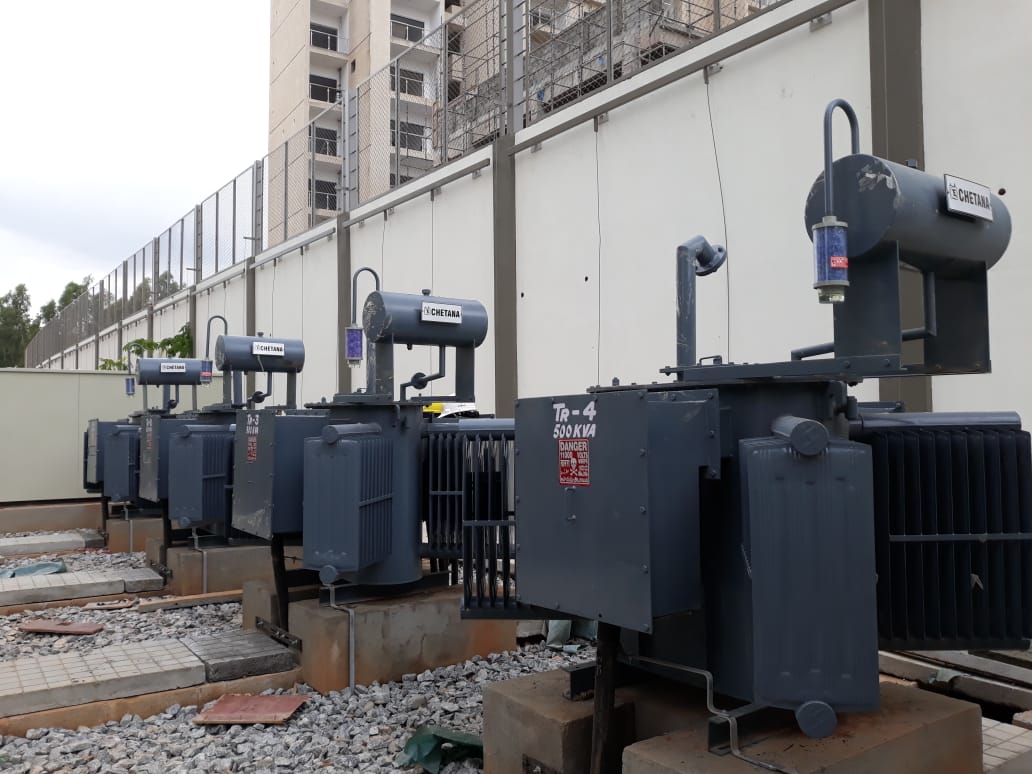
Substation Installation for Major Industrial Complex
Heavy-Duty Oil Immersed Power Unit Deployment
Factory Dispatch & Client Site Integration
Optimize your industrial melting performance, eliminate unplanned downtime, and secure CPRI-tested engineering reliability. Contact Chetan Electric's technical sales team today for customized transformer proposals, technical drawings, and quotation requests.