The electricity sector in the Netherlands is undergoing a transformative paradigm shift. Driven by the Dutch Climate Agreement (*Klimaatakkoord*) aiming for a 55% reduction in greenhouse gas emissions by 2030, the national grid managed by transmission system operator (TSO) TenneT and regional distribution system operators (DSOs) such as Liander, Enexis, and Stedin is facing unprecedented operational demands. The rapid integration of multi-megawatt offshore wind farms in the North Sea, utility-scale solar PV parks across provinces like Gelderland and Groningen, and massive industrial electrification in Rotterdam's Europort has created severe grid congestion (Netcongestie).
For Dutch engineering procurement managers, utility consultants, and EPC contractors, procuring current transformers (CTs), potential transformers (PTs), and distribution units from top-tier Chinese manufacturing partners is no longer merely a cost-optimization decision; it is a critical strategy for supply-chain resilience and technological compliance. Equipment deployed within the Dutch distribution infrastructure must adhere stringently to European Harmonized Standards, specifically NEN-EN-IEC 60076 for power transformers and NEN-EN-IEC 61869 for instrument transformers.
Custom low-loss transformers designed to withstand dynamic bi-directional power flows caused by intermittent renewable generation and rapid EV fast-charging demand surges.
Strict adherence to EU Regulation 2019/1783, mandating ultra-low no-load losses ($P_0$) and load losses ($P_k$) to reduce lifecycle operational expenditure (OPEX) and carbon taxes.
Environmentally safe biodegradable synthetic and natural ester dielectrics (FR3/MIDEL) optimized for strict Dutch soil and water protection regulations (*Wet bodembescherming*).
In modern power systems, Current Transformers (CTs) serve as the primary sensory interface for protective relays and revenue metering systems. When sourcing from premier Chinese manufacturers for Dutch utility or industrial projects, understanding the precise electromagnetic parameters is crucial. Chinese manufacturing facilities leveraging cold-rolled grain-oriented (CRGO) silicon steel cores (such as Baosteel grade 23Q110 or higher) and high-purity electrolytic copper windings deliver excitation curves that meet or exceed stringent Western European specifications.
Below is a technical comparison of standard supply configurations engineered for Dutch medium-voltage (10kV, 20kV) and high-voltage (110kV, 150kV) secondary networks:
| Transformer Type | Primary Voltage Range | Accuracy Class / Vector Group | Cooling / Dielectric Type | Dutch Application Standard |
|---|---|---|---|---|
| Current Transformers (CT) | 0.66kV to 110kV | 0.2S / 0.5S (Metering), 5P20 (Protection) | Epoxy Cast Resin / SF6-Free Gas | IEC 61869-2 / NEN-EN 61869 |
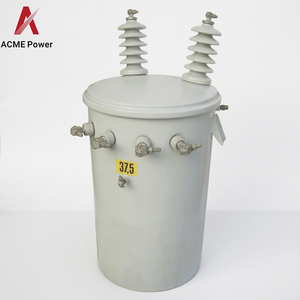
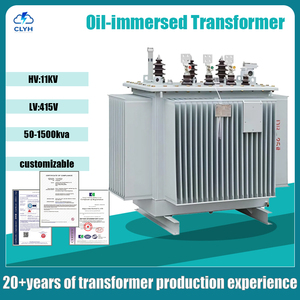
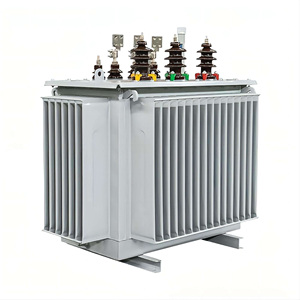
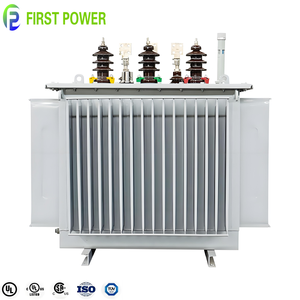
| Oil-Immersed Distribution | 10kV, 20kV, 33kV | Dyn11 / Yyn0 (EU Loss Level Tier 2) | ONAN / ONAF Mineral or Ester Oil | NEN-EN 60076-1 / EU 2019/1783 |
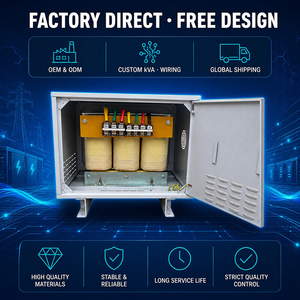
| Cast Resin Dry-Type | 6.3kV to 24kV | Dyn11 (Class F / H Insulation) | AN / AF Forced Air Cooling | IEC 60076-11 / NEN-EN 60076 |
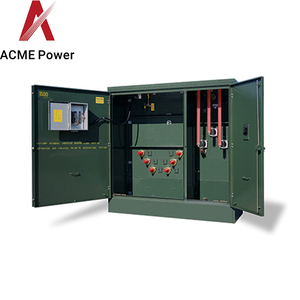
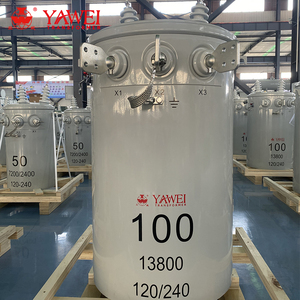
| Pad-Mounted Compact Substation | 11kV to 33kV | Dyn11 Vector Group (Integrated Switchgear) | Hermetically Sealed ONAN | IEC 62271-202 Compact Substation |
For accurate energy settlement in Dutch commercial applications, current transformers must offer Class 0.2S accuracy across a wide range of primary currents (from 1% to 120% of rated current). This ensures that light loads—such as off-peak solar generation during winter months—are metered with absolute precision, preventing revenue loss for grid operators and asset owners.
Custom engineering is paramount due to the Netherlands' unique geographic, environmental, and urban conditions. Below are four primary field application scenarios where our specialized transformers deliver maximum operational efficiency and structural durability.
Deployment in coastal regions demands high-grade anticorrosion treatment. Units are built with C5-M marine-grade paint systems and stainless steel hardware to endure saline atmospheres, high moisture, and constant gale-force winds along the North Sea shoreline.
Solar installations in North Brabant require step-up transformers (e.g., 0.8kV to 20kV) capable of handling severe thermal cycling and harmonic distortions caused by solar inverters. Electrostatic shielding between primary and secondary windings suppresses high-frequency grid noise.
Cast-resin dry-type transformers (F400/F1 fire rating) provide maximum safety for underground parking, residential hubs, and intensive EV charging corridors. They exhibit self-extinguishing properties without the risk of toxic gas emissions or oil leaks.
Backed by over 30 years of transformer design, development, and advanced manufacturing excellence, our enterprise operates state-of-the-art production lines equipped with automatic vacuum drying chambers, CNC foil winding machines, and fully automated testing bays.
Every unit supplied to the Netherlands undergoes rigorous type testing and routine inspection certified by independent power research institutes, ensuring full alignment with ISO 9001 quality management standards and European CE marking requirements.
To maintain zero-defect output for sensitive European power installations, our factory executes a rigorous multi-stage quality control protocol before any unit is packed for containerized export:
| Testing Stage | Test Parameter / Inspection Standard | Target Benchmark |
|---|---|---|
| Raw Material Audit | Laser Core Loss Testing (Silicon Steel) & Copper Purity Analysis | 99.9% Pure Oxygen-Free Copper; Core loss $\le 0.85$ W/kg |
| In-Process Winding Inspection | Turn Ratio Measurement & Impulse Voltage Resistance | Zero tolerance for inter-turn insulation micro-cracks |
| Routine Electrical Testing | IEC 60076-1: Winding Resistance, Voltage Ratio & Vector Group Check | Strict conformity to Dyn11 / Yyn0 phase alignment |
| Dielectric Insulation Testing | Separate Source AC Overvoltage & Induced Overvoltage Withstand | Partial discharge levels $< 10\text{ pC}$ at $1.2 U_m$ |
| Enclosure & Coating Verification | Elcometer Paint Thickness Gauge & Salt Spray Chamber Testing | Minimum coating thickness 120 µm (C4/C5 Corrosion Class) |
By strictly enforcing these testing benchmarks, our transformers ensure seamless integration into Dutch distribution grids, offering operational lifespans exceeding 30 years under continuous full-load operating conditions.