
Executive Whitepaper: Air-Cored Reactors in the Modern Hellenic Power Grid
As Greece rapidly transitions its energy matrix toward renewable generation—spearheaded by the Independent Power Transmission Operator (ADMIE / IPTO) and the Hellenic Electricity Distribution Network Operator (HEDNO)—the stability of high-voltage transmission corridors and localized solar/wind microgrids has become paramount. Modern electrical grids in Greece, particularly across Crete, the Cyclades, Peloponnese, and Thessaly, face unprecedented challenges including severe short-circuit surge levels, voltage fluctuations, and high-order harmonic contamination.
The Information Gain Advantage: Why Air-Core Over Iron-Core Reactance?
Traditional iron-cored reactors suffer from a fundamental physical limitation: magnetic saturation during high-amplitude transient events. Under severe grid short-circuit conditions, iron cores reach their saturation knee point on the B-H magnetizing curve, resulting in a catastrophic drop in inductance exactly when maximum limiting impedance is required.
Dry-type air-cored reactors eliminate core saturation entirely. Because air possesses a constant magnetic permeability (\(\mu_r = 1\)), the inductance of an air-core reactor remains strictly linear from normal continuous current up to extreme short-circuit fault currents exceeding 60kA. This absolute inductance linearity makes air reactors the definitive engineering choice for current limiting, neutral grounding, capacitor bank switching, and harmonic filter networks in Greece's evolving grid architecture.
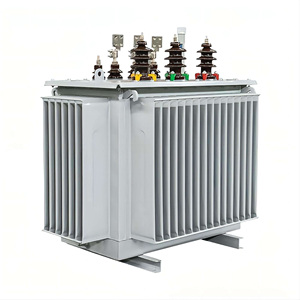
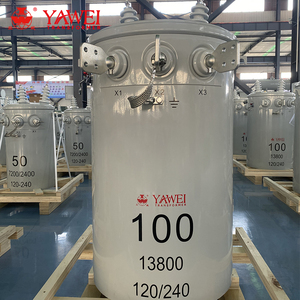
As a leading Chinese manufacturer and global exporter, our engineering facilities integrate advanced 3D Finite Element Method (FEM) electro-magnetic modeling and automated fiber-glass resin impregnation systems. We manufacture custom dry-type air-core reactors up to 1000 KVAR and high-voltage distribution transformers up to 5000 kVA / 33kV, specifically tailored to withstand Greece’s demanding coastal marine environments and high-seismic active zones.