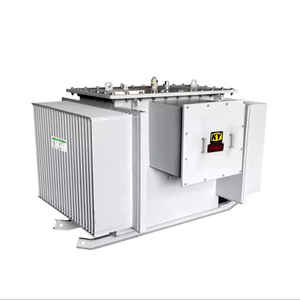
Delivering engineered transformers and power quality reactor assemblies configured to meet North American grid requirements (60Hz, 240V/480V/600V) and international heavy-duty utility specifications.
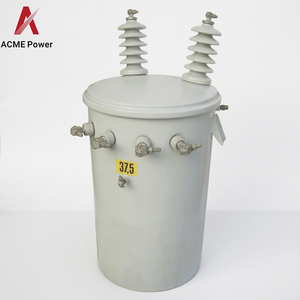
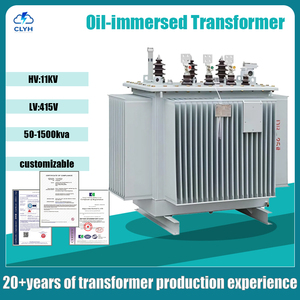
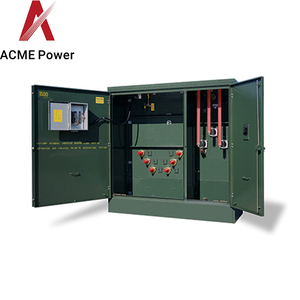
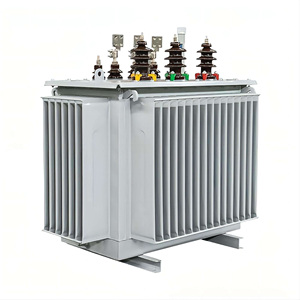
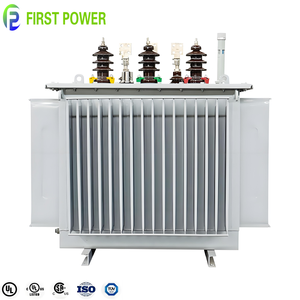
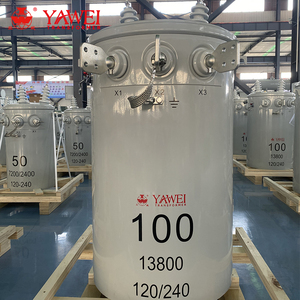
The Greater Los Angeles metropolitan area—spanning from the commercial towers of Downtown LA and Century City to the massive logistical hubs of the Inland Empire and port facilities in San Pedro Bay—operates one of North America's most dynamic and high-density electrical networks. Managed primarily by the Los Angeles Department of Water and Power (LADWP) and Southern California Edison (SCE), the regional power grid faces unprecedented pressure driven by rapid industrial electrification, grid-tied megawatt-scale solar installations, EV fleet charging depots, and heavy automated manufacturing.
Modern industrial facilities across Southern California rely heavily on non-linear electrical loads. Variable Frequency Drives (VFDs) powering HVAC systems, heavy industrial crane invertors at the Port of Los Angeles, Uninterruptible Power Supplies (UPS) in Silicon Beach data centers, and solid-state silicon-controlled rectifiers (SCRs) introduce significant amounts of current harmonics into the utility distribution network. The predominance of 5th (300Hz), 7th (420Hz), 11th (660Hz), and 13th (780Hz) harmonic orders creates severe waveform distortion, elevated neutral conductor current, dangerous voltage stress, and premature insulation breakdown.
When facility engineers install standard power factor correction (PFC) capacitor banks without inductive protection, a catastrophic phenomenon occurs: Harmonic Resonance. The capacitive reactance of the capacitor bank matches the inductive reactance of the supply transformer at specific harmonic frequencies. This creates a low-impedance parallel resonant circuit that magnifies harmonic currents by 500% to 1000%. The result is exploded capacitor cells, blown main fuses, tripped circuit breakers, severe transformer overheating, and costly facility downtime.
Detuned Reactors (Detuned Filter Inductors) are the essential engineering solution to this issue. Connected in series with power factor capacitors, a detuned reactor lowers the resonant frequency of the LC circuit below the lowest dominant harmonic frequency (typically below the 5th harmonic, or 300Hz in 60Hz systems). This prevents electrical resonance, protects capacitor banks, lowers Total Harmonic Distortion (THD-i and THD-v), and guarantees full compliance with strict IEEE 519-2022 utility harmonic standards enforced by LADWP and SCE.
By tuning the LC network below 300Hz (60Hz grid), detuned reactors shift the series resonance point away from grid frequencies, rendering capacitor banks inductive at harmonic frequencies and preventing parallel resonance overvoltages.
Engineered with Class H (180°C) copper or high-grade aluminum windings, vacuum pressure impregnation (VPI), and low-loss iron cores, our reactors absorb high harmonic currents without magnetic saturation ($B_{max} < 1.2\text{ Tesla}$).
Designed to maintain Total Harmonic Voltage Distortion ($THD_V$) under 5% and Total Demand Distortion ($TDD$) under utility specified limits at the Point of Common Coupling (PCC) in California industrial installations.
Selecting the correct detuning factor ($p\%$) is critical for balancing reactive power compensation ($kVAR$) with harmonic damping in 60Hz North American power networks. The table below outlines standard configurations supplied to electrical contractors, OEM panel builders, and plant engineers throughout Los Angeles and Southern California.
| Detuning Factor ($p\%$) | Tuning Frequency ($f_r$ at 60Hz) | Dominant Harmonics Protected | Capacitor Voltage Rating ($V_{cap}$) | Typical LA Application Scenarios |
|---|---|---|---|---|
| 5.67% ($p = 0.0567$) | 252 Hz | 5th (360Hz), 7th, 11th, 13th | 525V / 600V AC | Light industrial, commercial HVAC, high-density residential towers in Downtown LA with low 3rd harmonic content. |
| 7% ($p = 0.07$) | 227 Hz | 5th (360Hz), 7th, 11th, 13th | 480V / 525V / 600V AC | Standard industrial manufacturing, aerospace precision machine shops in Torrance, food processing plants in Vernon. |
| 14% ($p = 0.14$) | 160 Hz | 3rd (180Hz), 5th, 7th, 11th | 600V / 690V AC | Heavy VFD concentration, EV fast-charging stations, automated crane systems at Port of Los Angeles, facilities with high neutral harmonics. |
As Southern California accelerates its clean energy transition under state mandates like Title 24, CALGreen, and clean grid initiatives, the physical characteristics of electrical loads across the Los Angeles basin are undergoing rapid transformation:
The Port of Los Angeles and Port of Long Beach are transitioning container handling cranes, yard tractors, and shore-to-ship power (cold ironing) systems to electric drives. High-power active front-end (AFE) inverters and multi-megawatt pulse-width modulated (PWM) drives generate severe high-order harmonic feedback. Our custom 14% and 7% heavy-duty detuned iron-core reactors absorb non-linear current spikes, preventing grid resonance and avoiding strict LADWP utility penalties.
With logistics hubs in Commerce, Santa Fe Springs, and the Inland Empire building out massive Level-3 DC fast-charging plazas, large-scale battery storage, and rooftop solar microgrids, non-linear rectifiers operate continuously. Detuned reactors installed in central PFC banks ensure voltage stability, suppress transient voltage swells, and safeguard sensitive digital control metering systems against harmonic distortion.
Mission-critical facilities in Playa Vista, El Segundo, and Pasadena cannot tolerate harmonic-induced neutral conductor overheating or voltage drop notches. Our dry-type vacuum impregnated detuned reactors deliver ultra-low acoustic noise emission (< 48 dBA), high thermal endurance, and precise inductance linearity, keeping data processing nodes operational without harmonic-related IT hardware rebooting or failure.
High-precision CNC machine centers, induction melting furnaces, and laser welding equipment in Hawthorne and Glendale demand clean power. Detuned reactor banks neutralize reactive power losses while filtering destructive harmonic frequencies, significantly reducing peak demand ($kVA$) billing charges on monthly utility statements.
Backed by over 30 years of transformer and electrical reactor engineering history (established in 1994 as Chetan Electric Pvt. Ltd.), our manufacturing facilities leverage state-of-the-art production technology, strict quality control systems, and extensive field testing. We specialize in designing and exporting heavy-duty magnetic components up to 1000 KVAR for reactors and up to 5000 KVA 33kV for power transformers.
Our products are type-tested at prestigious accredited labs including the Central Power Research Institute (CPRI), ensuring every core design satisfies rigorous short-circuit withstand, temperature rise, and dielectric strength requirements. Routine testing is performed in strict adherence to international standards including IS 2026 / IS 1180 / IS 11171 as well as North American standards (ANSI/IEEE C57 and IEC 60076).
Constructed using high-permeability, low-loss grain-oriented silicon steel (CRGO) laminations. Engineered air gaps prevent magnetic saturation even under severe current overload conditions (1.6 to 2.0 times rated current).
Impregnated with high-grade Class H polyester varnish under deep vacuum pressure and heat-cured, providing superior moisture resistance, high mechanical rigidity against short-circuit forces, and minimal hum.
Serving over 600 global enterprise clients and major infrastructure projects, including defense establishments, real estate giants (Prestige Group, Sobha, Brigade, Raheja), healthcare facilities, and power utility networks.