
Custom-engineered power distribution equipment compliant with IEEE C57, ANSI, and ISO 9001 certified manufacturing benchmarks for Boston and New England infrastructure.
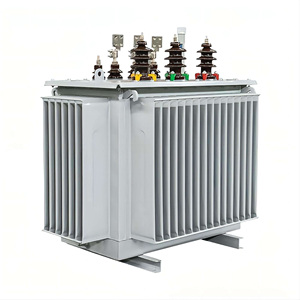
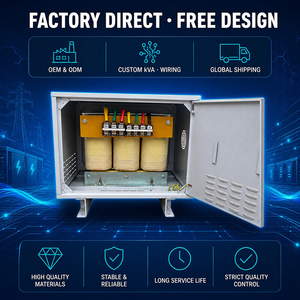
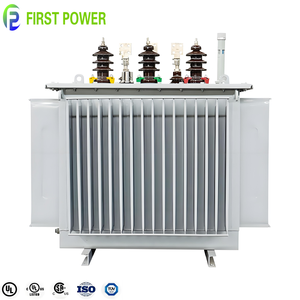
Navigating the complex electrical distribution ecosystem of Greater Boston, Massachusetts requires liquid-filled transformers optimized for dense metropolitan environments, strict environmental mandates, and extreme seasonal ambient fluctuations. Serving local electric utilities—including Eversource Energy and National Grid—as well as major regional industrial facilities, academic campuses, and biotechnology hubs in Cambridge and the Seaport District, high-reliability oil transformers remain the backbone of New England's power delivery matrix.
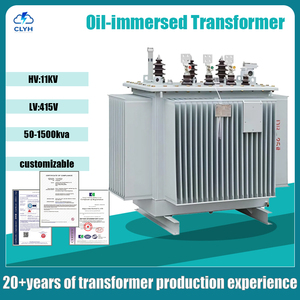
Oil-filled transformers (liquid-immersed units) offer decisive thermal dissipation and dielectric insulation advantages over dry-type equivalents in outdoor substations, underground vaults, and heavy industrial step-down applications. By utilizing mineral oil or bio-based natural synthetic esters (such as FR3 fluid) as both dielectric insulation medium and thermal transfer agent, liquid-filled transformers achieve superior overload durability, reduced partial discharge levels, and extended operational lifespans exceeding 30 to 40 years.
While traditional refined naphthenic mineral oil (conforming to ASTM D3487) remains the standard for suburban overhead lines and isolated substations, urban Boston installations increasingly mandate Natural Ester Bio-Fluids (ASTM D6871). Bio-esters elevate the flash/fire point from 145°C to over 330°C (K-class rating), enabling zero-clearance installations near commercial property boundaries while providing 100% biodegradability in sensitive coastal watershed zones near Boston Harbor and the Charles River.
Manufacturing liquid-immersed transformers to perform reliably in New England demands precise core-and-coil engineering:
Deploying transformer infrastructure across Eastern Massachusetts involves meeting highly localized municipal codes, historic urban vault constraints, and aggressive decarbonization goals mandated by the Massachusetts Clean Energy and Climate Plan. Below are the predominant real-world engineering deployment profiles:
| Deployment Environment | Typical Voltage Rating | Transformer Design Profile | Critical Engineering Focus |
|---|---|---|---|
| Urban Underground Vaults (Back Bay, Downtown Boston) | 13.8kV to 480V/277V 3-Phase | Submersible / Vault-Type Oil Immersed | Submersible stainless steel tanks, natural ester FR3 fluid for fire safety, compact footprint. |
| Coastal Substation Facilities (Boston Harbor, Quincy, Lynn) | 23kV & 33kV to 4.16kV Step-Down | ONAN/ONAF Station Transformers | C5-M multi-layer anti-corrosion coating, hermetically sealed, stainless steel hardware. |
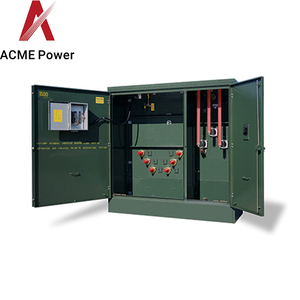
| Biotech & Life Science Parks (Cambridge, Kendall Sq, Seaport) | 13.8kV to 415V/240V High-Purity | Pad-Mounted Dead-Front Transformers | Ultra-low noise core designs, low total harmonic distortion (THD), dual-fuse protection. |
| EV Fast-Charging & Commercial Microgrids | 13.8kV Primary to 480V Secondary | K-Factor Rated Distribution Pad Mounts | High harmonic mitigation, dynamic thermal overload management, smart sensor integration. |
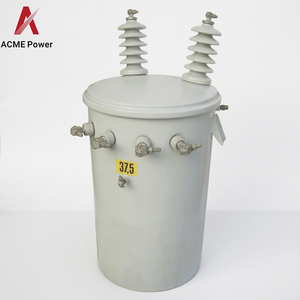
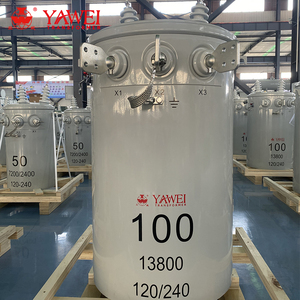
| Suburban Overhead Utilities (Route 128 / I-95 Corridor) | 13.8kV / 7.2kV to 120V/240V Single Phase | Overhead Pole-Mounted Single Phase | IEEE C57.12.20 compliance, pressure relief valves, light-weight aluminum/copper windings. |
In life science facilities across Cambridge, power quality is paramount. A momentary power dip or harmonic distortion spike can compromise millions of dollars in sensitive research equipment. Custom-engineered 3-phase liquid pad-mounted transformers featuring electrostatic shielding between primary and secondary copper windings effectively attenuate high-frequency electrical noise and switching transients, delivering pristine sine-wave power to sensitive cleanroom environments.
Furthermore, for municipal utility expansion projects along Boston's suburban peripheries, overhead single-phase pole-mounted transformers (such as 13.8kV to 120/240V split-phase units) provide essential step-down delivery for residential and light commercial networks, offering integrated surge arresters and dual-high-voltage bushing options for loop or radial overhead feed circuits.
The ISO New England (ISO-NE) regional transmission territory is undergoing a rapid transition toward clean energy integration, electric vehicle fleet adoption, and building electrification. These shifts directly impact how distribution and power transformers are specified by municipal electrical inspectors and utility procurement managers:
With an established engineering legacy dating back to 1994, Chetan Electric Pvt. Ltd. stands as an ISO 9001 certified powerhouse in custom transformer design and fabrication. Serving over 600 global enterprise clients across commercial real estate, defense, aerospace, infrastructure, and heavy industrial sectors, Chetan Electric provides specialized liquid-immersed and dry-type transformers up to 5000 kVA at 33kV ratings.
Every transformer manufactured by Chetan Electric undergoes rigorous quality control protocols. Our designs are type-tested and certified by the world-renowned Central Power Research Institute (CPRI), validating total compliance with international standards including IS 2026, IS 1180, IS 11171, as well as IEEE/ANSI equivalents. All units undergo 100% routine testing (impulse voltage withstand, induced overvoltage, winding resistance, turns ratio, and loss measurement) before dispatch.
Key Corporate & Technical Capabilities:
Use the engineering breakdown below to evaluate technical parameters across our standard liquid-immersed power distribution series for Boston utility and enterprise projects:
| Transformer Category | KVA Capacity Range | Primary Voltage Options | Cooling Method | Insulation Fluid Options | Standards Compliance |
|---|---|---|---|---|---|
| Overhead Pole Mounted | 10 kVA - 160 kVA | 6.3kV, 11kV, 13.8kV, 20kV | ONAN Self-Cooled | Mineral Oil (ASTM D3487) | IEEE C57.12.20 / IS 1180 |
| Pad Mounted Substation | 150 kVA - 2500 kVA | 11kV, 13.8kV, 23kV, 33kV | ONAN / ONAF | FR3 Bio-Ester / Mineral Oil | IEEE C57.12.28 / IEEE C57.12.34 |
| Industrial Distribution | 200 kVA - 1500 kVA | 10kV, 11kV, 20kV, 33kV | ONAN | High-Grade Mineral Oil | IEEE C57.12.00 / IS 2026 |
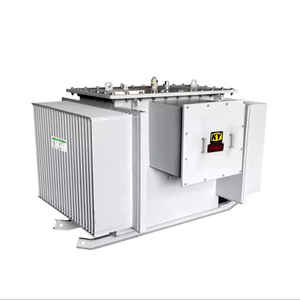
| Heavy Power Substation | 1500 kVA - 5000 kVA | 11kV, 22kV, 33kV | ONAN / ONAF (with OLTC) | Inhibited Mineral / Synthetic Ester | IEEE C57 / CPRI Certified |
| Special Application (Furnace/Rectifier) | Custom up to 5000 kVA | Tailored to Industrial Specs | ONAF / OFAF Forced Water/Air | Synthetic Ester / Mineral Oil | Custom IEC / IEEE / IS Specs |
In Massachusetts, liquid-filled distribution and power transformers must comply with IEEE C57 series standards (including C57.12.00 for general requirements, C57.12.28 for pad-mounted enclosure integrity, and C57.12.90 for test codes). Electrical gear destined for interconnecting with local utilities like Eversource or National Grid must meet specific loss efficiency standards set by the U.S. Department of Energy (DOE 2016 / 10 CFR Part 431). Chetan Electric manufactures transformers fully compliant with IEEE, ANSI, IEC, and IS standards, offering custom loss profiles tailored to regional utility interconnections.
The U.S. Environmental Protection Agency (EPA) Spill Prevention, Control, and Countermeasure (SPCC) rule (40 CFR Part 112) applies to oil-filled operational equipment containing more than 55 gallons of oil. In urban Boston locations near waterways, secondary containment measures—such as containment curbs, oil-absorbent vault liners, or using non-toxic Natural Ester (FR3) fluids—are utilized. Bio-ester fluids are readily biodegradable, significantly lowering environmental liability and simplifying SPCC spill mitigation compliance.
FR3 natural ester fluid possesses a fire point exceeding 330°C (K-class fluid classification), compared to ~145°C for standard mineral oil. For dense Boston installations—such as hospital complexes in Longwood, high-rise residential towers, and university laboratories—using FR3 fluid allows engineers to reduce required fire-wall separation distances, minimize insurance premiums (FM Global approved), and extend transformer insulation life due to FR3’s superior moisture-absorbing capabilities.
Coastal atmospheric conditions in Boston Harbor, North Shore, and South Shore present severe marine corrosion risks. Standard industrial paints deteriorate rapidly under salt aerosol exposure. Chetan Electric supplies transformers for coastal New England with heavy-duty C5-M high-durability epoxy coating systems, hot-dip galvanized radiator banks, and 304 or 316L stainless steel hardware, tanks, and cabinet bases to prevent atmospheric rusting and guarantee structural longevity.
The standard medium-voltage primary distribution level across Greater Boston is 13.8kV (along with legacy 4.16kV and 23kV sub-transmission loops). Secondary step-down configurations typically require 480Y/277V 3-phase 4-wire for commercial industrial facilities and EV charging hubs, or 208Y/120V for light commercial building loads. Pole-mounted single-phase units step down 13.8kV primary voltage to 120/240V split-phase for overhead residential services.
While domestic U.S. transformer lead times currently stretch from 50 to 100+ weeks due to regional supply constraints, Chetan Electric’s streamlined manufacturing facility provides expedited engineering and production cycles. Custom-designed liquid-immersed pad-mounted and power transformers up to 5000 kVA can be designed, fabricated, factory-tested, and shipped via ocean freight directly to East Coast ports (Port of Boston / Massport terminals) in significantly compressed timelines.
Need a reliable, high-efficiency liquid-immersed or oil-cooled transformer engineered specifically for your Boston installation? Consult with Chetan Electric's senior engineering team today for technical specs, custom vector group designs, CPRI test documentation, and competitive factory quotes.