
High-reliability step-down transformers, oil-immersed reactors, and pole/pad-mounted units engineered for rigorous industrial electrical networks.
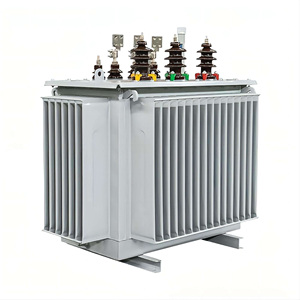
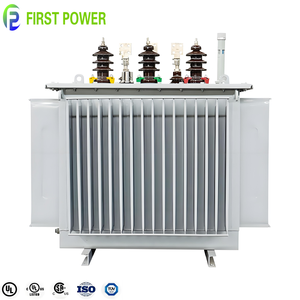
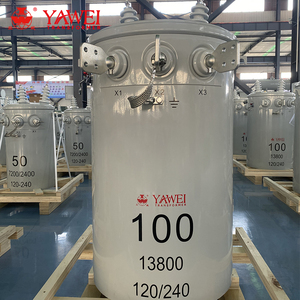
The Russian Federation presents one of the most electrically complex and geographically expanse energy landscapes in the world. Stretching across eleven time zones and encompassing sub-arctic, continental, and extreme cold regions, the Russian power grid demand on electrical infrastructure—specifically power reactors, oil-immersed distribution transformers, and reactive power compensation equipment—is governed by stringent reliability metrics and technical regulations (such as GOST R 52719-2007 and Rosseti unified technical policy standards).
As industrial operators, power grid contractors, and metallurgical conglomerates seek robust international original equipment manufacturers (OEMs), selecting qualified Power Reactor Manufacturers capable of satisfying the specific grid codes of the Russian market is critical. Modern power networks across Central Russia, Siberia, and the Far East require high-voltage reactors that dynamically suppress capacitive charging currents in long-distance overhead transmission lines (220kV, 330kV, 500kV, and 750kV networks), limit severe short-circuit fault currents in heavy manufacturing plants, and filter destructive harmonics in electric arc furnace installations.
Information Gain Key Takeaway: Modern power reactors operating within the Russian grid must comply with UHL1 climate execution standards (GOST 15150-69), guaranteeing continuous rated performance down to sub-zero ambient temperatures of -60°C without dielectric degradation or mechanical embrittlement of structural steel casing.
Power reactors (including shunt reactors, series current-limiting reactors, neutral grounding reactors, and smoothing reactors) serve as the fundamental safeguards for transmission stability. In the Russian regional grid (EES of Russia), long-distance extra-high-voltage (EHV) lines generate substantial reactive power under light load conditions due to line capacitance. Without precision-engineered shunt reactors, voltage amplification via the Ferranti effect causes catastrophic dielectric breakdown across substation switchgear and transformers.
Furthermore, heavy mining, metallurgical, and oil extraction facilities across regions such as Krasnoyarsk, Tyumen, and Chelyabinsk require specialized current-limiting and iron-cored shunt reactors up to 1000 KVAR and high-capacity dry-type or oil-cooled step-down transformers up to 5000 KVA 33kV. OEM suppliers must combine advanced magnetic circuit design, low-loss grain-oriented silicon steel cores, and specialized cooling media to withstand both extreme ambient fluctuations and high harmonic distortion.
When evaluating high-voltage reactor topology for Russia market integration, engineers must weigh the operational trade-offs between oil-immersed shunt reactors and dry-type air-core or iron-cored reactors. Below is a structural engineering comparison based on rigorous power frequency testing, thermal withstand limits, and sub-zero operational readiness.
| Specification Parameter | Oil-Immersed Power Reactors | Dry-Type Air-Cored Reactors | Iron-Cored Shunt Reactors |
|---|---|---|---|
| Rated Voltage Range | 10kV to 35kV / 110kV - 500kV | up to 35kV Indoor / Outdoor | 6.3kV to 33kV (up to 1000 KVAR) |
| Cooling Mechanism | ONAN / ONAF / OFAF | AN (Natural Air) / AF (Forced) | ONAN / VPI Dry Type |
| Thermal Category (GOST 15150) | UHL1 (-60°C to +40°C) | UHL2 / UHL4 (-45°C to +40°C) | UHL1 / UHL3 (-50°C to +40°C) |
| Dielectric Insulation | Mineral / Synthetic Low-Pour Oil | Class F / H Resin Encapsulated | High-Grade Epoxy / VPI Resin |
| Harmonic Suppression | Excellent (EAF & HV Lines) | High Linearity (Short Circuit) | Optimal for Distribution Networks |
| Standard Compliance | GOST 52719 / IEC 60076-6 | GOST 14794 / IEC 60076-6 | IS 2026 / GOST R Standards |
Utilizing specialized low-viscosity transformer oil (such as naphthenic VG-10 base or synthetic esters) that retains fluid mobility and heat dissipation capabilities at temperature drops down to -60°C.
Precision-milled non-magnetic gaps within the iron core to prevent magnetic saturation under system overvoltages, ensuring linear inductance characteristics across peak power fluctuations.
Reinforced tie-rod clamping structures and high-density pressboard damping elements designed to restrict magnetostrictive acoustic noise below 65 dB in accordance with municipal environmental safety regulations.
Established in 1994, Chetan Electric Pvt. Ltd. has grown into an international powerhouse in transformer design, reactor manufacturing, and specialized power electronics. Operating from state-of-the-art production plants in Bangalore, India, Chetan Electric brings over 30 years of continuous technical innovation, serving more than 600 major institutional clients across infrastructure, heavy industry, defense, and power utility sectors.
Every power reactor, dry-type transformer, and oil-cooled distribution unit leaving our manufacturing facility undergoes stringent routine and type testing. Certified under ISO 9001 standards, our equipment is rigorously tested at the world-renowned Central Power Research Institute (CPRI), Bangalore, satisfying international quality benchmarks including IS 2026, IS 1180, IS 11171, and IEC 60076, as well as customized adaptation to GOST requirements for Eurasian market deployment.
Chetan Electric’s engineering expertise extends across a broad portfolio of transformer and power reactor configurations tailored for extreme duty cycles:
Capacities up to 5000 KVA 33kV, equipped with On-Load Tap Changers (OLTC) and Remote Tap Changer Cubicles (RTCC) for real-time voltage regulation under variable loads.
Cast Resin and Vacuum Pressure Impregnated (VPI) dry-type units up to 11kV, delivering zero-fire-hazard operation for indoor urban infrastructure and commercial complexes.
Custom-built electric arc furnace (EAF) transformers, high-current rectifier transformers, high-voltage testing units up to 150kV, and ferroresonant Constant Voltage Transformers (CVT).
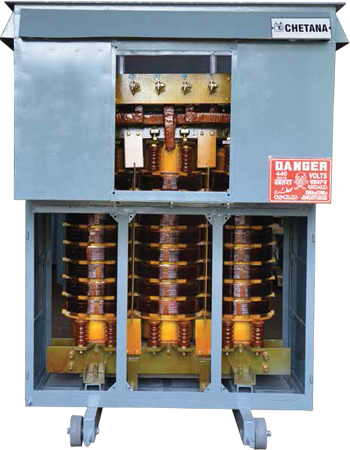
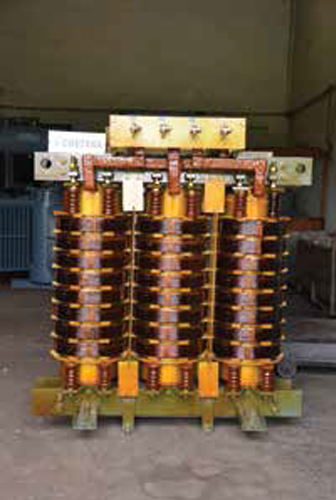
Deploying power reactors and high-capacity step-down transformers across the diverse regions of the Russian Federation requires dedicated engineering adaptations tailored to specific localized industrial environments:
Challenge: Sub-zero operational temperatures dropping down to -60°C combined with corrosive marine-atmospheric environments in Arctic energy hubs.
Solution: Hermetically sealed oil-immersed reactors equipped with cold-resistant nitrile/fluorosilicone gaskets, automatic conservator oil heaters, and UHL1 execution tanks painted with anti-corrosive polyurethane coating systems.
Challenge: Severe voltage flickers and high 5th, 7th, and 11th order harmonic currents generated by electric arc smelting furnaces in Chelyabinsk and Yekaterinburg.
Solution: Heavy-duty iron-cored tuning reactors up to 1000 KVAR integrated into harmonic filter banks, featuring high thermal reserve factors and dynamic short-circuit withstand capabilities.
Challenge: Space constraints in underground or indoor transformer substations located in Moscow and St. Petersburg metropolitan areas requiring minimal noise and zero oil-leak risk.
Solution: Compact VPI dry-type power transformers and air-cored reactors encased in IP54 enclosures with low-loss core geometry and forced-air cooling options.
Challenge: Excessive Ferranti voltage rise across 110kV and 220kV radial transmission lines servicing remote mining ventures in Norilsk and Khabarovsk.
Solution: High-voltage oil-immersed shunt reactors connected at terminal substations to dynamically absorb reactive power and maintain line voltage within strict ±5% operational bands.
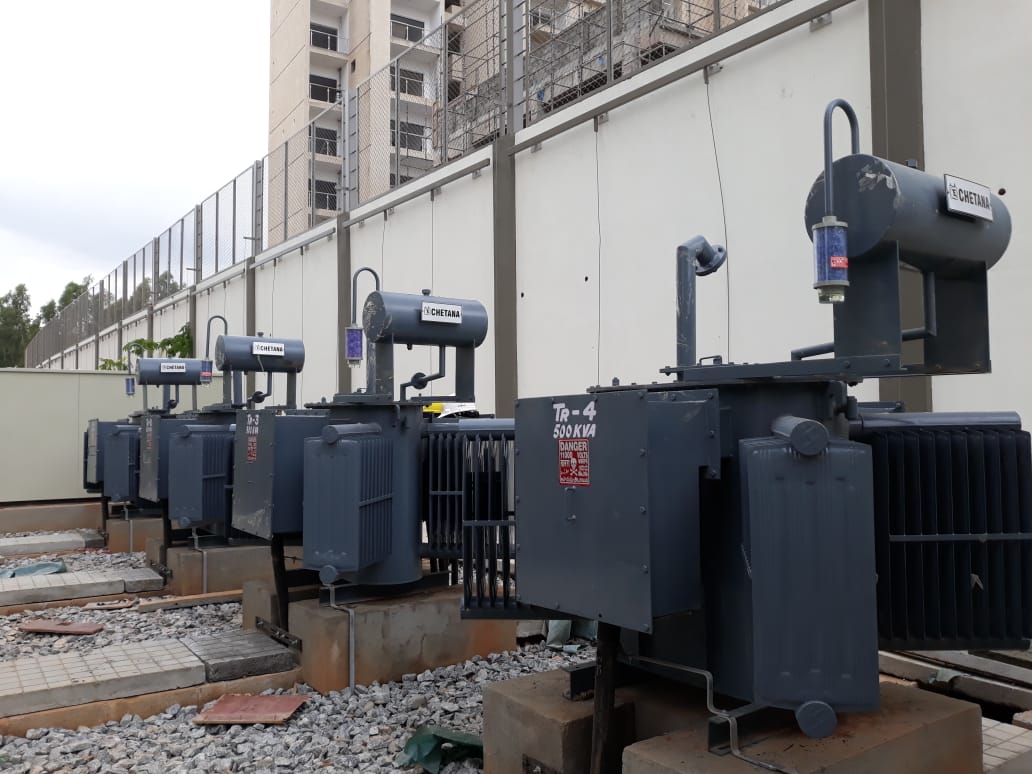
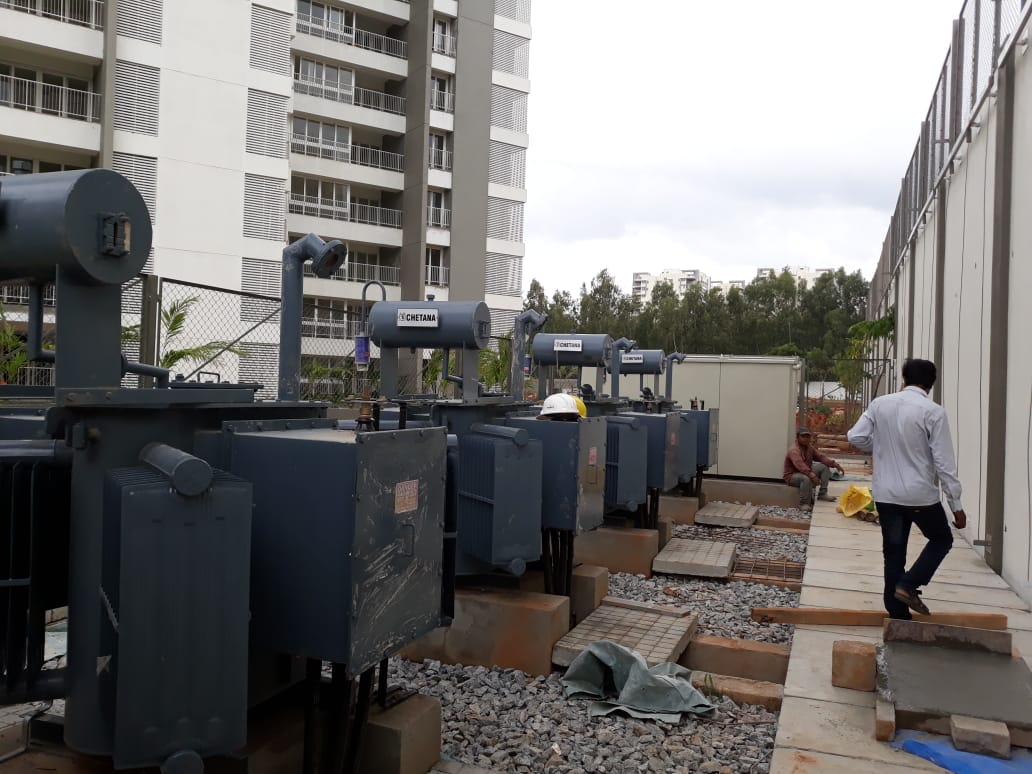
Below are technical answers to key questions frequently raised by electrical procurement directors, chief power engineers (Главный Energetik), and EPC contractors sourcing power reactors and transformers for the Russian market.
Our power reactors and transformers designed for Eurasian delivery undergo thermal and mechanical re-engineering. Steel tanks are fabricated from cold-resilient structural alloys certified for low-temperature impact toughness down to -60°C. Bushings, gaskets, tap changers, and insulating fluids are specified according to GOST 15150-69 UHL1 criteria, ensuring cold-start reliability without insulation cracking or fluid gelling.
Standard manufacturing cycles range from 6 to 10 weeks depending on KVA rating and custom vector group requirements. Deliveries are routed via sea freight to major sea hub ports (such as Vladivostok, Saint Petersburg, or Novorossiysk) followed by Trans-Siberian heavy rail transport directly to project sites across Russia, complete with nitrogen-filled transport options for large core assemblies.
Yes. Chetan Electric specializes in custom electromagnetic design. By modeling total harmonic distortion (THD) profiles provided by client site surveys, we manufacture iron-cored shunt reactors and series reactors with optimized air gaps, reinforced conductor transpositions, and Class H insulation systems to eliminate localized hot-spot heating under non-sinusoidal current waveforms.
Every shipment includes a comprehensive Factory Acceptance Test (FAT) dossier certified under ISO 9001 protocols. Test certificates detail winding resistance, voltage ratio, vector group verification, short-circuit impedance, zero-sequence impedance, load/no-load losses, dielectric breakdown of transformer oil, and high-voltage power frequency withstand tests aligned with CPRI and IEC/GOST specifications.