
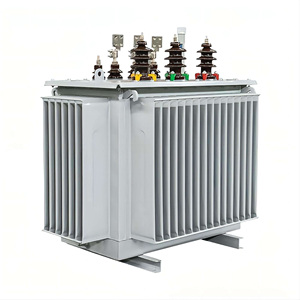
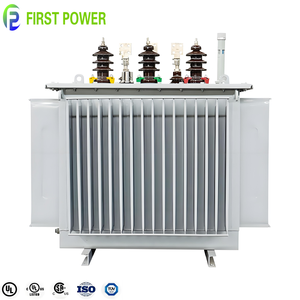
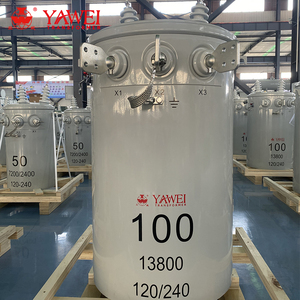
Industrial power conversion within the Republic of Iraq demands specialized electrical machinery designed to endure some of the most aggressive environmental and operational stresses globally. As Iraq accelerates the rehabilitation of its national power grid, expands refining capacities in Basra, and scales steel production across Kurdistan and Erbil, the requirement for robust direct current (DC) power supplies has elevated the role of high-capacity rectifier transformers. Unlike standard step-down distribution units, rectifier transformers function as combined transformation and phase-shifting apparatuses tailored to feed solid-state diode, thyristor, or IGBT semiconductor rectifiers.
Operating a semiconductor rectifying bridge introduces heavy current harmonics (5th, 7th, 11th, 13th, and higher order harmonics) directly into the transformer windings. These harmonic currents generate additional eddy current losses within the copper conductors, provoke localized hot-spot overheating inside the tank, and induce mechanical stress across core laminations. When coupled with Iraq's hyper-arid ambient temperatures exceeding 50°C during summer peak seasons, standard off-the-shelf transformers suffer accelerated insulation degradation, oil oxidation, and premature dielectric breakdown. Engineering rectifier transformers specifically for Iraq requires a holistic approach balancing thermal dissipation, harmonic-rated copper sizing, magnetic flux regulation, and robust mechanical clamping.
To supply high DC currents for applications such as chlor-alkali electrolysis, aluminum smelting, and cathodic corrosion protection across Iraqi oil pipelines, multi-pulse rectification systems are mandatory. A standard 6-pulse rectifier bridge reflects significant 5th and 7th harmonic current components into the high-voltage supply grid. By implementing multi-pulse topology—specifically 12-pulse, 18-pulse, or 24-pulse systems—harmonic cancelation is achieved magnetically within the transformer's secondary phase configurations.
Our engineering architecture utilizes advanced vector groups including extended delta ($\Delta$), zig-zag ($Z$), and dual star with Interphase Transformers (IPT). For a 12-pulse rectification scheme, two secondary windings are integrated: one star-connected ($Y$) and one delta-connected ($\Delta$), creating a 30-degree electrical phase shift between the outputs. This arrangement cancels the 5th and 7th harmonics, shifting the primary ripple frequency to the 11th and 13th harmonics, which carry significantly lower energy amplitudes.
| Transformation Criterion | Standard Power Transformer | Heavy-Duty Rectifier Transformer (Iraq Spec) |
|---|---|---|
| Primary Design Mandate | Sinusoidal 50Hz Voltage Step-Down | Combined Transformation, Phase-Shift & Harmonic Isolation |
| Harmonic Tolerance (K-Factor) | Standard K-1 Rating (Minimal Harmonics) | Engineered K-13 to K-20 Harmonic Load Ratings |
| Thermal Rise Limit (Ambient: 55°C) | 65°C Winding / 60°C Oil Rise (Standard IEC) | Strict 45°C Winding / 40°C Oil Top Rise Limits |
| Mechanical Clamping Force | Nominal Short-Circuit Rating (IEC 60076) | 3x Reinforced Tie-Rods to Withstand DC Pulse Spikes |
| Cooling Medium Options | Standard Mineral Oil (Class A) | High Fire-Point Synthetic Ester or Thermally Enhanced Mineral Oil |
| Voltage Regulation Control | Off-Circuit Tap Changer (OCTC) | On-Load Tap Changer (OLTC) + Saturable Reactor/Transductor Control |
Understanding regional industrial topography is vital for selecting the appropriate rectifier transformer specification. Equipment deployed in southern coastal desert zones requires vastly different enclosure protection compared to inland manufacturing complexes.
Primary Function: Electrostatic Desalting & Cathodic Pipeline Protection.
In the high-salinity crude extraction zones of Basra, West Qurna, and Rumaila, crude oil must undergo electrostatic desalting to extract emulsified brine. Our oil-immersed single-phase and three-phase rectifier transformers provide continuous DC bias to high-voltage grid plates. Furthermore, for cross-country petroleum pipelines running from Basra to Haditha, our specialized cathodic protection transformers ensure continuous negative bias to protect subterranean steel against aggressive soil corrosion.
Primary Function: DC Electric Arc Furnaces & Aluminum Scrap Smelting.
Northern Iraq's expanding metallurgical industrial parks rely heavily on DC arc furnaces for scrap rebar re-melting. DC arc furnaces deliver superior thermal efficiency and reduced electrode consumption compared to AC alternatives. Our rectifier transformers are rated up to 5000 kVA, built with heavy copper busbar secondary terminals capable of carrying up to 30,000 Amperes of rectified continuous current under severe cyclic load swings.
Primary Function: High-Current Electrolysis for Chlorine & Caustic Soda.
Chemical processing installations around Khor Al-Zubair require continuous, high-purity DC energy for brine electrolysis cells. A sudden drop in DC output interrupts chemical production and risks membrane damage. We integrate specialized On-Load Tap Changers (OLTC) alongside saturable core transductors, granting precise step-less current regulation under full-load operational status.
Primary Function: Electrodialysis Reversal (EDR) Water Purification Systems.
Addressing water salinity challenges across agricultural and municipal sectors involves EDR technology. Our compact, dry-type, and oil-cooled rectifier units deliver stable low-voltage, high-current DC excitation to ion-exchange membranes, engineered to withstand sandstorms and ambient dusty environments.
The Iraqi energy market is experiencing significant modernization driven by national directives to reduce transmission losses, integrate industrial self-generation, and enforce strict grid compliance. Procurement officers and EPC contractors must align equipment specifications with the following local factors:
With over three decades of continuous power engineering legacy since 1994, Chetan Electric Pvt. Ltd. stands as a trusted manufacturer and exporter of heavy-duty transformer units. Certified under ISO 9001 standards, our state-of-the-art manufacturing facility in Bangalore, India, specializes in custom transformer design up to 5000 kVA, 33kV class.
Our core transformer designs have undergone short-circuit, impulse voltage, and temperature-rise type testing at the Central Power Research Institute (CPRI), verifying operational integrity under extreme electrical fault conditions.
Every unit is manufactured and routine-tested in strict compliance with IS 2026, IS 1180, IS 11171, and IEC 60076 / IEC 60146 international converter transformer specifications.
We utilize high-permeability, cold-rolled grain-oriented (CRGO) silicon steel laminations combined with 99.9% pure electrolytic grade copper conductors insulated with thermal-class paper coverings.
Full support for international export packing, sea-freight containerization, and logistical transit directly to Um Qasr Port, Basra oil terminals, or inland destinations across Baghdad and Erbil.