
Shunt Reactor Engineering & Power Grid Stabilization in the Seoul Metropolitan Area
An authoritative technical manual on reactive power control, Ferranti effect mitigation in dense high-voltage underground cable networks, and supplier specification criteria for South Korea's electrical infrastructure.
The Seoul Metropolitan Area (SMA) represents one of the world's most concentrated, technologically advanced, and electrically dense urban environments. Housing over 25 million people across Seoul, Incheon, and Gyeonggi Province, the regional grid managed by the Korea Electric Power Corporation (KEPCO) operates under rigorous operational parameters. As Seoul accelerates its transition toward smart cities, high-density underground power transmission, mega-scale data centers in Pangyo, and high-speed rail networks (GTX), maintaining voltage stability across transmission lines has become a paramount engineering challenge.
At the center of this power quality matrix is the Shunt Reactor—the most efficient device for compensating capacitive reactive power generated by long, high-voltage underground cables and lightly loaded high-voltage overhead lines. Without adequate shunt reactor installation, Seoul's grid would suffer from dangerous voltage rises driven by the Ferranti Effect, leading to insulation breakdown, premature equipment failure, and localized grid instability.
1. The Ferranti Effect & Reactive Power Dynamics in Seoul's Underground Grid
Over 85% of Seoul's core electrical transmission network (comprising 154kV and 345kV lines down to 22.9kV-Y multi-grounded distribution feeders) relies on underground Cross-Linked Polyethylene (XLPE) cables to preserve urban space and safeguard public infrastructure. While underground cables offer high safety and aesthetic benefits, their inherent physical geometry produces a remarkably high line capacitance ($C$) per kilometer compared to traditional overhead lines.
During off-peak hours—such as midnight operational windows in Seoul's commercial districts (Gangnam, Yeouido, and Euljiro)—the load current drops significantly. Under low-load or no-load conditions, the charging current flowing through the cable capacitance causes the receiving-end voltage ($V_R$) to exceed the sending-end voltage ($V_S$). Mathematically, this voltage rise is expressed as:
ΔV ≈ V_S × (ω² × L × C) / 2
Where $\omega$ is the system angular frequency (60 Hz in South Korea), $L$ is line inductance, and $C$ is line capacitance. To neutralize this capacitive reactive power ($Q_C = \omega C V^2$), Gapped-Core Oil-Immersed Shunt Reactors or Dry-Type Air-Cored Shunt Reactors must be connected directly to the transformer tertiary windings or station busbars to inject inductive reactive power ($Q_L$), bringing the system voltage back into KEPCO’s strict ±5% operational tolerance band.
| Shunt Reactor Parameter | Gapped Iron-Core (Oil-Immersed) | Air-Cored (Dry-Type) | Variable Shunt Reactor (VSR) |
|---|---|---|---|
| Primary Seoul Application | Underground Substation (154kV / 345kV) | Outdoor/Substation Bus (22.9kV) | Data Center & Dynamic Grid Hubs |
| Magnetic Flux Control | Non-magnetic gaps in silicon steel core | Linear flux path through air | On-load tap changer adjusted gaps |
| Noise Level (dBA) | Ultra-Low (< 55 dBA, Urban Shielded) | Moderate (65 - 75 dBA) | Low (< 60 dBA) |
| Footprint Density | Extremely Compact (High Volumetric KVAR) | Requires Magnetic Clearance Zone | Compact with Tap Changer Housing |
| KEPCO Compliance Grade | Grade A (Urban Indoor Ready) | Grade A (Industrial Outdoor) | Advanced Dynamic Grid Ready |
2. Key Shunt Reactor Topologies Manufactured for Seoul Suppliers
When sourcing shunt reactors for projects within the Seoul Capital Area, procurement managers and electrical engineering EPCs must evaluate two main architectural variants based on environmental constraints, magnetic flux shielding, and operational noise thresholds:
Oil-Immersed Gapped-Core Reactors
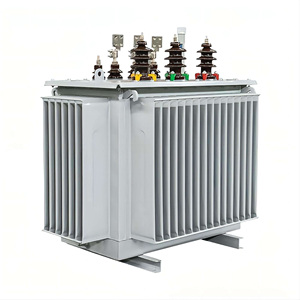
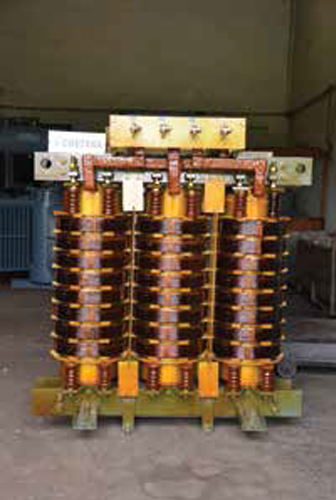
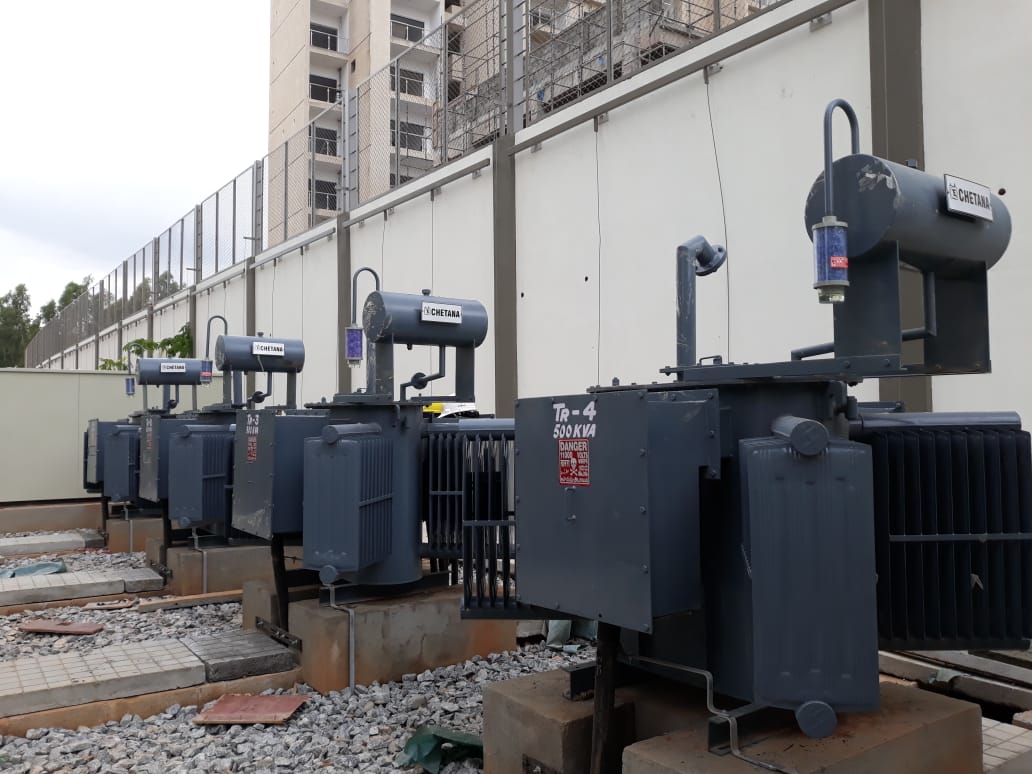
Utilizes high-permeability cold-rolled grain-oriented silicon steel (CRGO) divided by ceramic or epoxy-bonded gaps. Immersed in synthetic ester or mineral oil inside a hermetically sealed tank. Designed specifically for indoor underground substations in Seoul where space is premium and sound attenuation is mandatory.
Dry-Type Air-Cored Shunt Reactors
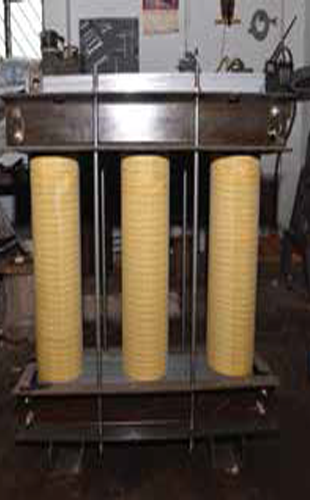
Constructed from encapsulated aluminum or copper conductors insulated with resin-impregnated fiberglass. Featuring a completely linear V-I characteristic with zero magnetic saturation risk. Highly cost-effective for outdoor medium-voltage substations (22.9kV) in satellite industrial complexes such as Hwaseong and Pyeongtaek.
Variable Shunt Reactors (VSRs)
Incorporates an On-Load Tap Changer (OLTC) directly into the reactor winding structure, allowing real-time adjustment of reactive power rating (e.g., smoothly stepping from 10 MVAR to 30 MVAR). Imperative for data center clusters in Pangyo with drastically fluctuating 24/7 load profiles.
3. Localized Application Scenarios Across the Seoul Metropolitan Infrastructure
A specialized supplier must engineer equipment tailored to the unique physical and electrical environment of Seoul. Our transformers and shunt reactors are custom-built for four critical metropolitan applications:
1. High-Density Underground Urban Substations
In districts like Gangnam, Yeouido, and Gwanghwamun, substations are placed multi-story underground. Our oil-immersed shunt reactors utilize high-flashpoint biodegradable synthetic ester fluids (IEC 61099 Class K3) to eliminate fire risk while providing compact footprints with built-in magnetic shielding to prevent eddy current heating in surrounding steel structures.
2. Pangyo & Sangam Hyperscale Data Center Clusters
Pangyo Techno Valley and Sangam DMC host South Korea's cloud and AI compute hubs. These facilities exhibit sharp load transitions between daytime processing spikes and nighttime idle states. Our Variable Shunt Reactors (VSRs) seamlessly balance lagging and leading power factors, safeguarding sensitive IT power supplies against micro-voltage surges.
3. Seoul Metro Rail & GTX Power Traction Networks
The Great Train eXpress (GTX) high-speed underground commuter network and Seoul Metro Lines 1–9 operate on high-power AC traction systems. Rapidly accelerating electric trains inject extreme reactive power transients into the 22.9kV supply grid. Our heavy-duty air-cored and gapped-core reactors absorb harmonic distortions and balance phase voltages under cyclic load demands.
30+ Years of Custom Transformer & Reactor Production
Established in 1994, Chetan Electric Pvt. Ltd. operates state-of-the-art ISO 9001 certified manufacturing facilities. Every unit undergo strict quality verification, type-tested at internationally recognized laboratories including CPRI (Central Power Research Institute), matching KERI standards required in South Korea.
Consult Our Engineering Team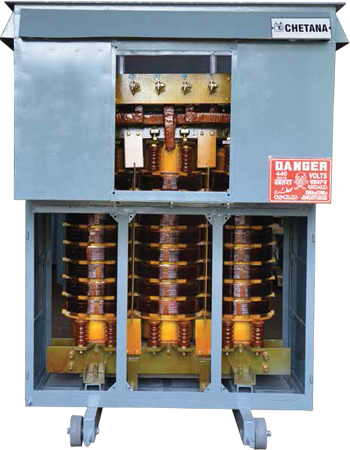
4. South Korea Grid Evolution Trends: 2024–2030 Horizon
Supplying power equipment to Seoul requires deep alignment with South Korea's national energy policies, including the 10th Basic Plan for Long-Term Electricity Supply and Demand and the national target for 2050 Carbon Neutrality:
- Yellow Sea Offshore Wind Integration to Metropolitan Grid: As mega offshore wind farms come online off the western coast of Incheon and Jeonnam, submarine HVDC and HVAC links will transfer thousands of megawatts directly toward Seoul. High-rating shunt reactors at grid landing substations are critical to absorb excessive line charging KVAR.
- Strict Low-Noise Municipal Regulations: Seoul Metropolitan Government enforces environmental acoustic limits below 50 dBA at residential boundaries. Modern reactors must incorporate anti-vibration core damping, stress-free core clamping, and sound enclosure shrouds to meet Korean urban noise codes.
- Transition to Eco-Friendly Ester Insulation Fluids: Moving away from standard mineral oils toward natural and synthetic esters with high fire points (>300°C) and rapid biodegradability is now a mandatory preference for KEPCO's underground indoor substations.
5. Seoul Procurement & Engineering FAQ
Key technical queries addressed for South Korean EPC engineers, electrical contractors, and KEPCO utility buyers:
6. Why Partner with Us for Seoul Power Projects
As a global transformer and reactor manufacturer with three decades of engineering authority, we provide complete lifecycle support for power distribution projects in Korea and worldwide:
Custom Core Engineering
Tailored magnetic circuit designs utilizing premium CRGO steel from top global mills, minimizing no-load losses and harmonic emissions.
ISO 9001 & Type Tested
Rigorous quality assurance backed by CPRI type test certificates for short-circuit withstand, impulse voltage, and temperature rise.
Full Turnkey OEM Capabilities
Complete design customization ranging from 25kVA distribution units up to 5000kVA / 33kV power class and specialized iron-cored reactors up to 1000 KVAR.