
Heavy-duty low and medium voltage transformers custom-manufactured to conform with IEC 60076, Ethiopian Electric Power (EEP) grid requirements, and East African environmental parameters.
Ethiopia’s energy ecosystem is undergoing an unprecedented structural transformation. Driven by the National Electrification Program (NEP 2.0) and massive industrialization initiatives across the Horn of Africa, the country aims to achieve universal electricity access through a combination of grid expansions and off-grid mini-grids. For engineering procurement managers, utility contractors, and industrial developers, sourcing reliable Low Voltage (LV) and Medium Voltage (MV) transformers from premier Chinese manufacturers has become a strategic imperative to balance capital expenditure with rigorous technical resilience.
Operating electrical equipment in Ethiopia presents distinct geographic and atmospheric challenges. A significant portion of the country's economic and industrial activities—including the capital, Addis Ababa (elevated at 2,355 meters above sea level), Kilinto, and Hawassa—are located at high altitudes above 1,000 meters. High elevation leads to reduced ambient air density, which directly undermines dielectric insulation strength and impairs natural convective thermal dissipation. Standard transformers deployed without altitude derating factors risk severe insulation flashovers, accelerated thermal degradation, and premature transformer failure.
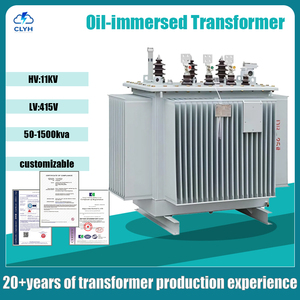
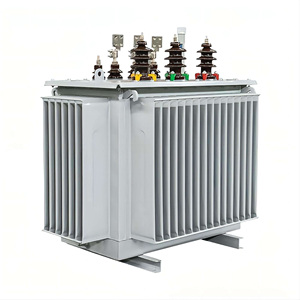
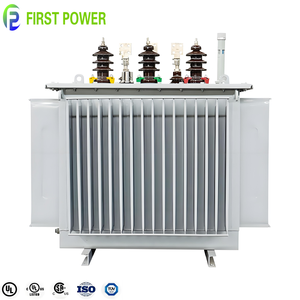
As a leading Chinese transformer supplier specializing in East African export specifications, our engineering team integrates modified thermal cooling surfaces (increased radiator fin density) and elevated Dielectric Withstand Levels (BIL) to ensure full operational safety at high altitudes. Our S11-M oil-immersed transformers and pad-mounted substations are engineered specifically to step down Ethiopian utility transmission voltages (15kV, 33kV, 11kV) to standard low-voltage commercial levels (415V three-phase, 240V single-phase) with minimal core loss and superior harmonic resistance.
Customized electrical infrastructure built to withstand regional climatic conditions, dust exposure, and severe load fluctuations.
Deployments in Hawassa Industrial Park, Bole Lemi, Kilinto, and Dire Dawa SEZ require continuous 24/7 power for heavy textile, agro-processing, and pharmaceutical manufacturing. Our 1000kVA–2500kVA ONAN/ONAF oil transformers and dry-type units provide dual low-voltage outputs with high short-circuit resistance and Buchholz protection.
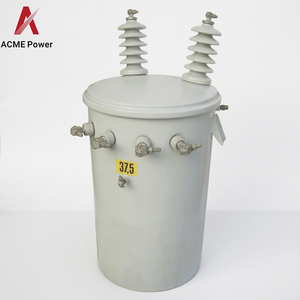
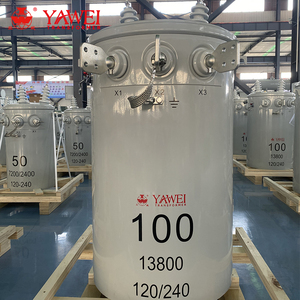
Extending low-voltage electrification to regional hubs like Mekelle, Gondar, Jimma, and Hawassa. Our single-phase overhead pole-mounted transformers (25kVA–100kVA) step down 15kV or 6.3kV rural feeders to safe single-phase 110V/240V residential lines, built using hermetically sealed tanks to prevent moisture ingress during rainy seasons.
Matching the rapid growth of solar-diesel hybrid projects in remote lowland regions (Afar, Somali Region). We provide step-up/step-down transformers designed to handle inverted solar power harmonics, non-linear loads, and extreme ambient thermal spikes up to 45°C without dielectric fluid degradation.
1. Shift Toward S11 / S13 Low-Loss Core Standards: In line with Ethiopian Ministry of Water and Energy directives, utility power contractors are replacing legacy high-loss transformers with energy-efficient S11-M and S13 silicon steel core designs. Cold-rolled grain-oriented (CRGO) steel cores dramatically lower no-load power losses, enabling municipal power authorities to reduce grid transmission drain over long distance feeders.
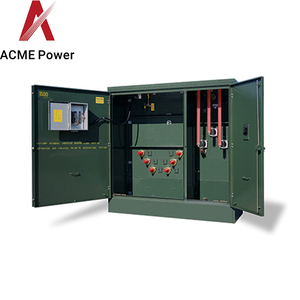
2. Rapid Adoption of Pad-Mounted Compact Substations: Urban real estate developments in Addis Ababa, including modern commercial towers, hospital complexes, and luxury residential projects, are shifting away from traditional open-air pole setups toward aesthetically enclosed, safe, tamper-proof pad-mounted transformers. These units combine MV load-break switches, low-voltage switchgear, and step-down transformers in a unified outdoor cabinet.
3. Strict Adherence to IEC and Ethiopian Standards Agency (ESA) Rules: Ethiopian power contracts strictly mandate IEC 60076 series compliance for power transformers. Factory Acceptance Testing (FAT) with comprehensive routine testing (winding resistance, insulation resistance, voltage ratio, short-circuit impedance, and dielectric breakdown tests) is mandatory before customs clearance at Djibouti Port and Mojo Dry Port.
Technical, compliance, payment, and logistical answers tailored for Ethiopian power contractors and commercial procurement managers.
With over 30 years of transformer engineering legacy, our state-of-the-art production facility incorporates automatic foil winding machines, vacuum drying ovens, computer-controlled core stacking tables, and a high-voltage testing laboratory. Unlike standard trading companies, our direct OEM manufacturing capacity ensures every transformer delivered to East Africa is built to withstand rigorous operating cycles.
Our core product lines have passed rigorous short-circuit withstand, temperature rise, and lightning impulse tests at CPRI laboratories, validating electrical structural integrity.
Utilizing high-purity electrolytic copper/aluminum windings insulated with thermal Class A materials and high-breakdown mineral transformer oil compliant with IEC 60296.
100% of manufactured units undergo strict routine testing: applied voltage tests, induced overvoltage tests, turns ratio verification, and oil dielectric strength testing before dispatch.
We maintain dedicated technical account teams familiar with East African infrastructure tenders, supporting engineering contractors from preliminary design consultations and short-circuit calculations to final field commissioning assistance.