
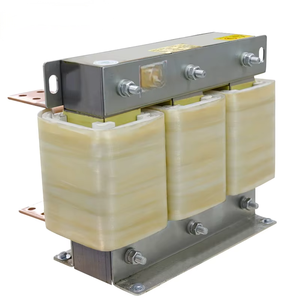
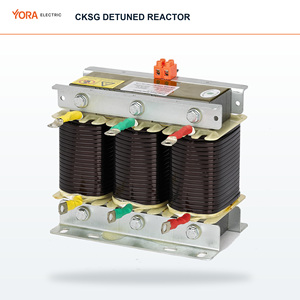
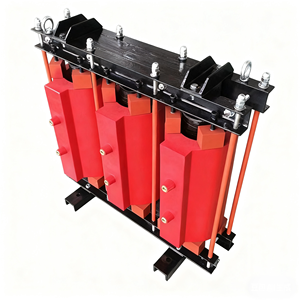
Precision-engineered iron-core and air-core tuning reactors built with premium silicon steel laminations and vacuum-impregnated H-class insulation for extreme operational stability.
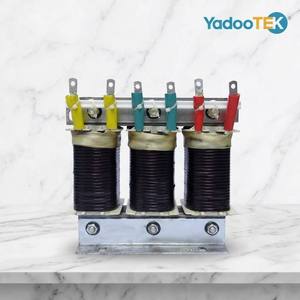
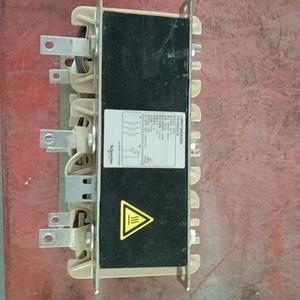
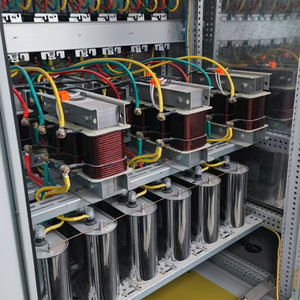
Morocco’s national electricity framework, governed by the Office National de l'Électricité et de l'Eau Potable (ONEE), is undergoing a profound structural evolution. Driven by rapid expansion in industrial infrastructure, phosphate processing complexes operated by OCP Group, mega-scale automotive hubs in Tangier Med, and aggressive renewable energy integration targets (surpassing 52% renewable generation capacity by 2030), the national grid faces unprecedented power quality challenges. In particular, the extensive proliferation of non-linear loads—such as variable speed drives (VSDs), medium-voltage soft starters, arc furnaces, and grid-scale solar PV inverters—has dramatically escalated Total Harmonic Distortion (THD-v and THD-i) across Moroccan low voltage (LV) and medium voltage (MV) distribution networks.
When power factor correction (PFC) capacitor banks are installed in environments contaminated with 5th, 7th, 11th, and 13th order voltage and current harmonics, parallel resonance between the supply transformer’s inductive reactance and the capacitor bank’s capacitive reactance occurs naturally. Unmitigated resonance causes catastrophic voltage spikes, capacitor dielectric breakdown, premature contactor failure, nuisance tripping of circuit breakers, and severe energy losses across plant transformers. For electrical engineers, EPC contractors, and plant utility directors operating within the Kingdom of Morocco, selecting high-reliability tuning reactors (detuned reactors) engineered by certified global manufacturers is no longer optional—it is a critical imperative for operational continuity and ONEE grid compliance.
Shifts system resonant frequency below the lowest harmonic order (typically tuned to 189 Hz or 134 Hz for 50Hz networks), eliminating harmonic amplification and protecting capacitor banks.
Eliminates heavy reactive power penalty charges enforced by ONEE by maintaining displace power factor ($\cos\phi$) consistently above 0.95 under non-linear conditions.
Engineered with premium grain-oriented silicon steel cores maintaining linear inductance up to $1.8 \times I_n$, preventing saturation even during extreme voltage surges.
A detuned tuning reactor is an iron-core inductive component connected in series with a power factor compensation capacitor. The combination forms a series resonant circuit with a specific tuning frequency ($f_r$). The fundamental performance of the reactor is defined by its reactance ratio or detuning factor ($p$), expressed as a percentage of capacitive reactance:
The detuning factor $p$ is calculated as:
p = (X_L / X_C) * 100 = (f_0 / f_r)^2 * 100
Where $f_0$ is the grid fundamental frequency (50 Hz in Morocco), $X_L$ is the inductive reactance of the reactor, and $X_C$ is the capacitive reactance of the capacitor step. For a 50 Hz power system:
When selecting a tuning reactor, engineers must account for the voltage boost effect across the capacitor terminal. Because the series reactor acts as a step-up autotransformer effect at fundamental frequency, the terminal voltage across the capacitor ($U_c$) rises above the nominal system grid voltage ($U_n$):
U_c = U_n / (1 - p)
Consequently, for a standard Moroccan 400V 50Hz grid equipped with a 7% ($p=0.07$) detuned reactor, the capacitors must be rated for at least 445V to 480V continuous operation (commonly standardized at 450V or 525V heavy-duty ratings) to ensure dielectric longevity and absolute safety against thermal degradation.
Below is the technical baseline specification matrix engineered by Chetan Electric Pvt. Ltd. for high-ambient export environments such as Morocco and North Africa:
| Parameter / Parameter | Low Voltage Series (CKSG / LVR) | High Voltage Series (CKSC / GKSC) |
|---|---|---|
| Rated Voltage Spectrum ($U_n$) | 230V, 400V, 440V, 480V, 525V, 690V 3-Phase | 3.3kV, 6.6kV, 11kV, 22kV, 33kV 3-Phase |
| Reactance Ratios ($p$) | 5.67%, 7%, 14% (Custom tuning available) | 6%, 7%, 12% High Voltage Tuning |
| Core Metallurgy | High-permeability, low-loss cold-rolled silicon steel | Iron-Core / Air-Core Gap Stacked Design |
| Insulation Thermal Class | Class H ($180^\circ\text{C}$) / Class F ($155^\circ\text{C}$) | Class H ($180^\circ\text{C}$) Vacuum Pressure Impregnated |
| Linearity Factor ($I_{lin}$) | $1.8 \times I_n$ ($L \ge 0.95 L_n$) | $1.8 \dots 2.0 \times I_n$ Linear Inductance |
| Impregnation Process | VPI (Vacuum Pressure Impregnation) Solventless Resin | Dry-Type Cast Resin / Epoxy VPI Coating |
| Standard Compliance | IEC 60076-6, IEEE 519, IS 2026, IS 1180 | IEC 60076-6, CPRI Tested Standards |
| Noise Level Rating | $\le 48 \text{ dB(A)}$ at 1 meter distance | $\le 55 \text{ dB(A)}$ Heavy-Duty Low Noise |
Our tuning reactors are specifically designed to meet the rigorous thermal, environmental, and electrical demands of Morocco's key economic hubs and geographical zones:
Phosphate extraction relies on high-power slurry pumps, crushers, and heavy ball mills powered by large variable frequency drives (VFDs). These generate massive 5th, 7th, and 11th harmonic distortion. Installing our heavy-duty CKSG 7% 450V/525V iron-core tuning reactors prevents capacitor bank explosion and maintains plant-wide power factor above 0.98, avoiding severe ONEE non-compliance penalties.
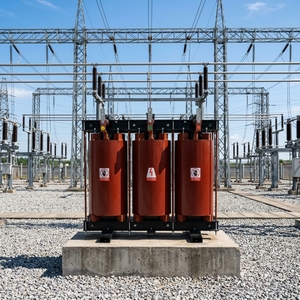
Morocco's landmark solar and wind farms utilize multi-megawatt central inverters that feed high-frequency switching harmonics into step-up substations. Our GKSC and CKSC High Voltage (11kV to 33kV) Iron-Core Reactors deliver harmonic filtering, line stabilization, and reactive power compensation capable of enduring extreme ambient desert heat and wide daily thermal swings.
Automotive assembly lines feature robotic welding machines, induction heating furnaces, and automated stamping presses. Rapid, pulsating reactive loads require ultra-fast response PFC cabinets integrated with LVR07250A40D 25kvar/40kvar low-loss tuning reactors to suppress flicker, prevent voltage dips, and safeguard precision PLC automation.
Morocco’s National Energy Strategy aims to achieve over 52% of electrical power generation from clean energy sources by 2030, alongside strict national energy efficiency mandates under Law 47-09. As renewable penetration increases and industrial electrification accelerates, grid stiffness decreases at regional connection nodes. This structural shift makes local industrial grids highly sensitive to harmonic resonance and voltage instability.
By installing Chetan Electric's high-efficiency, low-loss tuning reactors into automatic power factor correction (APFC) panels, Moroccan enterprise clients directly achieve:
Key technical inquiries addressed by our senior application engineering team for electrical consultants, panel builders, and procurement managers in Morocco:
Established in 1994, Chetan Electric Pvt. Ltd. is an ISO 9001 certified transformer and reactor manufacturer headquartered in Bangalore, India. With over three decades of core electrical engineering expertise, we design, manufacture, and export a complete portfolio of power transformers, dry-type distribution units, iron-core shunt reactors, and harmonic tuning filter reactors serving over 600 global industrial clients.
Our reactors undergo rigorous short-circuit, temperature-rise, noise, and dielectric type-testing at the Central Power Research Institute (CPRI), guaranteeing rock-solid field performance.
From non-standard reactance ratios ($p=6\%, 8\%, 12\%$) to high voltage ratings up to 33kV 1000kvar, our engineering team tailors solutions to match exact client electrical specifications.
Ready to optimize your power factor correction cabinets and protect your industrial grid in Morocco?